
Reviewed · WHIRLING DERVISH SHOWS
Istanbul: Hodjapasha Whirling Dervishes Show & Exhibition
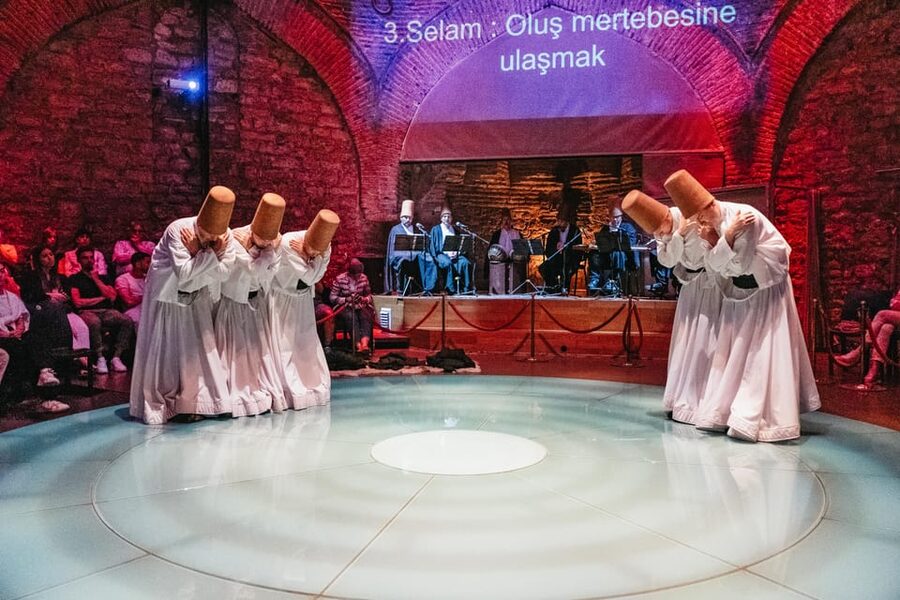
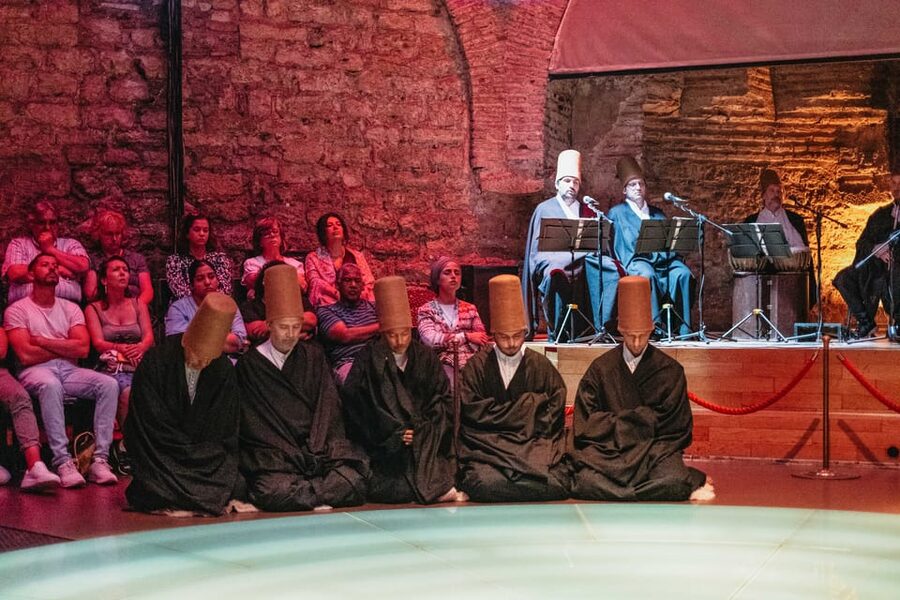
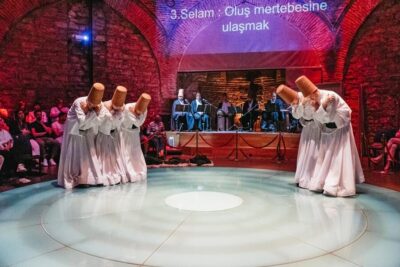
The most striking part of this Istanbul experience is its setting: the HodjaPasha Culture Center occupies a restored 550-year-old Ottoman Turkish bath. Beneath the central dome, musicians play traditional instruments while dervishes perform the Mevlevi Sema, a seven-part ceremony that represents the human journey toward spiritual understanding.
I like the live Turkish music, with instruments such as the ney, oud, kanun, and traditional percussion. I also like the small exhibition, which gives you useful context before the ceremony begins. The main consideration is that this is a solemn religious ritual, not a fast-moving dance show. The whirling can feel repetitive if you are expecting a typical stage performance.
Key points to know
- A historic Ottoman bath is the venue: The ceremony takes place inside a restored 550-year-old building near Sirkeci.
- The performance lasts about one hour: It begins with classical Turkish music and continues through the seven sections of the Sema.
- This is a religious ceremony: Talking, applause, and photography are not permitted.
- Arrive early for the exhibition: The panels and objects explain the meaning of the dervishes and the ceremony.
- Seats are assigned by booking order: Booking earlier can improve your position, but exact seating is not guaranteed.
- It suits adults and older children: Children under seven are not allowed, and the venue is not suitable for wheelchair users.
Inside the 550-year-old HodjaPasha bath
You meet at the Hocapaşa Culture Center, about 100 meters from the Sirkeci Tram Stop. That central location makes this an easy evening stop if you are already visiting Sultanahmet, the Spice Bazaar, or the waterfront around Eminönü.
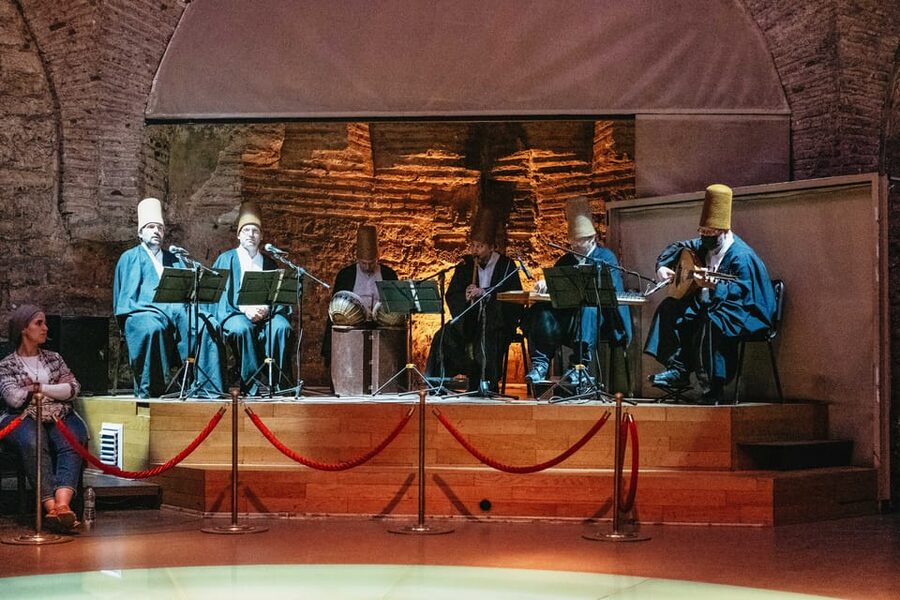
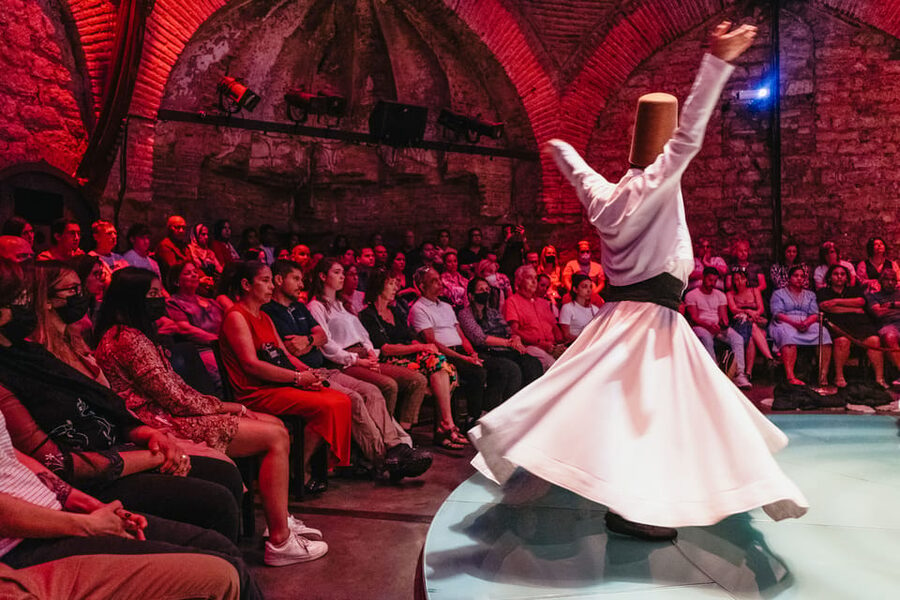
The building is part of the experience. Rather than entering a modern theater, you step into a former Ottoman bath with old stonework, a domed interior, and a compact exhibition area. The space helps explain why this ceremony feels different from a standard cultural show. Sound carries across the room, and the architecture gives the music a long, echoing finish.
The venue is intimate enough for you to see the performers clearly. One practical detail matters: there are stairs leading to the performance area, and wheelchair access is not available. Seating can also be close together. If you prefer more personal space, this may be a drawback during the hour-long ceremony.
More Whirling Dervish Shows in Istanbul
- Istanbul: Whirling Dervishes Ceremony and Mevlevi Sema
★ 4.3 · 1,694 reviews - Istanbul: Whirling Dervish Ceremony next to Hagia Sophia
★ 4.5 · 906 reviews - Istanbul Hodjapasha Whirling Dervishes Show & Exhibition
★ 4.0 · 503 reviews
Read the exhibition before the ceremony
The exhibition in the foyer is small, but it adds real value. Use it to learn the basic ideas behind Sufism, the Mevlevi tradition, and the place of the Sema in religious practice.
You receive a program booklet, but the displays are worth your time as well. Arriving early gives you a chance to look at the panels and artifacts without rushing. The exhibition helps turn the ceremony from a series of impressive spins into a ritual with a particular order and meaning.
The Sema is linked to the teachings of Jalal al-Din Rumi and the Mevlevi tradition. The ceremony represents a spiritual ascent through thought and love. You do not need prior knowledge of Islam or Sufism to follow the broad idea, but a few minutes with the background material makes the movements easier to understand.
There is no guide leading you through the exhibition or explaining every question in person. The booklet and displays provide the main introduction. If you want a long historical talk, this experience may feel brief. If you prefer to read a little and then observe quietly, the format works well.
The music comes before the whirling
The program begins with a concert of classical Turkish music. This is not filler while the dervishes prepare. It sets the mood and introduces the musical language of the ceremony.
The ensemble can include vocalists, a ney, oud, kanun, and Ottoman-era percussion. The ney is a reed flute with a thin, breathy sound that can feel especially powerful inside the old bath. The kanun supplies bright, precise notes, while the oud and percussion give the music its shape.
Several parts of the performance feature instrumental passages and vocal music. Some sections are slow and meditative. Others have a quicker pulse. The sound is a major reason to attend, especially if you enjoy traditional music and want more than a visual performance.
You should settle in before the music begins. Late arrivals can distract people who are already listening, and the ceremony requires silence. The no-photography rule is strict, but it also keeps the room free of glowing phone screens and camera movements.
Understanding the seven-part Mevlevi Sema
The dervishes and the sheikh take their places after the opening music. The ceremony includes praise for the Prophet Mohammed, chanting, and the sound of a drum that signals the movement into the Sema.
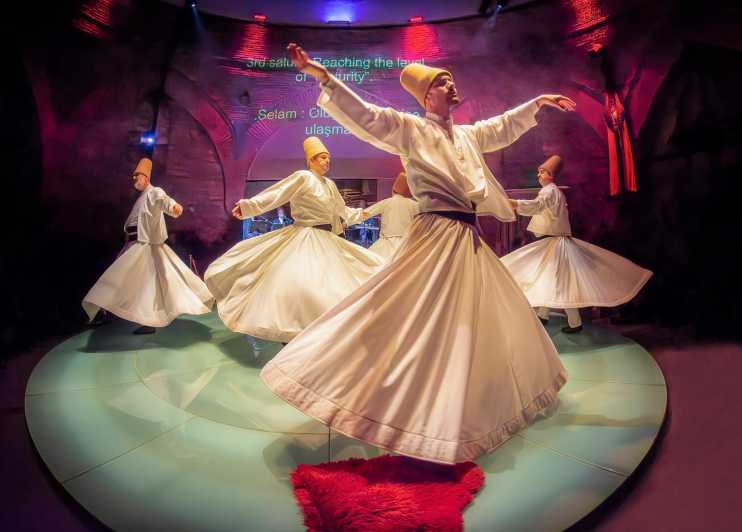
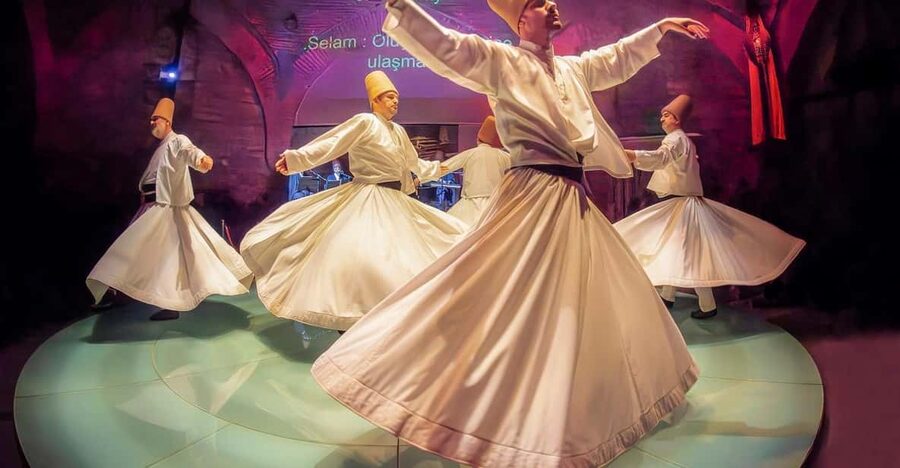
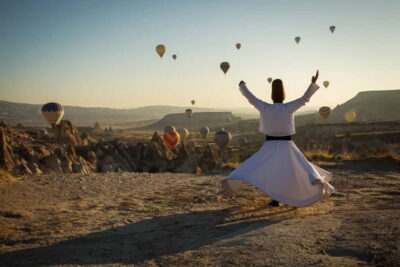
The whirling is the part most people recognize, but it is only one element of the ritual. The ceremony is arranged in seven sections and represents the birth of humanity and its spiritual movement toward God. The dervishes turn with one hand raised and the other lowered, a gesture connected with receiving and passing on spiritual grace.
The movement looks simple at first. It is not. The dervishes turn for extended periods and stop suddenly at the end of each section, often with remarkable control. Several performers may rotate around the central space while also moving along a circular path. From the audience, the combined motion creates a slow pattern of white robes, dark vests, and turning bodies.
Do not expect acrobatics or a dramatic finale. The power comes from repetition, restraint, and concentration. The ceremony can calm your mind, but it can also test your patience if you prefer constant action.
The ending includes a Fâtiha for the souls of prophets, martyrs, and believers, followed by a prayer for the salvation of the country. This is one reason applause is not allowed. You are watching a religious observance presented for public understanding, not a performance designed for audience reaction.
A completely different sort of day out, same corner of Turkiye:
- Istanbul: Bosphorus Dinner Cruise & Show with Private Table
★ 4.8 · 44,561 reviews - Istanbul: Daytime or Sunset Sightseeing Cruise & Audio Guide
★ 4.8 · 14,430 reviews - Istanbul: Bosphorus Dinner Cruise with Turkish Night Show
★ 4.8 · 10,127 reviews - Best of Istanbul 1, 2 or 3-Day Private Guided Istanbul Tour
★ 5.0 · 8,922 reviews
Why the quiet rules matter
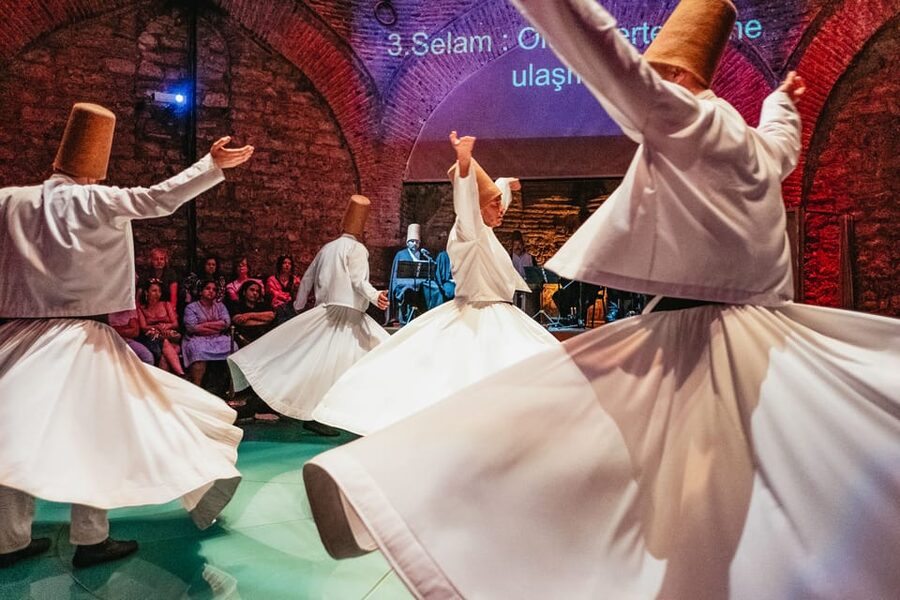
The instructions are unusually firm: no photography, no talking, and no applause during the ceremony. That may sound strict, but it fits the character of the event.
A phone raised in front of you can break the line of sight for an entire row. A whispered conversation can carry across the domed room, especially during the ney solos and quieter prayers. The ban on photographs also prevents the ceremony from becoming a hunt for the perfect social media image.
The rules may frustrate you if you like to document every stop. Still, they make it easier to pay attention to the music and movement. Bring your phone only for the journey to the venue, then turn it off before the ceremony begins. You may also want water or a cough drop, since even a small cough can sound loud in the quiet room.
Seating, timing, and the best way to arrive
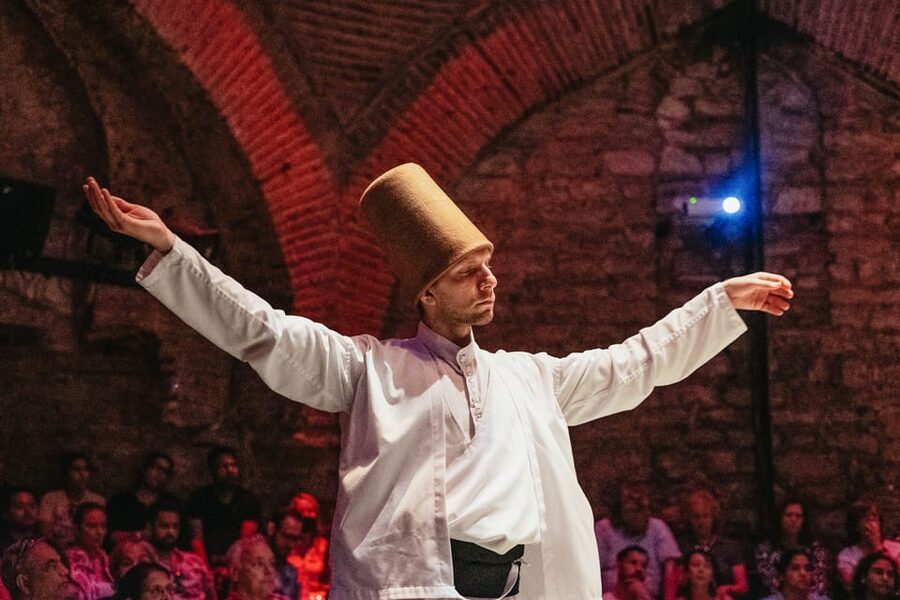
The activity lasts one hour, and starting times vary, so check the available schedule before booking. The meeting point is easy to find from Sirkeci Tram Stop, but give yourself time to locate the culture center and go upstairs.
Seats are allocated according to booking order. That means booking early can help, but it does not guarantee a particular chair or front-row position. Some people receive excellent views, while others find themselves farther back than expected.
The venue is not large, so even rear seats should allow you to follow the ceremony. Still, arriving early remains useful for three reasons:
- You can read the exhibition without hurrying.
- You can take your seat before the music begins.
- You avoid distracting late entry during the ritual.
The chairs are close together, and some people find them uncomfortable. There is little reason to leave during the ceremony, so plan for a full hour in one position.
Is $32 a fair price?
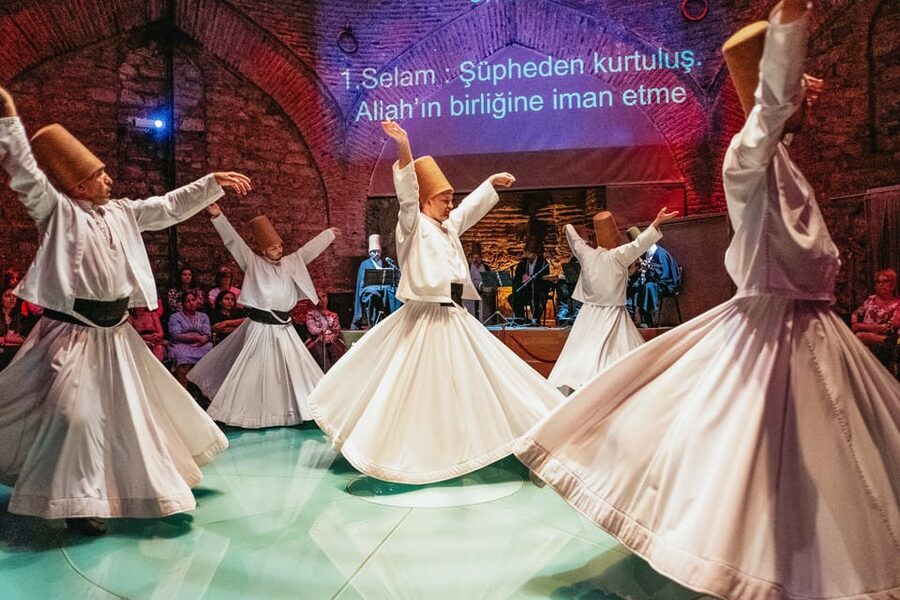
At $32 per person, the value depends on what you want from an Istanbul evening. You are paying for a one-hour ceremony, a program booklet, bottled water, access to the historic venue, and the small exhibition. Complimentary drinks are also provided during the experience.
The price is reasonable if you value live music, historic buildings, and a focused cultural encounter. You are not just watching people spin in a rented hall. The setting, musicians, religious structure, and background displays all form part of the visit.
It may feel expensive if you judge it only by duration. One hour is short, and the whirling itself takes up much of the ceremony. There is no extended lecture, hotel pickup, meal, or guided walk through Istanbul.
I would compare it with the cost of a standard evening show. This experience offers less spectacle but more quiet attention. If you want a lively folklore program with costumes, jokes, and audience participation, spend your money elsewhere. If you want to see an important Turkish religious tradition in a proper setting, $32 is a fair price.
Who will appreciate this experience most?
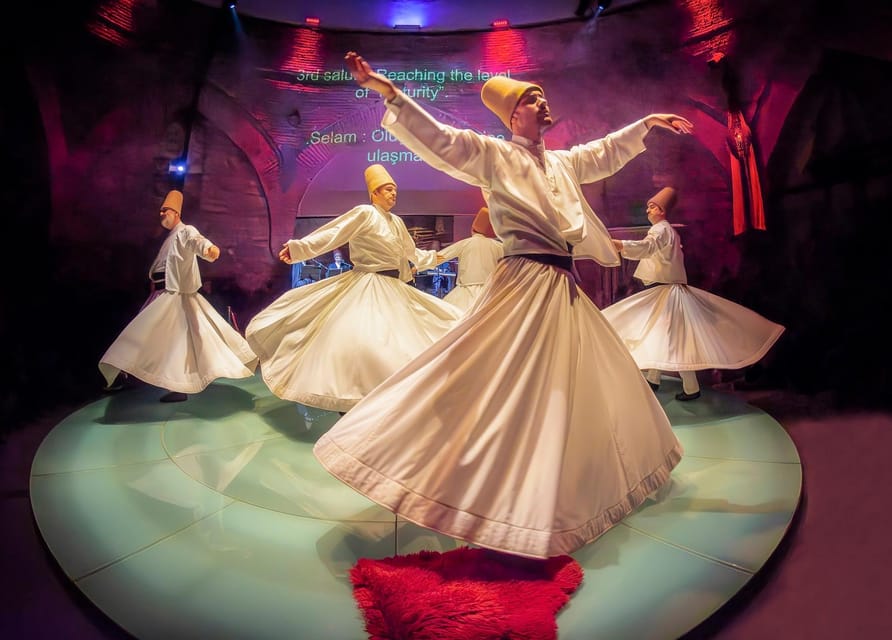
This ceremony suits you if you enjoy:
- Traditional music and unusual cultural experiences
- Religious art, ritual, and Islamic history
- Historic buildings with a strong atmosphere
- Quiet performances that reward patience
- Short evening activities in central Istanbul
It is especially useful for first-time visitors who want to understand a spiritual side of Turkey beyond mosques, palaces, and food. The exhibition gives you enough context to begin, while the ceremony lets you observe without a long lecture.
You may want to skip it if you need constant movement, dislike sitting quietly, or expect a theatrical dance show. The spinning is beautiful, but the ritual develops slowly. Some sections can feel repetitive, and the ceremony does not explain each moment while it happens.
Children under seven are not permitted. Older children may attend, but only if they can remain silent and still for the full hour. The venue is not suitable for wheelchair users because of the stairs and access conditions.
Practical advice for a respectful visit
Wear something comfortable for sitting, since the chairs are close and the ceremony lasts about an hour. Arrive early enough to read the displays and settle before the musicians begin.
Do not plan to take photographs inside. The rule applies during the ceremony, and talking or clapping is also forbidden. Keep your phone silent or switched off.
Think of the event as an observation of worship, not a dance concert. The dervishes are trained performers, but the ceremony carries religious meaning. A respectful attitude will help you understand why the room remains quiet even after a particularly difficult turn or musical passage.
If you are unsure about the movements, read the booklet before the performance rather than trying to interpret every gesture in real time. Let the music establish the pace. The less you demand from the hour, the more likely you are to appreciate its calm.
Should you book the HodjaPasha Sema ceremony?
Book it if you want a quiet, authentic-feeling introduction to Sufi ceremony in a historic Istanbul building. The live music is a major strength, and the old bath gives the event a sense of place that a modern theater could not match.
Do not book it expecting a flashy show. You will not hear applause, take photographs, or watch a choreographed spectacle built around surprise. You will sit in silence while musicians, a sheikh, and dervishes follow a formal religious sequence.
For most culturally curious adults, this is a worthwhile one-hour addition to an Istanbul itinerary. Arrive early, read the exhibition, accept the seating limits, and treat the Sema as a ceremony rather than entertainment. That approach gives you the best chance of finding the experience moving, peaceful, and memorable.
FAQ
Where does the whirling dervish ceremony take place?
It takes place at the Hocapaşa Culture Center, about 100 meters from the Sirkeci Tram Stop in central Istanbul.
How long does the experience last?
The Mevlevi Sema ceremony lasts one hour.
What is included in the ticket?
The ticket includes admission to the Mevlevi Sema ceremony, a program booklet, and bottled drinking water. Complimentary drinks are also provided during the show.
Is photography allowed inside?
No. Photography is not allowed inside the venue.
Can I talk or applaud during the ceremony?
No. Talking, applause, and other disruptions are prohibited during the performance.
Are children allowed to attend?
Children under seven are not permitted. Older children may attend if they can remain quiet and respectful throughout the ceremony.
Is the venue wheelchair accessible?
No. The activity is not suitable for wheelchair users.
How are seats assigned?
Seats are allocated based on the order in which bookings are made. Booking earlier may help with seating, but a specific seat is not guaranteed.
Can I cancel the booking?
Yes. You can cancel up to 24 hours in advance for a full refund. The reserve-now, pay-later option allows you to book without paying immediately.
More Museums in Istanbul
- Istanbul: Hagia Sophia Skip-the-Line Ticket & Museum Option
★ 3.7 · 4,958 reviews - Istanbul: Topkapi Palace & Harem Museum Ticket & Audio Guide
★ 4.1 · 3,977 reviews - Istanbul: Topkapi Palace and Harem Museum Tour with Ticket
★ 4.7 · 247 reviews - Istanbul: Official Museum Pass for 12 Most Popular Museums
★ 4.0 · 181 reviews
Newest Istanbul trips on the site
- Turkey Classics 7 Day Escorted Tour from Istanbul★ 4.5 · 165 reviews
- 7 Day 6 Night Express Turkey Tour★ 5.0 · 37 reviews
- Bosphorus Dinner Cruise with Turkish Music and Live Performances★ 4.0 · 158 reviews
- Bosphorus Dinner Cruise & Show with Private Table★ 5.0 · 24 reviews
- Pearl’s of Turkey – 8 Days★ 5.0 · 38 reviews
- Bosphorus Boat Tour 3 Hour with Asian Side Stop in Istanbul★ 5.0 · 97 reviews
- Turkey Highlights 4 Day Tour from Istanbul Hassle-Free Package★ 5.0 · 91 reviews
- 7 Days Turkey Tour Package – Highlights of Turkey★ 5.0 · 73 reviews
Whirling Dervish Shows, compared.
Istanbul Hodjapasha Whirling Dervishes Show & Exhibition
Our review →
Istanbul Traditional Turkish Dinner and Dervish Experience
Our review →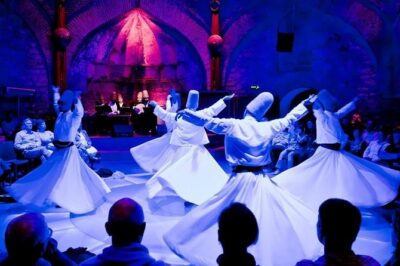
Browse the lists this tour appears in