
Reviewed · WHIRLING DERVISH SHOWS
Istanbul Hodjapasha Whirling Dervishes Show & Exhibition
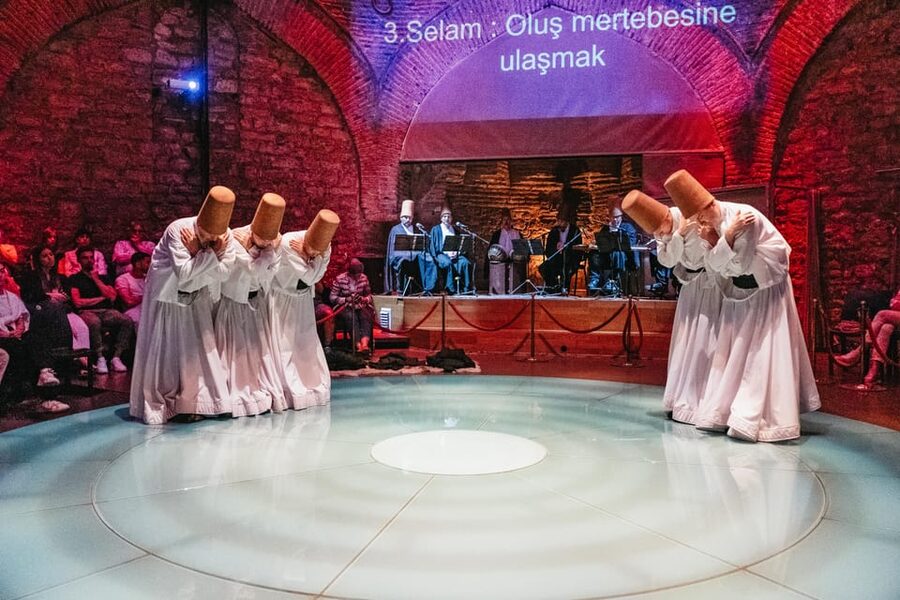
The most important thing to know is that this is a religious ceremony, not a dance show. The sema, the Sufi ritual associated with the Mevlevi tradition, unfolds slowly through music, chanting, bowing, and repeated whirling. If you expect a lively stage performance, the hour may feel long. If you come ready to watch a quiet act of devotion, it can be striking.
I like the small, intimate venue, where you can see the performers closely, and I like the informative exhibition before the ceremony. The live traditional music, soft vocals, and projected explanations help make the ritual easier to follow. The main drawback is repetition: the whirling does not begin at once, and some people may find the pace soothing while others find it dull.
Key points to know before booking
- The ceremony lasts about one hour, with whirling appearing after an opening sequence of music, prayer, and bows.
- The theater is small and seats are assigned, so you do not need to compete for a place once inside.
- The exhibition is worth arriving early for, especially if you want context on Sufism, Rumi, and the meaning of the ritual.
- Photography, video, and applause are not allowed, because the event is treated as a spiritual ceremony.
- The central Fatih location is convenient, near public transportation, restaurants, cafés, the Spice Market, and the tram.
- The $32 price is fair for a cultural introduction, but only if you understand that this is contemplative and repetitive rather than entertaining in the usual sense.
What the Hodjapasha ceremony really is
The whirling dervishes are among Istanbul’s most recognizable cultural images. That familiarity can create the wrong expectation. Hodjapasha does not present a fast, colorful folk dance with a running commentary and staged spectacle. It presents a formal Sufi ceremony for an audience.
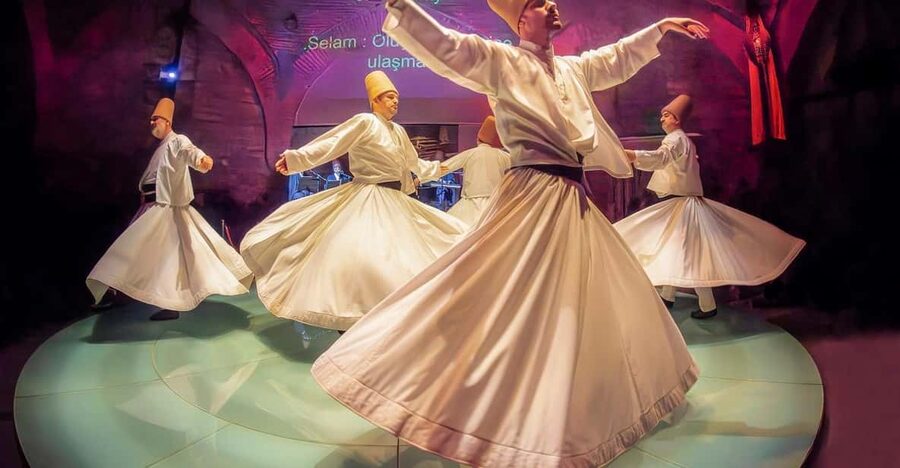
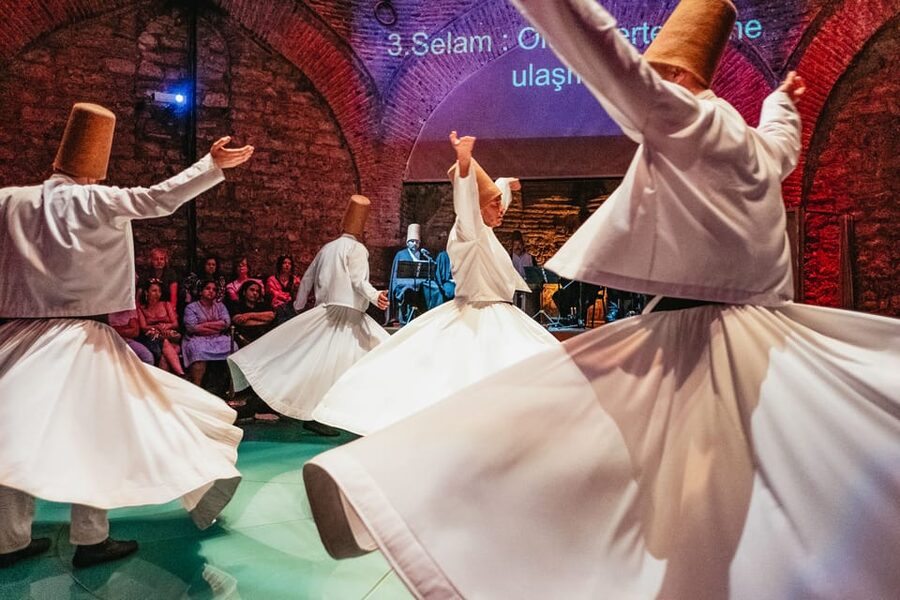
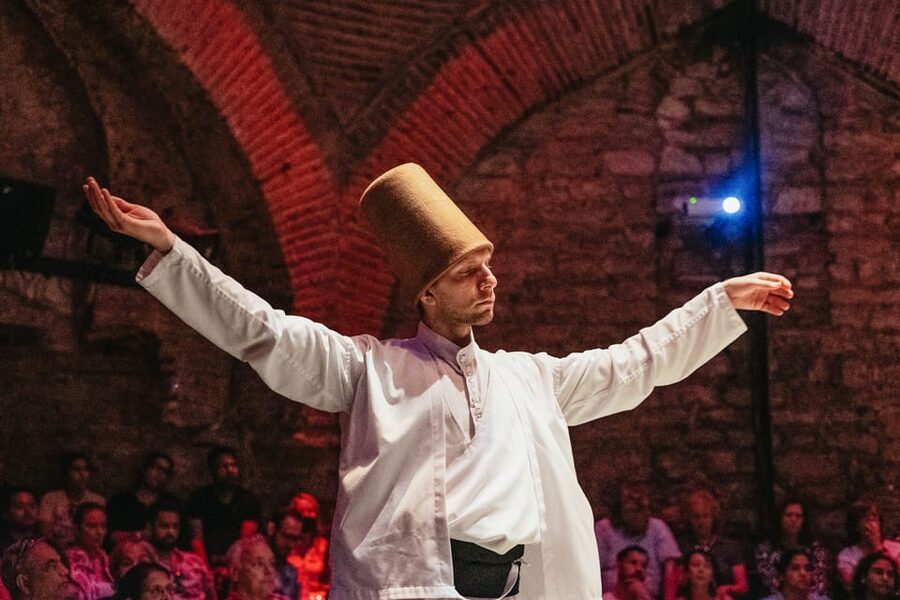
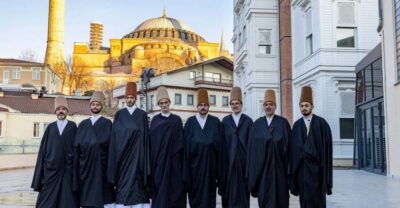
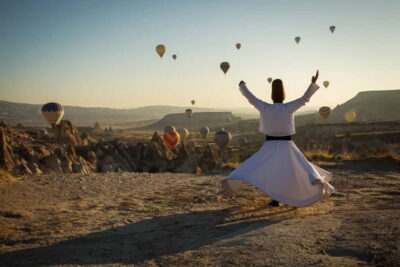
The central ritual is the sema. The dervishes move through a series of symbolic actions, including bows, prayer, music, and whirling. Their white garments and tall felt hats make the movement visually distinctive, but the purpose is spiritual rather than decorative. The turning represents a meditative practice connected with Sufi devotion and the teachings associated with Mevlana Jalaluddin Rumi.
You do not need to be religious to appreciate it. The ceremony offers a look at one form of Islamic spirituality, and the quiet concentration can speak to people from many backgrounds. Still, respect matters. This is not a comedy, concert, or interactive performance. You are watching a serious ritual that happens to be presented in a cultural center.
That distinction explains the mixed reactions this experience can produce. I find the repeated movement hypnotic, but you may find it monotonous. The discipline required to turn for an extended period is impressive, yet the ceremony does not keep changing to hold your attention in the way a conventional show would.
More Whirling Dervish Shows in Istanbul
- Istanbul: Hodjapasha Whirling Dervishes Show & Exhibition
★ 4.4 · 4,790 reviews - Istanbul: Whirling Dervishes Ceremony and Mevlevi Sema
★ 4.3 · 1,694 reviews - Istanbul: Whirling Dervish Ceremony next to Hagia Sophia
★ 4.5 · 906 reviews
Arrive early for the Rumi and Sufi exhibition
The best way to improve this experience is to spend time in the foyer before taking your seat. The exhibition explains the ceremony’s origins, Sufi ideas, Rumi’s poetry, and the symbolism behind what you are about to see.
Give yourself at least 20 minutes if you can. The extra time is not filler. Without some background, the opening bows and musical passages may seem puzzling, and the whirling can look like a single repeated action. With context, you begin to notice the order of the ceremony and the difference between its stages.
Explanatory material is also projected or displayed during the event. That helps you follow the ritual without a live guide interrupting the atmosphere. A multilingual booklet is included, so you have another way to learn about the ceremony.
The exhibition is one of the strongest parts of the visit for people who want more than a quick photograph. It turns the performance into a cultural lesson, not simply an hour of spinning. If you arrive just before the start, you will miss much of the material that gives the ceremony meaning.
Inside the small Hodjapasha theater
Hodjapasha Cultural Centre is at Hoca Paşa Mahallesi, on a side street near Ankara Caddesi in Fatih. The setting is central and practical for an evening visit. Restaurants and cafés are close by, and the Spice Market is within walking distance. The tram also makes this part of the city easy to reach.
Finding the exact entrance can take more effort than expected. The venue is on a smaller lane, and taxis may stop on the main road rather than directly beside the entrance. I would use the full address, Hoca Paşa, Hocapaşı Hamamı Sk. No:3 D:B, and allow extra time to locate the doorway.
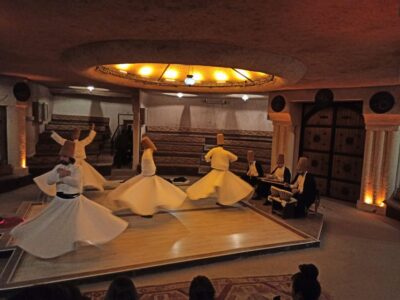
Inside, expect a compact theater rather than a grand auditorium. The close seating is a benefit if you want to observe the performers’ expressions, posture, and concentration. It also means the room can feel intimate and quiet. A small audience helps preserve the solemn mood, though the activity can accommodate up to 170 people.
Seats are assigned before the ceremony. That removes the usual scramble at the door and lets you focus on the exhibition or settle in calmly. The venue is described as comfortable and well organized, with effective lighting and sound. The production supports the ritual without turning it into a flashy stage act.
The one-hour sequence: music before whirling
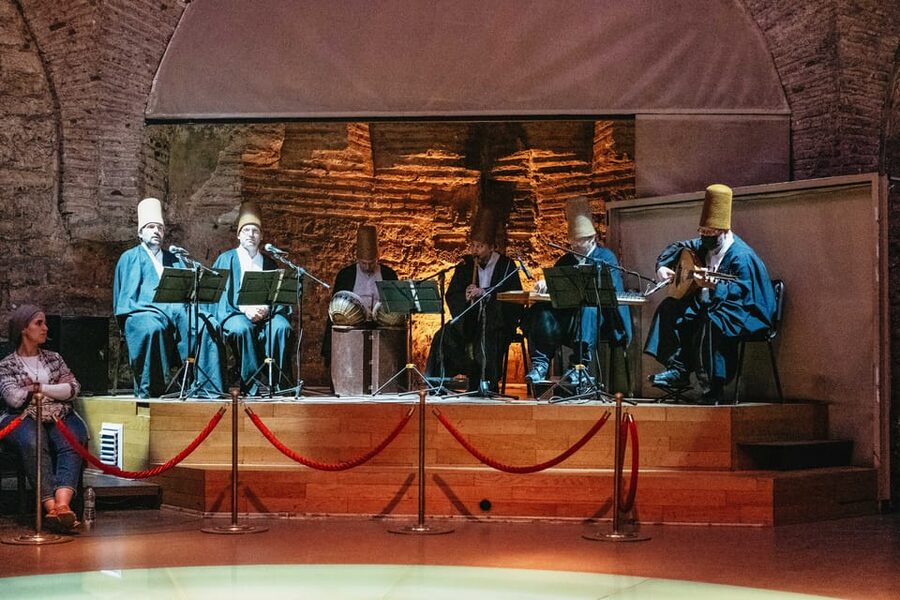
The hour does not begin with immediate spinning. The ceremony opens with musical and devotional elements, including traditional instruments, singing, and bows. This opening can occupy a substantial part of the program.
That slow start is important to understand. If you booked this expecting nonstop whirling, you may wonder when the main event begins. The opening establishes a prayerful mood and introduces the ceremonial structure. It is not wasted time, but it requires patience.
The music is a major strength. Traditional melodies and soft vocals create the atmosphere, and several parts of the ceremony are carried as much by sound as by movement. Even people who are less interested in religious history may find the music memorable.
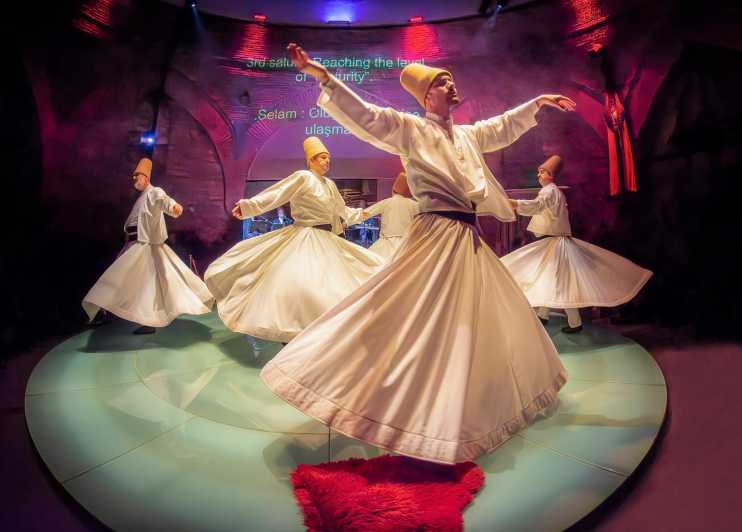
The projected explanations help identify each stage. You can watch the performers and then connect the action with its symbolic purpose. The lights are low, and the sound is gentle, so the overall mood is calm. For some people, that feels peaceful and meditative. For others, it may be sleepy. That is a fair warning if you are bringing children or anyone who needs constant action.
When the whirling begins, the visual focus becomes clear. The dervishes turn with arms extended, maintaining a controlled rhythm for a long period. The movement is simple in form but difficult in execution. The point is not variety. The power comes from concentration, repetition, and the sense of devotion behind it.
A completely different sort of day out, same corner of Turkiye:
- Istanbul: Bosphorus Dinner Cruise & Show with Private Table
★ 4.8 · 44,561 reviews - Istanbul: Daytime or Sunset Sightseeing Cruise & Audio Guide
★ 4.8 · 14,430 reviews - Istanbul: Bosphorus Dinner Cruise with Turkish Night Show
★ 4.8 · 10,127 reviews - Best of Istanbul 1, 2 or 3-Day Private Guided Istanbul Tour
★ 5.0 · 8,922 reviews
Why the silence matters
You are asked not to take photographs, record video, or applaud. That rule may disappoint you if you hoped to take home dramatic images, but it changes the quality of the hour.
Without phones lighting up or applause interrupting the pauses, the room stays focused. You can pay attention to the music, the turns, and the ceremonial transitions. The restriction also makes clear that the performers are not presenting a normal theater show for applause.
I appreciate that the rule encourages observation rather than documentation. At the same time, you should know it before booking. If capturing photos is central to your Istanbul sightseeing, this is not the right activity for that purpose.
The silence can feel unusual for visitors who expect applause after a performance. Here, quiet is part of the experience. Treat the ceremony with the same care you would show in a place of worship.
Authenticity, staging, and the $32 price
The difficult question is authenticity. Hodjapasha is a scheduled cultural presentation in a historic-style venue, and it is performed for a public audience. It is not the same as quietly observing a private Sufi gathering. Some people will therefore see it as a staged representation rather than an entirely private religious event.
That does not make it worthless. Istanbul visitors have limited access to Sufi ceremonies, and Hodjapasha offers a structured way to learn about the tradition and see the ritual at close range. The exhibition, booklet, live music, and projected explanations give the visit more substance than a short dance demonstration.
At $32 per person, I consider it reasonable for a one-hour cultural activity in central Istanbul. You are paying for admission, an assigned seat, the ceremony, the exhibition area, a multilingual booklet, and bottled water. The price is strongest when you value cultural context and a formal venue.
The value drops if you want entertainment in the usual sense. There are no dramatic costume changes, comic moments, audience participation, or rapid choreography. You may also find the hour too long if repetitive movement quickly loses your attention.
In simple terms, you are paying for access to a spiritual performance and an introduction to Sufi tradition, not for a high-energy evening show.
Who will appreciate this most
I would recommend Hodjapasha to adults interested in religion, music, Turkish culture, Rumi, or meditative movement. It suits people who enjoy sitting quietly and noticing small changes in gesture, sound, and rhythm.
It is also a good choice if you want an evening activity close to Sultanahmet and the historic center. You can combine it with the Spice Market, a meal, or a walk through the surrounding streets. The central setting makes it easy to fit into a day of sightseeing.
Families should think carefully about the one-hour format. The minimum age is seven, and most people can participate, but younger children may get bored. The show’s repetitive structure and quiet mood are not designed to hold a restless child’s attention.
I would also recommend it to visitors who want a cultural experience that does not depend on language. The booklet and exhibition are useful, but you can still understand the basic feeling through the music and movement. The activity is offered in English, and the multi-national booklet adds support for an international audience.
You may want to skip it if you need constant action, dislike solemn ceremonies, or expect an authentic private religious gathering rather than a public presentation. Those are not flaws in the ceremony itself. They are signs that this activity may not match your style.
Practical timing and transportation advice
The experience lasts approximately one hour and ends at the same place where it begins. There is no hotel pickup or drop-off, so you need to reach Hodjapasha on your own.
The location is near public transportation, and the surrounding area is useful for an evening before or after the ceremony. Restaurants and cafés are close, and the Spice Market is nearby. Walking or using the tram is more practical than relying on a taxi in the narrow streets around the venue.
Plan to arrive early enough to find the entrance and read the exhibition. A rushed arrival defeats one of the main benefits of the experience. It also gives you time to settle into your assigned seat without disturbing the opening.
Confirmation is provided at booking, and the ticket is mobile. Free cancellation is available if you cancel at least 24 hours before the start time. Changes or cancellations made within 24 hours are not accepted for a refund.
My verdict: book it if you want ritual, not spectacle
I would book Hodjapasha if you want a close look at Sufi ceremony, live traditional music, Rumi-related context, and a quiet evening in central Istanbul. Arrive early, read the exhibition, and treat the hour as observation rather than entertainment.
I would not book it expecting an exciting dance performance. The ceremony is slow, serious, and repetitive, and the whirling begins only after an opening sequence. For the right audience, that patience is the point. For everyone else, it may feel like a long hour.
At $32, the experience earns its price through the intimate venue, useful background material, assigned seating, and strong atmosphere. Add it to your Istanbul plans if you are curious about Turkish spiritual culture and willing to put your phone away for an hour.
FAQ
How long does the Hodjapasha Whirling Dervishes experience last?
The ceremony lasts approximately one hour.
Where does the ceremony take place?
It takes place at Hodjapasha Cultural Centre, Hoca Paşa Mahallesi Ankara Caddesi, Hoca Paşa, Hocapaşı Hamamı Sk. No:3 D:B, 34110 Fatih, Istanbul.
Is the ticket mobile?
Yes. A mobile ticket is provided.
Is the exhibition included?
Yes. You can visit the exhibition connected with the ceremony, including information about Sufi traditions and Rumi poetry.
Is this a dance show or a religious ceremony?
It is presented as a cultural and mystical ceremony. The event includes prayerful elements, music, bows, and whirling, so it is better understood as a religious ritual than a conventional dance show.
Are photographs and videos allowed?
No. Photography and video are not allowed during the ceremony. Applause is also not allowed.
What is included in the price?
Admission to the ceremony is included, along with a multi-national booklet and bottled water.
Is there a minimum age?
Yes. The minimum age is seven.
Can I cancel for a refund?
You can cancel for a full refund if you do so at least 24 hours before the experience begins. Cancellations or changes made less than 24 hours before the start time are not accepted for a refund.
More Museums in Istanbul
- Istanbul: Hagia Sophia Skip-the-Line Ticket & Museum Option
★ 3.7 · 4,958 reviews - Istanbul: Topkapi Palace & Harem Museum Ticket & Audio Guide
★ 4.1 · 3,977 reviews - Istanbul: Topkapi Palace and Harem Museum Tour with Ticket
★ 4.7 · 247 reviews - Istanbul: Official Museum Pass for 12 Most Popular Museums
★ 4.0 · 181 reviews
Newest Istanbul trips on the site
- Turkey Classics 7 Day Escorted Tour from Istanbul★ 4.5 · 165 reviews
- 7 Day 6 Night Express Turkey Tour★ 5.0 · 37 reviews
- Bosphorus Dinner Cruise & Show with Private Table★ 5.0 · 24 reviews
- Bosphorus Dinner Cruise with Turkish Music and Live Performances★ 4.0 · 158 reviews
- Pearl’s of Turkey – 8 Days★ 5.0 · 38 reviews
- Bosphorus Boat Tour 3 Hour with Asian Side Stop in Istanbul★ 5.0 · 97 reviews
- 7 Days Turkey Tour Package – Highlights of Turkey★ 5.0 · 73 reviews
- Turkey Highlights 4 Day Tour from Istanbul Hassle-Free Package★ 5.0 · 91 reviews
Whirling Dervish Shows, compared.
Istanbul Traditional Turkish Dinner and Dervish Experience
Our review →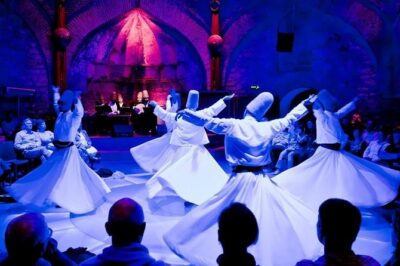
Browse the lists this tour appears in