
Reviewed · WHIRLING DERVISH SHOWS
Istanbul: Whirling Dervish Ceremony next to Hagia Sophia
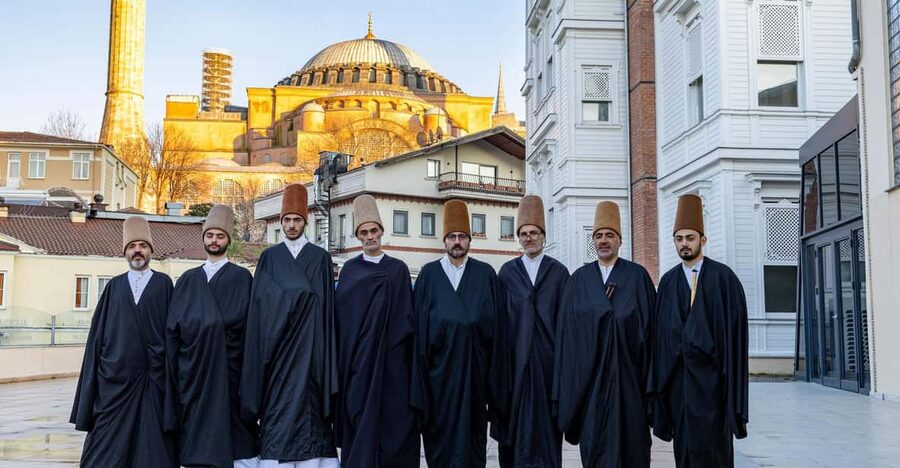
The most striking part of this 55-minute Sufi sema ceremony is its quiet pace. Dervishes enter with calm purpose, then turn in time with old Turkish music while one hand reaches upward and the other faces the earth. This is not a loud stage show. It is a religious ritual built around prayer, music, motion, and the letting go of the ego.
I like the historic setting beside Hagia Sophia, and I like the short explanation before the ceremony. It helps you understand what you are seeing instead of simply watching people spin. The tea or sherbet at the end is a small but welcome local touch. The main drawback is that the ceremony is intentionally slow and silent, so anyone expecting a lively dance show may find it too restrained.
Key points at a glance
- A genuine Sufi ritual: Local followers perform the sema with traditional music and prayer.
- A prime Istanbul location: The venue is next to Hagia Sophia and close to the Basilica Cistern.
- Useful cultural context: An English-speaking host explains the ceremony before and after it.
- Old musical tradition: The program includes compositions from the 1400s through the early 1800s.
- A small local refreshment: Tea or sherbet and water are included.
- Good value at $17: The price is modest for a central cultural activity with live musicians and an audio guide.
A quiet ceremony beside Hagia Sophia
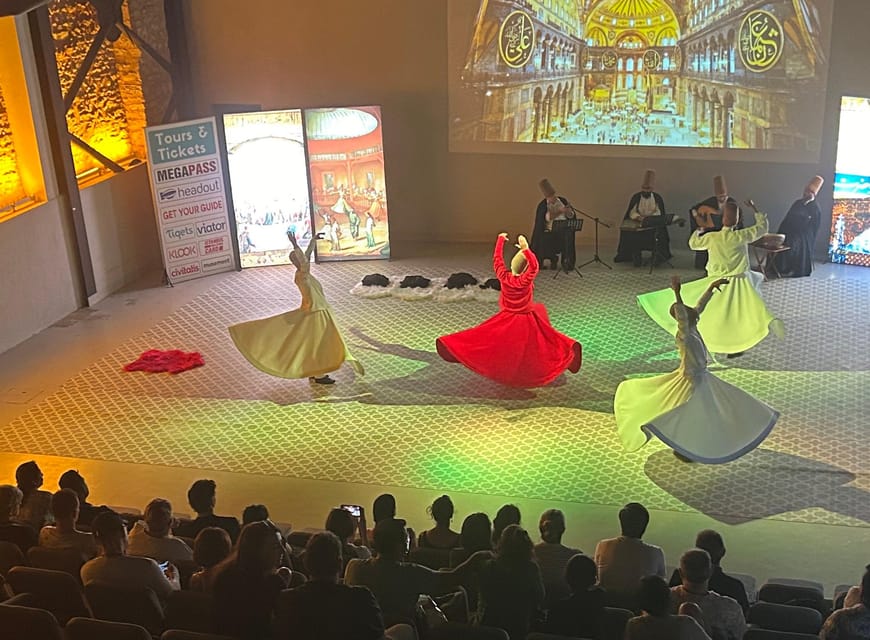
Istanbul can wear you out. After mosques, museums, ferries, traffic, and vendors, the stillness of a sema ceremony can feel like a useful pause. You sit in a purpose-built hall, listen to strings, drums, and flutes, and watch the ritual build at its own measured speed.
The ceremony comes from Sufi practice and is associated with the teachings of Rumi. The whirling is not presented as a trick or a test of balance. It represents a spiritual journey toward divine love and unity. The turning also suggests the movement of the universe and the surrender of the individual ego.
That distinction matters. If you approach this as a dance performance, you may spend the hour waiting for something dramatic to happen. If you treat it as a religious ceremony with music and symbolic movement, the slow rhythm makes more sense.
The event is listed by UNESCO as an example of Intangible Cultural Heritage. That label does not make the ceremony automatically worthwhile, but it tells you that you are seeing a living tradition with cultural importance, not a piece of stage decoration invented for tourists.
More Whirling Dervish Shows in Istanbul
- Istanbul: Hodjapasha Whirling Dervishes Show & Exhibition
★ 4.4 · 4,790 reviews - Istanbul: Whirling Dervishes Ceremony and Mevlevi Sema
★ 4.3 · 1,694 reviews - Istanbul Hodjapasha Whirling Dervishes Show & Exhibition
★ 4.0 · 503 reviews
Finding the white wooden house
The meeting point is next to the entrance of the Basilica Cistern. Look for the gate of the large white wooden house, where the reception desk is located. The gate opens 30 minutes before the scheduled start.
This is close to Hagia Sophia, so it fits neatly into a day in the historic center. You can visit the Basilica Cistern, Hagia Sophia, or the Blue Mosque area before the ceremony, then walk over without arranging transport. Check your map carefully, though. One visitor found that the map link pointed to the wrong side of the road, which caused some confusion.
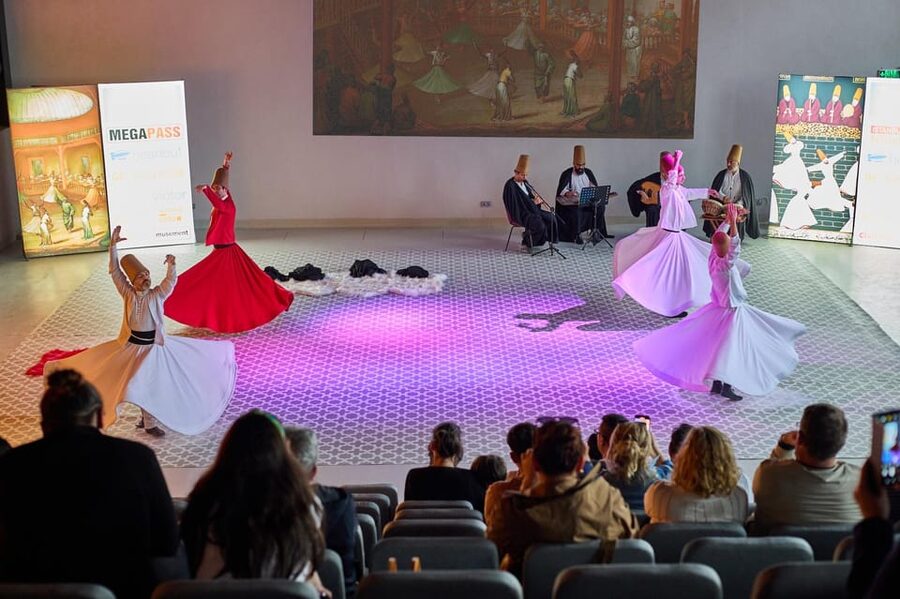
Arrive early enough to identify the entrance and settle in. The house and arts-center setting feel more personal than a large theater. The hall has comfortable seats, and the layout gives you a clear view from every place. The venue is described as wheelchair accessible, although one party found that staff had to make extra effort to arrange access. If you use a wheelchair, contact the provider ahead of time so the arrival is as easy as possible.
The activity is not suitable for children under two. Young children can attend, but the atmosphere demands quiet, and the ticket price applies to them rather than offering a special child rate.
The introduction gives the ritual a frame
Before the musicians begin, an English-speaking host explains the ceremony and its place in Sufi culture. This short talk is one of the most useful parts of the visit. It covers the meaning behind the gestures, the role of the dervishes, and the background of Rumi and the sema tradition.
The explanations have not always been delivered at the same pace. Some people have found the speaker too fast, and one person had trouble hearing the opening talk. If the room is busy, sit where you can hear clearly. The presentation is short, so you do not want to miss it.
The digital audio guide adds more background in English, German, French, Italian, Russian, Spanish, and Arabic. It is accessed through a QR code, giving you material on Sufism, Rumi, and the whirling tradition. This is useful if you want more than the brief spoken introduction, though it also means you should have a charged phone available.
I recommend reading a little about Rumi and Shams Tabrizi before you go. You do not need to become a scholar. Knowing that the ritual is tied to ideas about divine love, the self, and spiritual surrender will help you read the movements in a more meaningful way.
Live Turkish music sets the pace
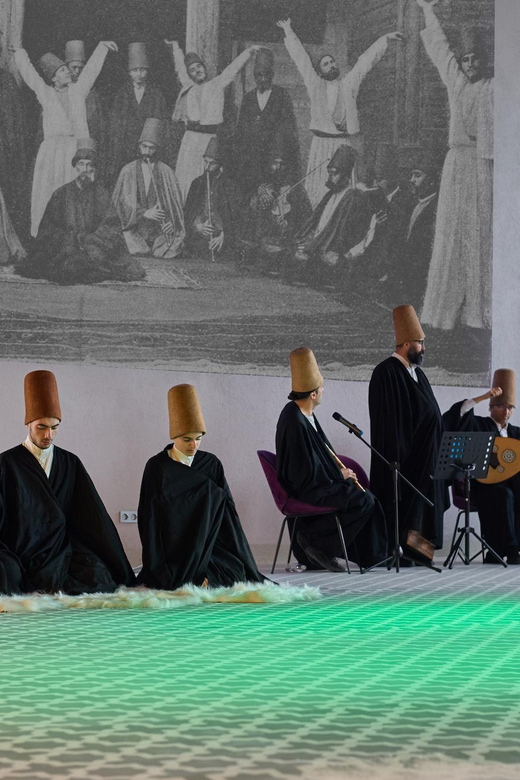
The music starts before the dervishes begin to whirl. Traditional instruments include strings, drums, and the ney, a reed flute with a breathy, haunting sound. The musicians play pieces composed between the 1400s and the early 1800s, giving the ceremony a distinctly old-world musical character.
This is an important point for anyone comparing it with other whirling dervish events. The music is not background noise added to a dance. It is part of the prayer and helps establish the ceremony’s mood and rhythm. The sound rises and settles as the ritual progresses.
Audio quality can be uneven. One person found the sound less clear than expected, especially during the opening explanation. That is worth keeping in mind if hearing every spoken word is important to you. The musicians themselves are a major part of the appeal, but the hall is still an event space rather than a specialist concert venue.
There is no English translation of the songs or recitations. The guide explains the ceremony in English, but the words being sung remain in their original language. That can limit your understanding of the vocal sections, though it also preserves the character of the ritual.
A completely different sort of day out, same corner of Turkiye:
- Istanbul: Bosphorus Dinner Cruise & Show with Private Table
★ 4.8 · 44,561 reviews - Istanbul: Daytime or Sunset Sightseeing Cruise & Audio Guide
★ 4.8 · 14,430 reviews - Istanbul: Bosphorus Dinner Cruise with Turkish Night Show
★ 4.8 · 10,127 reviews - Best of Istanbul 1, 2 or 3-Day Private Guided Istanbul Tour
★ 5.0 · 8,922 reviews
Watching the dervishes turn
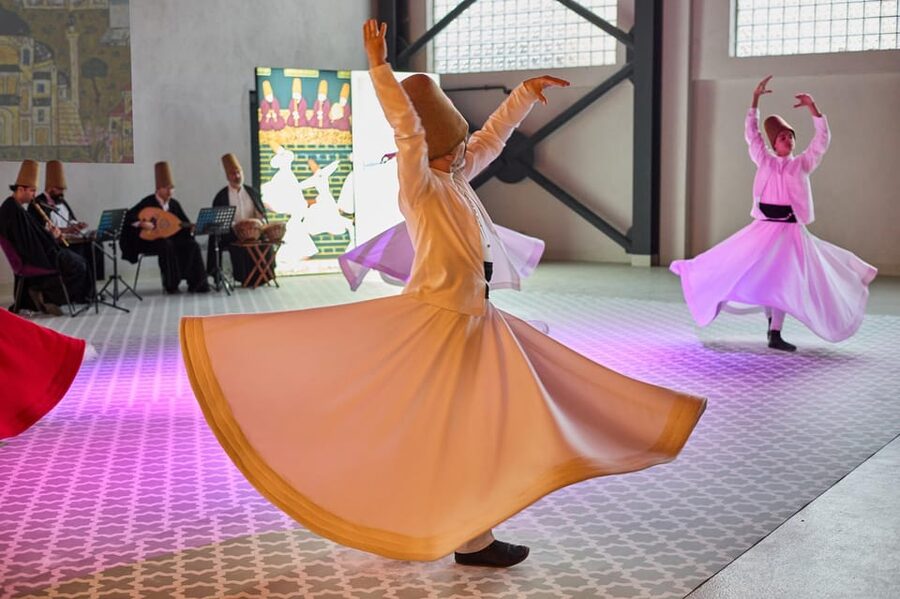
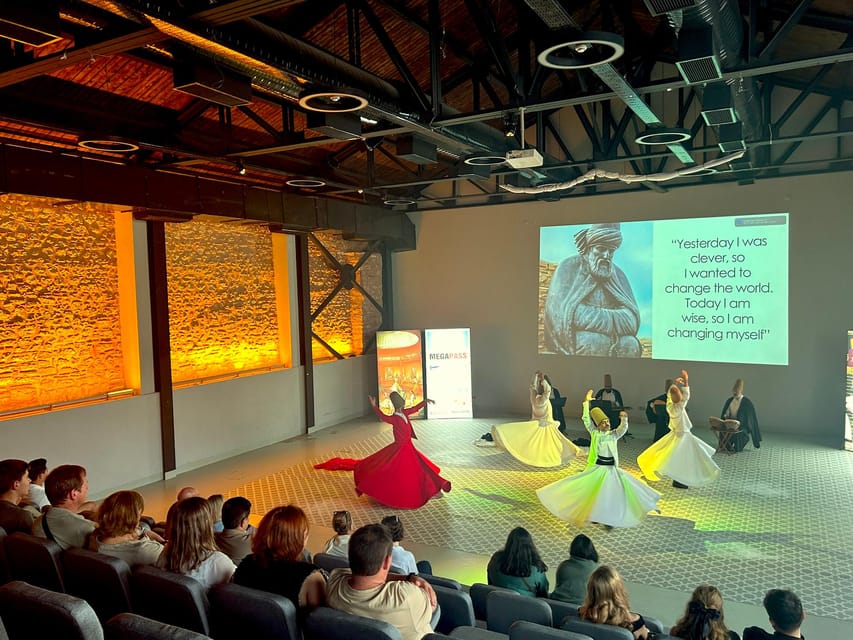
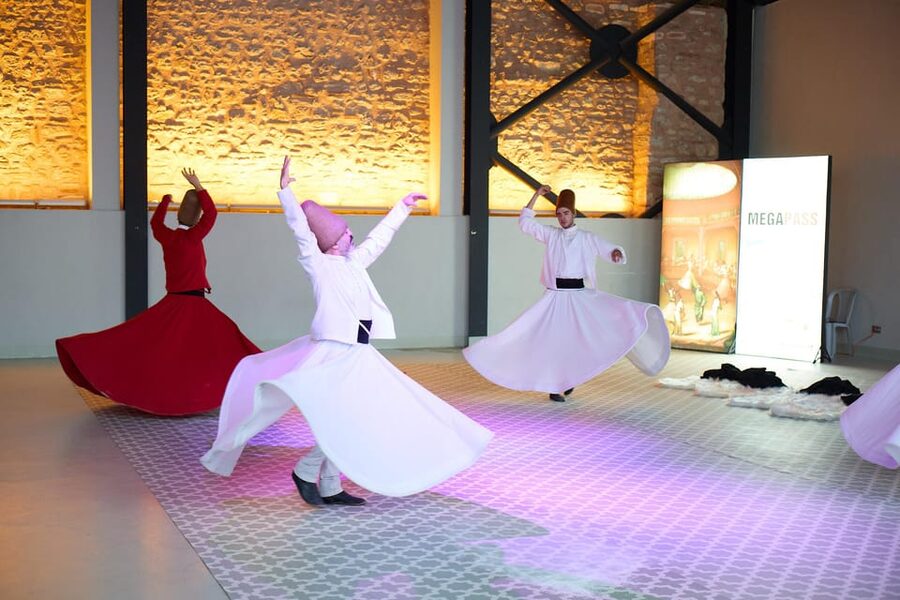
The dervishes enter calmly after the instrumental opening. Their movements begin slowly, then follow the pulse of the music. As the ceremony develops, the turning becomes more continuous and focused.
The familiar image is one arm raised toward heaven and the other lowered toward earth. This symbolizes receiving divine blessing and passing it on to the world. The gestures are part of a wider system of meaning, so the ceremony is best understood as prayer expressed through the body.
The effect can be hypnotic, but the mood is not flashy. You may find the steady turning peaceful, moving, or even challenging if you are not used to religious ceremonies. The event does not try to entertain you with fast changes or theatrical effects.
A visual projection or painted video has appeared in the background, and it has not worked for everyone. Some people felt it distracted from the dervishes or created harsh reflections in photographs. The hall itself gives good sightlines, but photography is not always easy because of lighting and reflected panels.
You may be allowed to take photos and videos, but I would keep your phone away during the main ritual. Looking down at a screen breaks the silence and makes it harder to follow the slow changes in the ceremony. The hosts ask you not to make noise, and that rule is central to the experience rather than a minor house policy.
The ending, questions, and a glass of tea
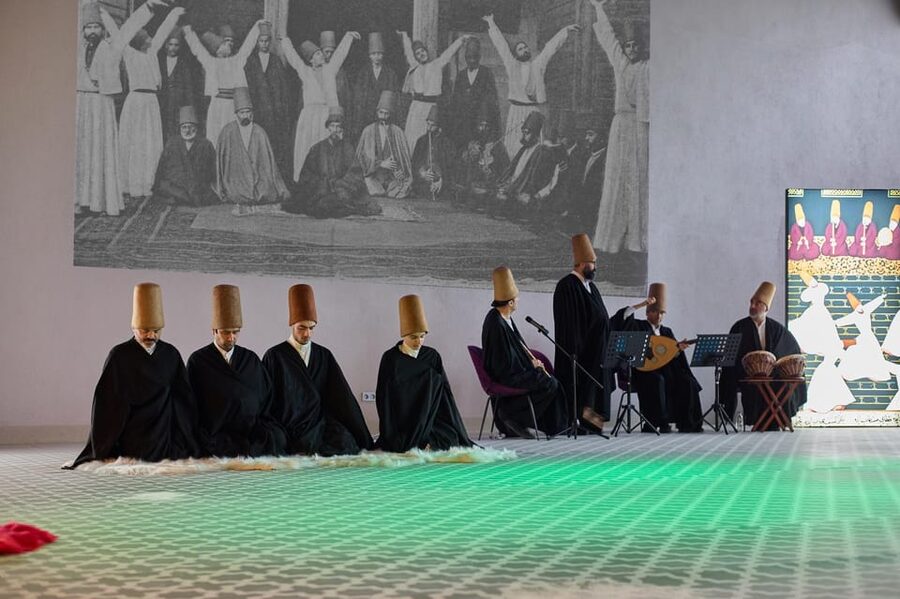
After the ceremony, the host may offer further explanations and answer questions. This is the time to ask about the music, the gestures, Rumi, or the place of the sema in Sufi tradition. The question period may not work for you if the ceremony runs late and you need to leave immediately.
A traditional drink is included on the way out. You can choose tea or sherbet, and water is also provided. It is a modest inclusion, but it gives you a few minutes to talk quietly and absorb what you have seen.
The arts center also supports education and scholarships, according to the information provided at the venue. That adds a practical benefit to the ticket. Your $17 is not only paying for a central Istanbul activity, live musicians, and a cultural presentation. It also helps support an organization connected with arts education.
Is $17 good value?
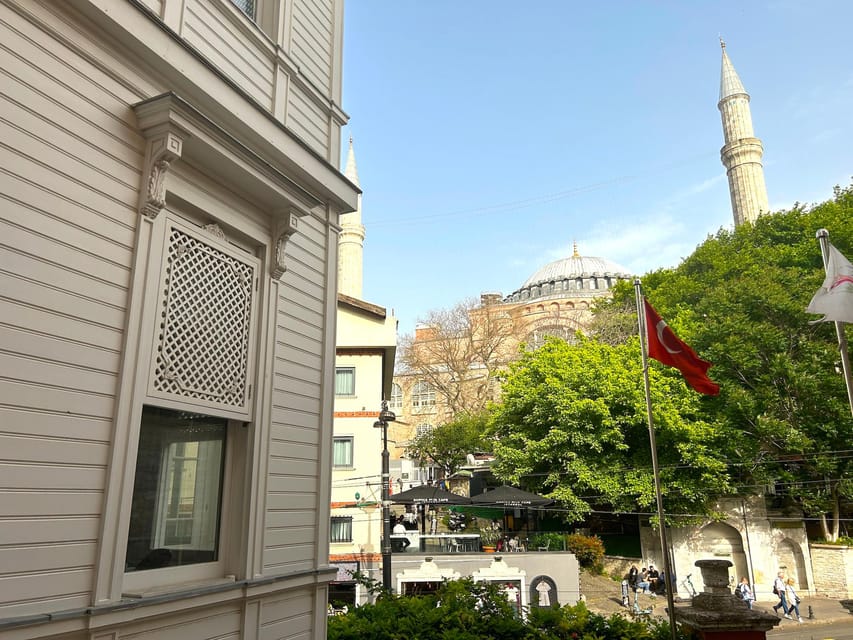
For Istanbul, $17 is a fair price for a 55-minute program in the historic center. You receive entry to the ceremony, live music, an English explanation, a multilingual digital guide, water, and tea or sherbet.
The value depends on your expectations. If you want a full evening program with extensive commentary, food, or several cultural acts, this is too short. A few people felt the ceremony ended sooner than expected. If you want one focused introduction to Sufi ritual, the price is much easier to justify.
The central location is part of the value. You do not need a separate excursion or a long taxi ride. Pair it with nearby sights and it becomes an easy addition to your Istanbul schedule.
Free cancellation up to 24 hours before the start gives you some flexibility, and you can reserve without paying immediately. Check the available start times before booking, since the schedule can vary.
Who will appreciate this most?
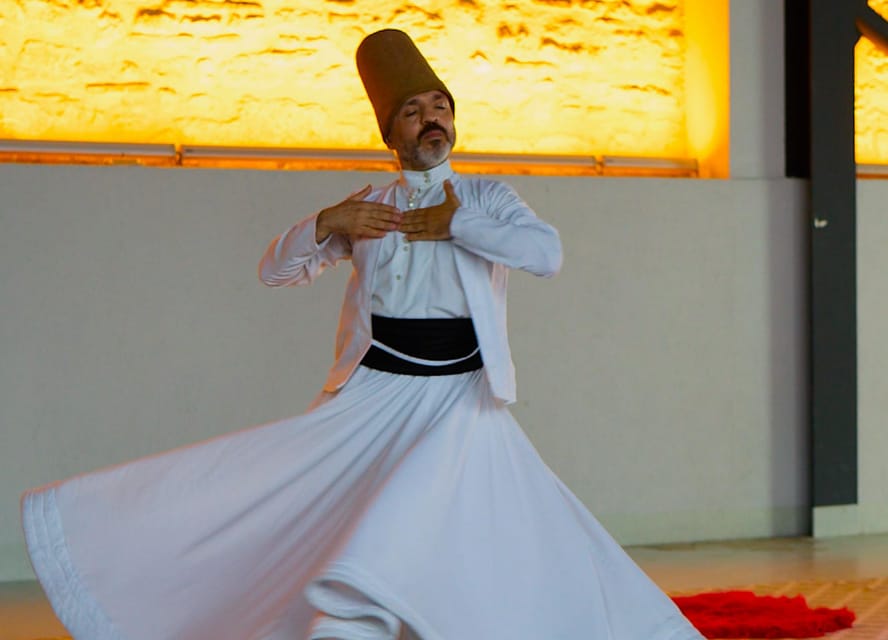
I would choose this ceremony if you want a calm cultural experience between major sightseeing stops. It suits visitors interested in religion, music, Ottoman-era culture, Rumi, or the meaning behind traditional movement.
It is also a good first introduction to whirling dervishes. The host gives enough context to prevent the ritual from feeling completely unfamiliar, while the digital guide lets you continue learning afterward.
You may want to skip it if you need constant action, dislike quiet rooms, or expect a theatrical dance show. The ceremony asks you to sit still, remain silent, and let the music and repeated movement work slowly. Restrooms should be used before or after, since leaving during the ritual would disturb the room.
The experience can suit families with older children, but full-price tickets for young children may make the value less attractive. Children under two are not permitted.
Should you book the Hagia Sophia dervish ceremony?
I would book it if you can give 55 minutes to a quiet, serious ritual. The strongest reasons are the setting beside Hagia Sophia, the live traditional music, the clear introductory talk, and the chance to see local Sufi followers rather than a purely theatrical reproduction.
Go with a little preparation. Read a short introduction to Rumi, arrive early at the white wooden house, sit where you can hear the host, and put your phone away once the ceremony starts. The experience will be more rewarding if you respect it as prayer and culture, not simply as spinning.
At $17, this is an easy choice for a first visit to Istanbul if the subject interests you. It is not for everyone, but for the right visitor it offers a rare hour of stillness in the middle of the historic city.
FAQ
How long does the Whirling Dervish Ceremony last?
The ceremony experience lasts 55 minutes.
How much does the experience cost?
The listed price is $17 per person.
Where is the meeting point?
Meet the host next to the entrance of the Basilica Cistern, at the gate of the large white wooden house.
When does the venue open?
The gate opens 30 minutes before the ceremony starts.
Is the ceremony performed in English?
The live guide and spoken explanations are in English. A digital audio guide is also available in English, German, French, Italian, Russian, Spanish, and Arabic.
Is tea included?
Yes. You receive a local drink, with a choice of tea or sherbet, as well as water.
Can I take photos or videos?
Photos and videos are allowed, but you must remain quiet. Lighting and reflections in the hall may make photography difficult.
Is the venue wheelchair accessible?
The activity is listed as wheelchair accessible. Contact the provider ahead of time, since extra arrangements may be needed.
Can young children attend?
Children under two are not permitted. Older children can attend, but the ceremony requires silence and tickets are generally charged at the full listed price.
Newest Istanbul trips on the site
- Turkey Classics 7 Day Escorted Tour from Istanbul★ 4.5 · 165 reviews
- 7 Day 6 Night Express Turkey Tour★ 5.0 · 37 reviews
- Bosphorus Dinner Cruise with Turkish Music and Live Performances★ 4.0 · 158 reviews
- Bosphorus Dinner Cruise & Show with Private Table★ 5.0 · 24 reviews
- Pearl’s of Turkey – 8 Days★ 5.0 · 38 reviews
- Bosphorus Boat Tour 3 Hour with Asian Side Stop in Istanbul★ 5.0 · 97 reviews
- Turkey Highlights 4 Day Tour from Istanbul Hassle-Free Package★ 5.0 · 91 reviews
- 7 Days Turkey Tour Package – Highlights of Turkey★ 5.0 · 73 reviews
Whirling Dervish Shows, compared.
Istanbul Hodjapasha Whirling Dervishes Show & Exhibition
Our review →
Istanbul Traditional Turkish Dinner and Dervish Experience
Our review →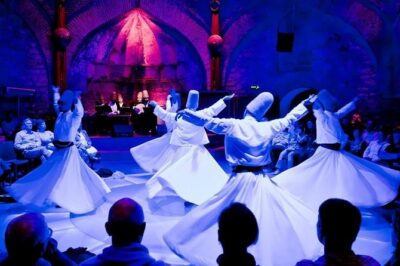
Browse the lists this tour appears in