
Reviewed · IZMIR TOURS
Seven Churches of Revelation 5 Days MINI Group Guided Tour
The most unusual thing about this tour is its focus: in five days, you connect the seven churches named in Revelation with the ruins, roads, temples, theaters, and modern towns that surround them. Pergamon, Sardis, Ephesus, and Laodicea are not just Bible-study stops. They are major ancient sites with enough physical remains to make the old world feel close at hand.
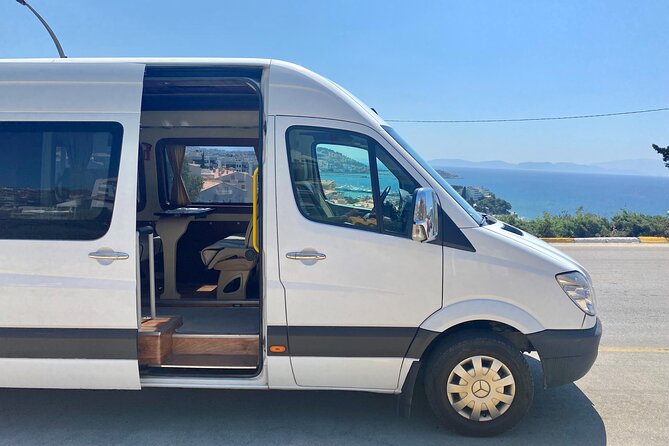
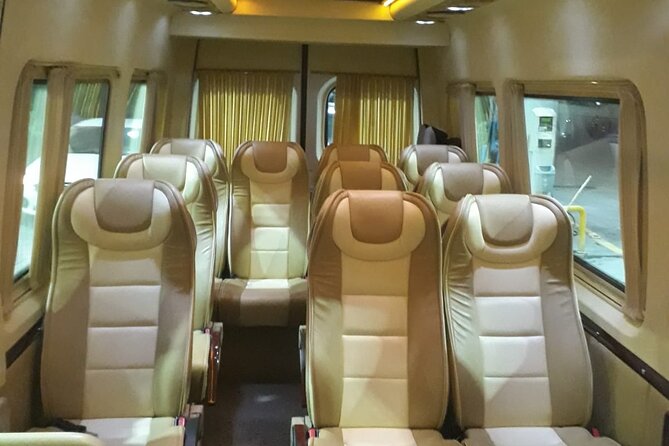
I like the small-group format, which allows time for questions and can sometimes feel almost private. I also like the practical setup: airport pickup, pre-paid entrance tickets, four nights in four-star hotels, and transport by air-conditioned minibus are all handled for you. The main drawback is the pace. You cover a large part of western Turkey, and several days include long drives and plenty of walking.
Key points at a glance
- All seven churches are covered: Pergamon, Thyatira, Smyrna, Sardis, Philadelphia, Laodicea, and Ephesus.
- The Bible-oriented guiding matters: Guides such as Emre Dasdemir, Melih, Kerem Ozbas, Tez, and Nahide have been praised for explaining both scripture and archaeology.
- The group is limited to 15 people: Some departures may be much smaller, even down to two people.
- The price includes useful essentials: Four nights, breakfasts, two dinners, transport, guide services, and entrance fees.
- Pamukkale adds a welcome change of pace: You spend the night at a thermal hotel after visiting Hierapolis and the white mineral terraces.
- Plan for active days: Ancient streets are uneven, and one guest specifically warned to expect a lot of walking.
Why this five-day route is different
Many tours of Turkey pass quickly through Ephesus and perhaps Pergamon. This one is built around the seven churches of Asia Minor, giving you a clear religious and historical thread from one site to the next.
That focus works best if you want more than photographs of ruins. At each stop, the guide connects the location to the letters in Revelation, then adds the political and commercial setting that shaped each city. You learn why Pergamon was powerful, why Thyatira was known for purple dye, why Laodicea became a trading center, and how Ephesus grew into one of the great cities of the ancient Mediterranean.
The tour is also useful for someone who has already seen parts of Turkey. The country can look different when you follow the early Christian story rather than the usual route of palaces, beaches, and famous Ottoman monuments.
The group size is capped at 15, though several departures have operated with only two people. That is a major advantage if you enjoy asking questions or need the guide to adjust the day. The guide may rearrange plans when the group agrees, and smaller groups make that much easier.
More multi-day tours in Izmir:
- Best of Istanbul 1, 2 or 3-Day Private Guided Istanbul Tour
★ 5.0 · 8,922 reviews - Istanbul: 1 or 2-Day Hop-On-Hop-Off Bus Tour Ticket
★ 4.1 · 863 reviews - Antalya/Kemer: 2-Day Cappadocia, Cave Hotel, & Balloon Tour
★ 4.4 · 732 reviews
Arrival in Izmir and the first evening
Your guide or local representative meets you at Izmir Adnan Menderes Airport with a sign bearing your name. The transfer takes you to the hotel, and pickup is also offered if you are already staying in Izmir, generally after 2 p.m.
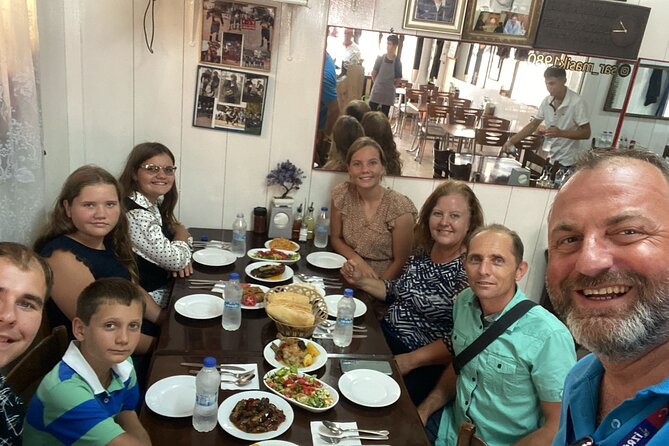
The first night is simple. You settle in, have the included dinner arranged for that evening, and prepare for the first full day. Centrally located four-star hotels are used in Izmir, including DoubleTree by Hilton Alsancak or Hilton Garden Inn Bayrakli, or a similar property.
You should note one small food detail before booking. Four breakfasts and two dinners are included, but drinks and meals not listed are extra. Dinner in Izmir is specifically excluded in the inclusions, so ask the operator to clarify which evening meals are covered.
Pergamon, the city of the Throne of Satan
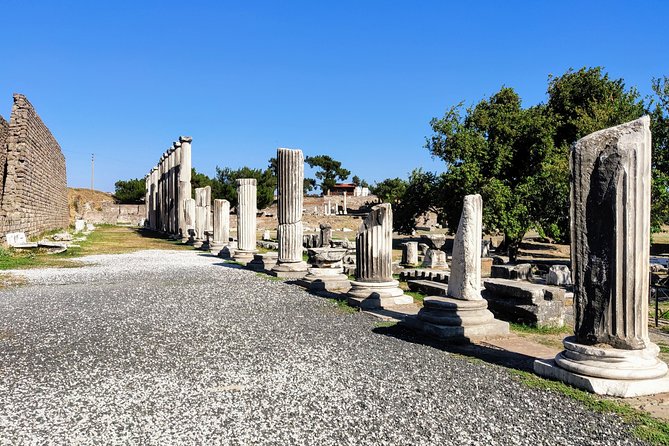
Day two begins with a drive to Bergama, the modern town near ancient Pergamon. This is one of the strongest stops on the route because the ruins are impressive even without the biblical connection.
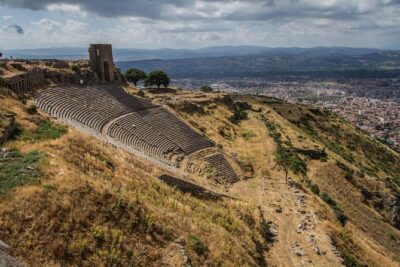
On the Acropolis, you see the steep theater cut into the hillside, the Temple of Trajan, and the remains of the library that once rivaled Alexandria. Pergamon is also linked with the development of parchment, a practical response to the city’s need for writing material when papyrus was harder to obtain.
The tour also visits the Asklepion, an ancient medical center. This gives the site a different feel from a standard temple visit. You can picture Pergamon as a place of healing, study, politics, and religious power, not simply a pile of broken marble.
The altar of Zeus is discussed in connection with the phrase Throne of Satan in Revelation. The wording is powerful, but a good guide should help you separate biblical interpretation from modern assumptions. Emre Dasdemir has been especially praised for giving direct answers and being honest when the evidence is less dramatic than the popular story.
The Pergamon visit takes about four hours, so wear shoes with firm soles and bring water. The steep theater and uneven ancient surfaces make this one of the more physically demanding stops.
Thyatira and the modern town of Akhisar
From Pergamon, the route continues to Thyatira, now Akhisar. The remains here are less grand than Pergamon or Ephesus, consisting mainly of a basilica and architectural fragments from the Roman period.
That does not make the stop unimportant. Thyatira is connected with Lydia, the seller of purple goods from Philippi, and the city was known for its dye production. This is a useful lesson in how commerce and faith traveled together across the Roman world.
The site visit takes about an hour, then you drive back toward Izmir. Because the physical remains are limited, this stop depends heavily on the guide’s explanation. If you prefer spectacular ruins at every stop, Thyatira may feel modest. If you enjoy putting scattered stones into a wider historical picture, it earns its place.
More small-group tours in Izmir:
- Small-Group Full Day Pergamum and Asklepion Tour from Izmir
★ 4.5 · 28 reviews - Cesme: Small Group Boat Tour with Open Buffet Lunch
★ 4.5 · 18 reviews - Antalya/Kemer: Suluada Island Small-Group Boat Tour w/ Lunch
★ 4.4 · 4,207 reviews - Istanbul: Sunset or Day Small-Group Yacht Cruise with Snacks
★ 4.9 · 3,774 reviews
Smyrna and the road to Sardis
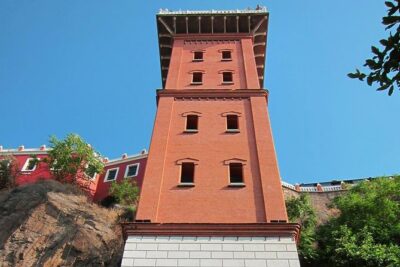
Before checking into the Izmir hotel, you take a panoramic ride through Smyrna, anciently associated with modern Izmir. The route includes a view of the Clock Tower and a look at this large commercial city.
Smyrna is one of the seven churches, but the schedule does not present a major excavation in the same way as Pergamon or Ephesus. That is worth understanding before you book. You see the modern city and receive the historical and biblical context, rather than spending hours among extensive ruins.
The next morning begins early with a drive to Sardis, now Sart. The early start is practical because the route covers a lot of ground. Sardis was the capital of the Lydian kingdom and is presented in Revelation as a church that had a reputation for being alive but was spiritually failing.
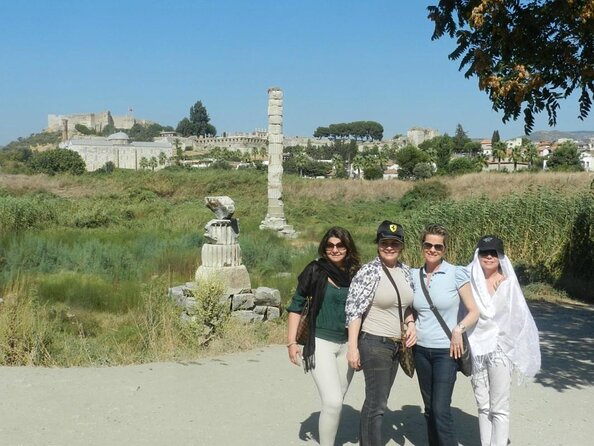
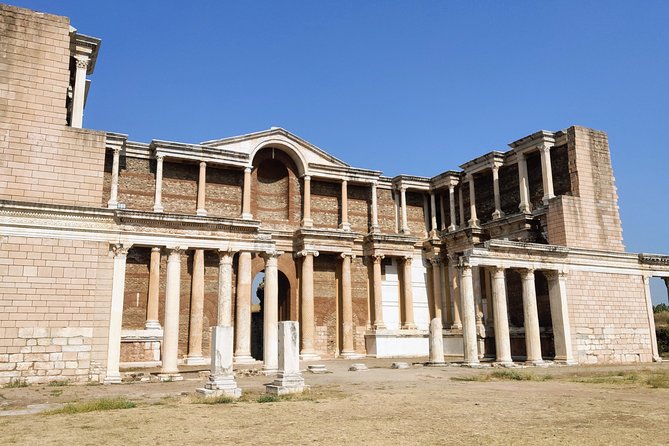
The archaeological remains are rewarding. You visit the Temple of Artemis, the restored gymnasium, and the reconstructed synagogue. You also see the last section of the Persian Royal Road from Susa to Sardis and the Pactolus River, associated with the Lydian story of gold.
Sardis is one of the most picturesque stops on the route, but the visit is only about an hour according to the schedule. You will want to listen closely and move efficiently.
Philadelphia and Laodicea
Philadelphia, modern Alasehir, is remembered as the only church in Revelation not censured. The remains include part of a Byzantine basilica, a high arch, and some eleventh-century frescoes.
Again, this is not a vast ruin field. The value comes from the contrast between the small surviving remains and the importance of the place in the biblical text. The stop lasts about an hour, making it manageable even on a full day.
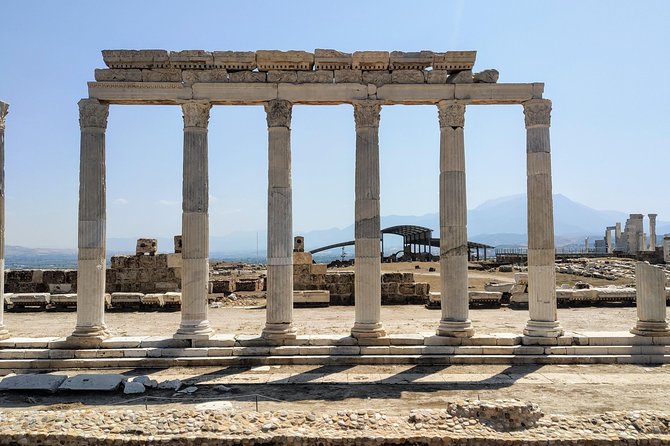
Laodicea follows. Founded in the third century BCE by the Seleucid ruler Antiochus II and named for his wife, the city grew at the meeting point of important roads. Its location gave it commercial and logistical power.
The setting helps explain the message to the Laodicean church. The city’s wealth and trade are not just background facts. They give the biblical language about comfort, wealth, and spiritual indifference a more specific local setting.
The remains at Laodicea are spread over a broad archaeological area, and the one-hour visit can feel short. You should expect to walk on open, uneven ground. The tour gives you the main context, but it is not designed for a slow, specialist archaeological study.
Hierapolis and a night at Pamukkale
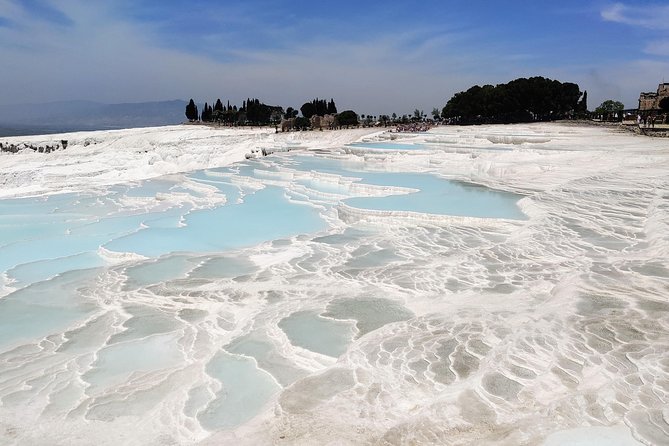
After Laodicea, you continue to Hierapolis and Pamukkale. Hierapolis was a healing center built around hot mineral springs, while Pamukkale is famous for its white mineral terraces and pools.
This is an excellent change of rhythm after several ancient cities. The white formations are striking, but the site can still be tiring because you have already spent much of the day on your feet. A thermal hotel night at Colossae Thermal, Pam Thermal Hotel, or a similar property gives you a chance to rest.
The religious and medical themes also connect nicely with the day’s earlier sites. Ancient people came here for the hot waters, and the city’s prosperity was tied to its position and resources. You see how healing, commerce, and pilgrimage could overlap.
The schedule lists only a brief formal stop for Pamukkale, but the overnight location gives you more comfort than simply passing through. A five-star upgrade is available for an additional $135 per person in a double room.
Ephesus, Mary’s House, and St. John
Day four brings the most famous archaeological site on the tour: Ephesus. The ancient city was founded in the tenth century BCE and later became one of the major centers of the eastern Roman world.
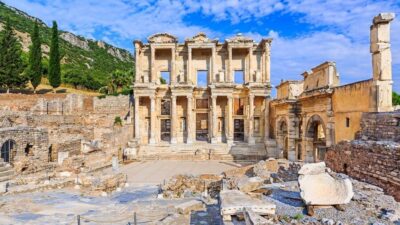
You walk along marble streets past the Baths of Scholastica, the Library of Celsus, the Temple of Hadrian, and the theater. Paul preached here and lived in the city for three years, giving the site a direct place in early Christian history.
The Temple of Artemis is also linked to Ephesus. It was one of the Seven Wonders of the ancient world, though only limited remains survive at the separate stop later in the day. The contrast is useful: famous ancient buildings often survive as fragments, while their historical importance remains much larger than what you can see on the ground.
The Ephesus visit lasts about two hours. That is enough for the major streets and buildings, but not for every corner of the site. Bring a hat and comfortable shoes, since the marble paving can be hard underfoot and the walking adds up across the whole tour.
The House of the Virgin Mary is on the Aladag Mountains, about five miles from Ephesus. The site became a place of pilgrimage after the Archbishop of Izmir declared it such in 1892. Pope Paul VI visited in 1967.
The tour presents the tradition that Mary came to Ephesus with St. John and lived there until her death. The wording is important: this is a religious tradition connected with the site, not a fact that can be established in the same way as the visible Roman buildings. If your visit falls on a Sunday, the guide may be able to arrange attendance at the service, as Tez did for one couple on a past departure.
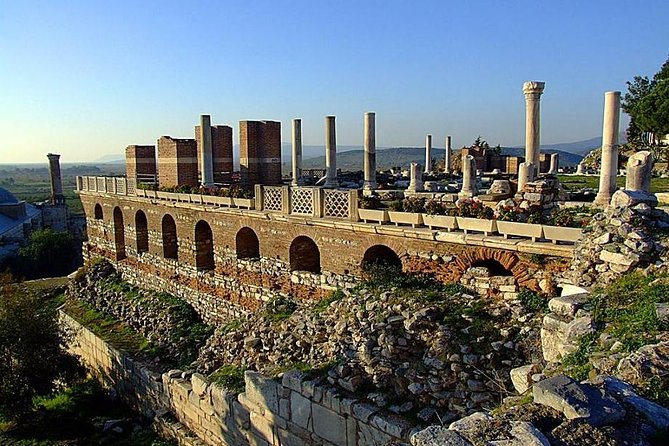
At the Basilica of St. John, you visit the remains of the church built near the place believed to be the evangelist’s burial site. It is another stop where the guide’s ability to explain tradition, archaeology, and uncertainty adds real value.
Artemis and an evening in Kusadasi
The Temple of Artemis stop lasts about 20 minutes and admission is free. You will not see a complete temple. Instead, you see the location and surviving fragments of a building once counted among the ancient wonders.
The day ends in Kusadasi, with a short sightseeing ride through the marina, port, caravanserai, and Grand Bazaar area. You spend the night at Efe Boutique Hotel or a similar property.
Kusadasi is a resort town, so this is the most commercial-feeling part of the route. That can be welcome after several archaeological sites, though you should not expect a long cultural walking tour. The next morning, after breakfast, you transfer to Izmir Airport.
Guides, transport, and the value of $989
At $989 per person, the tour is not a budget bus trip, but the price covers more than the sightseeing itself. You receive four nights in four-star hotels, four breakfasts, two dinners, an air-conditioned minibus, a professional Bible-oriented guide, entrance fees, and airport transfers.
Pre-paid entrance tickets are especially useful at major sites. You avoid spending time at ticket windows, and the guide can keep the group moving. Transport also matters here. The churches are spread across western Turkey, so arranging the same route independently would require careful hotel planning, car rental or private drivers, and constant attention to opening details.
The main value is the guide. Names praised for exceptional service include Emre Dasdemir, Tez, Melih, Kerem Ozbas, Inan, and Nahide, but the assigned guide will vary. Their strengths have included clear biblical explanation, strong historical background, flexibility, and practical help with meals, vendors, transfers, and changes to the daily plan.
You should still budget for drinks, unlisted meals, tips, and any personal purchases. The tour requires at least two people per booking, though the maximum group size is 15. Vegetarian meals are available if requested when you book.
Who should book this tour?
I would choose this tour if you want the seven churches treated as a connected subject rather than seven unrelated sightseeing stops. It suits church groups, couples, families with older children, and anyone who likes asking detailed questions while walking through ancient sites.
It is less suitable if you want lazy mornings, long stays at one ruin, or a relaxed beach holiday. The route is busy, the drives are substantial, and the walking can be demanding. Dress modestly for churches, monasteries, mosques, synagogues, and selected museums. Knees and shoulders must be covered, and shoes must be removed in mosques.
The operator offers a private version for families, which may be worth considering if your group needs a slower pace or more control over stops.
Should you book it?
Book it if the biblical connection is your main reason for visiting western Turkey and you want the practical work handled for you. The strongest reasons are the small group, the unusually focused route, the included entrance fees, and the quality of guide service available.
Think twice if you dislike early starts, long transfers, or modest archaeological remains such as Thyatira and Philadelphia. For the right traveler, $989 is a fair price for a tightly organized five-day journey that covers all seven churches, Ephesus, Pamukkale, and several major ancient cities without requiring you to manage the details yourself.
FAQ
How long is the Seven Churches of Revelation tour?
The tour lasts approximately five days and includes four nights of accommodation.
What sites connected with the seven churches are visited?
The route includes Pergamon, Thyatira, Smyrna, Sardis, Philadelphia, Laodicea, and Ephesus.
Is airport pickup included?
Yes. A representative meets you at Izmir Adnan Menderes Airport with a sign bearing your name and transfers you to the hotel. Departure transfer to the airport is also included.
What type of transport is used?
Transport is provided by an air-conditioned minivan or minibus.
How large is the group?
The maximum group size is 15 people. A minimum of two people is required per booking, and private touring is available for families.
Are hotels and meals included?
Four nights in centrally located four-star hotels, four breakfasts, and two dinners are included. Drinks, meals not listed, and dinner in Izmir are not included.
Is the tour physically demanding?
You should have a moderate level of physical fitness. The route includes considerable walking on uneven ancient surfaces, and one of the tour days includes several archaeological sites.
What should I wear at religious sites?
Knees and shoulders must be covered for both men and women at churches, monasteries, mosques, synagogues, and selected museums. Shoes must be removed in mosques, and entry may be refused if you do not follow the dress requirements.
More 5-Day Experiences in Izmir
- 5-Day Aegean Tour – Gallipoli, Troy, Ephesus, Kusadasi, Pamukkale
★ 4.5 · 86 reviews - 5 Day Enjoy Black Sea Tour
★ 5.0 · 15 reviews
Newest Izmir trips on the site
- Izmir: Çeşme, Alaçatı, Seferihisar and Sığacık Tour★ 3.0 · 16 reviews
- Cesme: Small Group Boat Tour with Open Buffet Lunch★ 4.5 · 18 reviews
- Cesme: Islands and Bays Boat Trip with BBQ Lunch★ 4.7 · 117 reviews
- From Izmir: Full Day Boat Trip around Cesme with BBQ Lunch★ 4.5 · 208 reviews
- Cesme-Alacati Tour from Izmir★ 5.0 · 27 reviews
- Small-Group Full Day Pergamum and Asklepion Tour from Izmir★ 4.5 · 28 reviews
- Alaçatı & Çeşme Chill Tour: Vibes, Streets & Snapshots★ 5.0 · 33 reviews
- Izmir City Tour★ 5.0 · 49 reviews
Izmir Tours, compared.
From Izmir: Full Day Boat Trip around Cesme with BBQ Lunch
Our review →

Alaçatı & Çeşme Chill Tour: Vibes, Streets & Snapshots
Our review →Browse the lists this tour appears in