
Reviewed · TURKISH NIGHT SHOWS
Istanbul: Hodjapasha Rhythm of The Dance Show
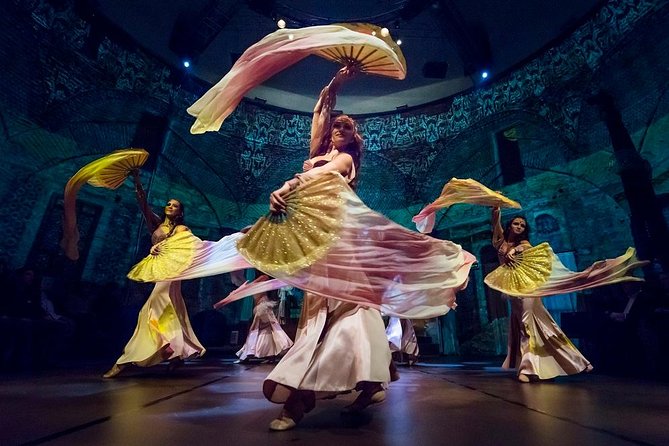
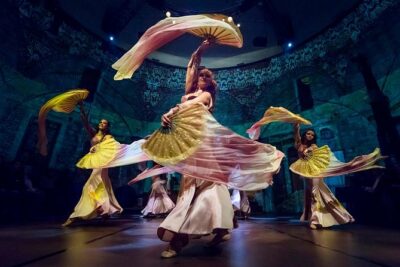
Istanbul’s Hodjapasha Rhythm of the Dance puts you inside a restored 550-year-old Ottoman bath for a fast-moving show of Turkish folk dances. Dancers in striking costumes perform pieces from different parts of Anatolia, joined by live music, strong drumming, modern choreography, lighting, and video projections.
I like the way the 65-minute running time keeps the show lively without taking over your evening. I also like the old hammam setting, assigned seating, and the broad mix of dance styles. The main drawback is that the performance moves quickly and offers little time for explanation, so you get a colorful introduction to Turkish culture rather than a detailed lesson.
Key points to know
- A former 15th-century hammam: The Hodjapasha Culture Center preserves the original feel of an Ottoman bath while hosting a modern stage show.
- Dance from across Anatolia: The program moves through several regional styles, with influences connected to Turkish, Balkan, Arab, and Levant cultures.
- High-energy presentation: Expect live drumming, folk music, belly dance, solo work, audience interaction, and quick changes in mood.
- Assigned seats: Places are allocated in booking order, so booking earlier may help you secure a better position.
- A compact evening activity: The performance lasts about 65 minutes, making it easy to pair with dinner or another Istanbul sight.
- Simple inclusions: Admission, a program booklet, and bottled water are included, but pickup and a bar are not.
Entering the 550-year-old Hodjapasha bath
The setting is half the reason to book this show. The Hodjapasha Culture Center occupies the restored Hodjapasha Hamam, an Ottoman Turkish bath built in the 15th century. Its old masonry and enclosed atmosphere give the performance a more distinctive backdrop than a standard theater.
The building is in Istanbul’s Marmara Region, and the meeting point is the Hodjapasha Culture Center itself. Allow extra time to find the entrance. The approach can feel like a maze of small lanes, and the center is not always obvious at first glance. If you are unfamiliar with the area, arriving early is sensible.
Before the show, you can look at the Dervish exhibition in the foyer. That gives you a small cultural preview before the dancing begins. The building itself deserves a few minutes of attention, so do not arrive at the last possible moment and hurry straight to your seat.
The hall is intimate rather than enormous. That matters because dance depends on seeing faces, hand movements, footwork, and costume details. Several performances have been especially praised for giving the audience a clear view, and the assigned seating helps prevent a rush toward the doors or a scramble for the best place.
More Turkish Night Shows in Istanbul
- Istanbul: Bosphorus Dinner Cruise with Turkish Night Show
★ 4.8 · 10,127 reviews - Istanbul: Bosphorus Cruise with Dinner Show
★ 4.4 · 2,181 reviews - Istanbul: Bosphorus Dinner Cruise with Turkish Night Show
★ 4.6 · 781 reviews
A quick-moving tour through Turkish dance
The show is not presented as one long folk dance. It is a sequence of different numbers, each with its own music, movement, costume, and mood. That variety keeps the 65 minutes moving.
You can expect dances inspired by different parts of Anatolia, along with influences from the wider region. The program has also been described as drawing on Arab, Balkan, and Levant cultures. This is a useful reminder that Turkey sits at a meeting point of several cultural traditions. The show presents that mixture through movement rather than a long spoken explanation.
The professional dancers are the heart of the performance. Their work is energetic and carefully timed, with group pieces giving way to solos and smaller presentations. The choreography combines traditional forms with modern stage movement. If you are hoping for a strictly historical demonstration, this will feel more theatrical. If you want an entertaining introduction to Turkish dance, that blend works well.
The program also includes comic touches and audience interaction. The live drummer is a memorable part of the evening, adding force and rhythm to the show. The drumming gives the performance a physical quality that recorded music alone would not provide.
Costumes, lighting, and music do much of the storytelling
You will not need to understand Turkish to follow the show. Costumes, rhythm, and movement carry much of the meaning. The clothing changes help distinguish one dance from another, while the lighting gives the solo performances a more dramatic feel.
Costumes are among the strongest visual features. Expect bright colors, flowing fabrics, and outfits suited to both traditional group dances and more modern presentations. The effect is theatrical, but the folk roots remain visible in the formations, gestures, and rhythm.
The music shifts with the dances. Some sections are driven by percussion and quick footwork. Others allow the dancers to slow down and use more controlled movements. This variation is important because a 65-minute program of nonstop speed could become tiring. Instead, the show changes pace often enough to hold your attention.
Lighting and video projections add another layer. They help separate the acts and make the solo pieces feel larger than the compact venue might suggest. At times, the visual presentation is more stage production than cultural demonstration. That is worth knowing before you book. You are seeing Turkish traditions adapted for a polished evening performance, not watching an unedited village celebration.
The belly dance and solo performances
The belly dance section is a major crowd-pleaser, but it is not the only solo work in the program. The show also includes a modern solo Sama performance, which gives the evening a more reflective and unusual moment.
The modern Sama piece is especially interesting because it connects the program with the broader tradition of Turkish spiritual and whirling movement, while presenting it through contemporary choreography. It should not be confused with a full sema ceremony by whirling dervishes. The two experiences have different purposes: a sema ceremony is slower and meditative, while Rhythm of the Dance is energetic and theatrical.
That contrast can help you choose between the two performances offered at the center. If you want quiet ritual and contemplation, the dervish ceremony may suit you better. If you want fast changes, colorful costumes, live drumming, and a broad range of dance styles, this show is the better fit. Some people choose both, since the programs offer very different evenings in the same historic venue.
The belly dance presentation brings yet another change of pace. It is lively, polished, and supported by the lighting and music. If you are attending with first-time visitors to Istanbul, this familiar element may make the show easy to enjoy, even for someone who knows little about Turkish folk traditions.
A completely different sort of day out, same corner of Turkiye:
- Istanbul: Bosphorus Dinner Cruise & Show with Private Table
★ 4.8 · 44,561 reviews - Istanbul: Daytime or Sunset Sightseeing Cruise & Audio Guide
★ 4.8 · 14,430 reviews - Best of Istanbul 1, 2 or 3-Day Private Guided Istanbul Tour
★ 5.0 · 8,922 reviews - Istanbul: Basilica Cistern Fast-Track Entry and Audio Guide
★ 4.6 · 7,521 reviews
What the evening feels like from your seat
The show has a clear entertainment focus. Dancers enter and leave in quick succession, music carries the action forward, and the lighting helps mark each new section. There is little downtime, which explains why the hour passes quickly.
Assigned seating is a practical advantage. Seats are allocated on a first-booked, first-served basis, so I would reserve ahead if you care about your position. The hall is intimate, and people have reported having a good view from their places, but earlier booking gives you a better chance of receiving a preferred seat.
The seating system also makes arrival calmer. You do not have to compete with other people for a place once you are inside. This is particularly helpful if you are attending as a family or with older companions.
The performance does not appear to be designed for audience participation throughout, but the dancers and drummer interact with the audience at points. Expect energy directed toward the room, not a formal lecture or guided presentation.
One small limitation is the lack of a bar. Bottled drinking water is included, but you should not plan on ordering wine, beer, or a cocktail during the show. Have your drink beforehand if that matters to you.
Is $32 a fair price?
At $32 per person, the show is not the cheapest way to spend an evening in Istanbul, but the price is reasonable for a professional live performance in a historic venue. Your ticket includes admission, a program booklet, and bottled water. It does not include transport or hotel pickup, so you need to make your own way to the center.
The value comes from the combination of three things: the old Ottoman bath, the professional dance company, and the production elements. You are not paying only for a folk dance demonstration. You are paying for a staged performance with costumes, lighting, projections, live music, and a carefully arranged sequence of acts.
The short length also adds value for a busy schedule. At roughly an hour, you can fit it between sightseeing and dinner without surrendering an entire night. It can work especially well on your first full day, when you may want something lively but not exhausting.
The tradeoff is depth. The program booklet may give you useful context, but the show itself does not appear to pause for detailed explanations of each region or dance. If your main goal is academic background, a museum or cultural talk will offer more. If your goal is a memorable evening with a strong sense of place, the ticket makes better sense.
When to schedule it in Istanbul
This is a useful first-night or early-trip activity. The show is lively, compact, and easy to understand without much preparation. It can help you get into the rhythm of Istanbul without requiring a full evening of translation or formal instruction.
You might also schedule it after a day of museums and historic sights. The performance changes the way you experience Turkish culture. Instead of looking at objects behind glass, you see music, costume, rhythm, and movement working together.
Give yourself time before the start to find the building, check in, and look at the Dervish exhibition in the foyer. The exact starting time can vary, so check availability when booking. Since the venue is reached independently, do not assume pickup from your hotel.
The center is not suitable for wheelchair users, so accessibility should be considered before reserving. For everyone else, the main practical issue is finding the entrance and arriving early enough to enjoy the building without stress.
Who will enjoy this show most?
I would recommend it to anyone who wants an accessible introduction to Turkish dance without committing to a long performance. Families, couples, solo visitors, and older adults can all find something to enjoy in the changing acts and short running time.
It is also a good fit for people who like live music. The drummer receives special attention, and percussion gives several sections their drive. If you prefer quiet, slow, highly structured cultural programs, the speed and theatrical lighting may feel like too much.
The show works well for repeat visitors too. The program has been updated over time, and the mixture of dances and solo acts can change enough to keep a return visit interesting. It is also an appealing choice if you have already seen a whirling dervish ceremony and want a completely different mood at the same venue.
I would be more cautious if you want a detailed explanation of Turkish regional history. You will see dances from many places, but the performance communicates mostly through sound and movement. Think of it as a cultural stage show with traditional roots, not a classroom presentation.
Practical details before booking
The full experience lasts 65 minutes. Admission, a program booklet, and bottled water are included. Pickup service is not included, and there is no bar listed as part of the venue experience.
Seats are allocated according to booking order. Reserve earlier if seating position matters to you. The center is located in the Hodjapasha Culture Center, and you should allow extra time to locate it among the surrounding lanes.
The activity is not suitable for wheelchair users. Free cancellation is available up to 24 hours before the start time, and a reserve-now, pay-later option may be available when you book. Check the current start times and conditions before confirming.
Should you book Hodjapasha Rhythm of the Dance?
Book it if you want a colorful, energetic evening that combines Turkish folk traditions with modern stage production. The historic hammam, live drumming, excellent costumes, assigned seating, and compact running time make it a practical choice for many Istanbul itineraries.
Skip it if you want a slow, devotional performance or detailed cultural commentary. In that case, a sema ceremony or a museum visit may suit you better. For most people seeking an entertaining first look at Turkish dance, the $32 ticket offers a solid evening out, especially when paired with dinner before or after the show.
FAQ
How long is the Hodjapasha Rhythm of the Dance show?
The performance lasts 65 minutes.
Where does the show take place?
It takes place at the Hodjapasha Culture Center, inside a restored 550-year-old Ottoman Turkish bath.
What is included with admission?
Admission, a program booklet, and bottled drinking water are included.
Is hotel pickup included?
No. Pickup service is not included, so you must make your own way to the Hodjapasha Culture Center.
Are seats assigned?
Yes. Seats are allocated on a first-booked, first-served basis.
Should I arrive early?
Yes. The center can be difficult to locate among the surrounding lanes, particularly if you do not know the area.
What kind of dancing is featured?
The show presents traditional dances from different regions of Anatolia, along with modern choreography, belly dance, solo performances, live music, and drumming.
Is this the same as a whirling dervish ceremony?
No. The center also presents a sema ceremony, but Rhythm of the Dance is a faster, more theatrical program with several folk dance styles.
Is the show wheelchair accessible?
The activity is not suitable for wheelchair users.
Can I cancel my booking?
You can cancel up to 24 hours in advance for a full refund. A reserve-now, pay-later option may also be available when booking.
Newest Istanbul trips on the site
- Turkey Classics 7 Day Escorted Tour from Istanbul★ 4.5 · 165 reviews
- 7 Day 6 Night Express Turkey Tour★ 5.0 · 37 reviews
- Bosphorus Dinner Cruise & Show with Private Table★ 5.0 · 24 reviews
- Bosphorus Dinner Cruise with Turkish Music and Live Performances★ 4.0 · 158 reviews
- Pearl’s of Turkey – 8 Days★ 5.0 · 38 reviews
- Bosphorus Boat Tour 3 Hour with Asian Side Stop in Istanbul★ 5.0 · 97 reviews
- 7 Days Turkey Tour Package – Highlights of Turkey★ 5.0 · 73 reviews
- Turkey Highlights 4 Day Tour from Istanbul Hassle-Free Package★ 5.0 · 91 reviews
Turkish Night Shows, compared.


Turkish Night at Cave Restaurant with Dinner and Unlimited Drinks
Our review →
Dinner Cruise On The Bosphorus with Turkish night show
Our review →
Istanbul Bosphorus Dinner Cruise and Turkish Night Show with DJ
Our review →Browse the lists this tour appears in