
Reviewed · CASTLE & PALACE TOURS
Istanbul: Dolmabahce Palace & Harem Skip-the-Line Entry
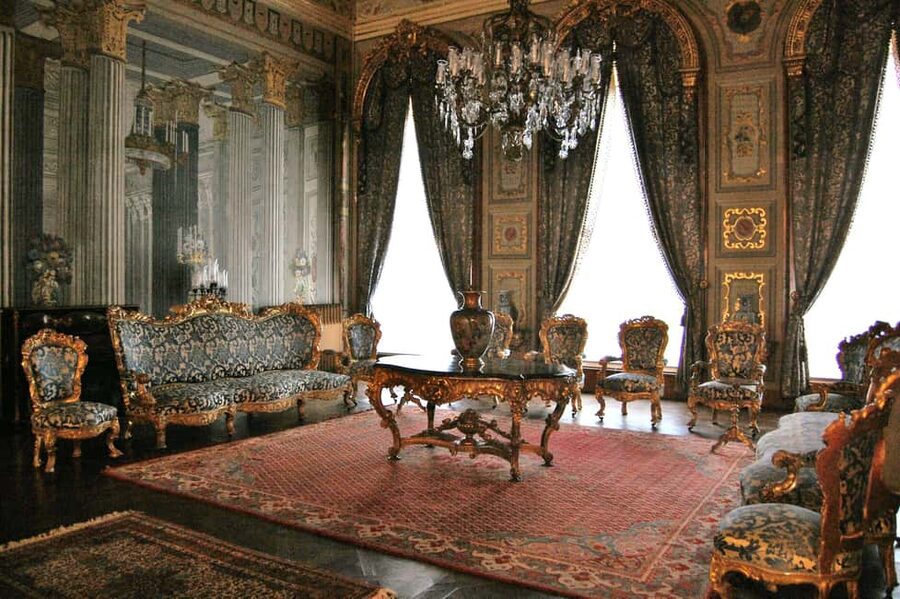
Dolmabahçe Palace is where Ottoman grandeur reached its most polished, expensive, and slightly overwhelming form. Built for Sultan Abdülmecid I and opened in 1856, it replaced the older Topkapı Palace as the empire’s main residence. Inside, you’ll find gilded ceilings, lavish furniture, and a world-famous collection of Baccarat and Bohemian chandeliers, including the largest Bohemian chandelier ever made.
I like the skip-the-ticket-line access, especially during the busy summer months. I also like having the audio guide in 25 languages, since the palace is large enough that a little context makes the rooms far more meaningful. The main catch is that the entry process is not always completely direct: your QR code may need to be exchanged for an official museum ticket, and security checks can still create a wait.
The visit lasts about two hours and costs $55 per person. That price makes the most sense if you value convenience, need a language other than English, or want the Harem included. If you simply want to walk through the palace without explanations, you may find the cost high.
Key points before you book

- The palace replaced Topkapı as the Ottoman court’s main residence: Expect European-inspired decoration rather than Topkapı’s courtyards and tiled chambers.
- The chandelier collection is a major reason to visit: Baccarat and Bohemian crystal dominate the grand ceremonial rooms.
- The Harem is included: Check that your ticket specifically includes the Harem section before entering.
- The audio guide arrives by email: It is supplied through a link from Istanbul Tourist Pass® and is not available for pickup at the palace.
- A live guide may not walk through the interiors: Museum rules can limit guides to an introduction outside, especially for groups larger than five.
- Monday is the weekly closing day: From November 1 to March 31, opening hours are approximately 9:00 AM to 4:00 PM.
Why Dolmabahçe feels different from Topkapı
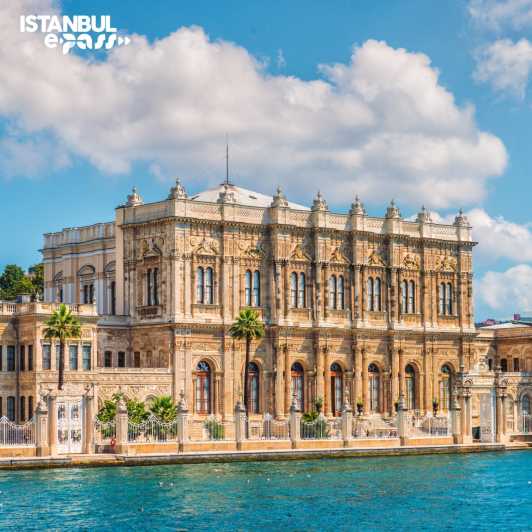
If Topkapı Palace feels like an Ottoman sultan’s older world of courtyards, tiled rooms, and Islamic design, Dolmabahçe feels like the empire trying to compete with the grand palaces of Europe. Sultan Abdülmecid I ordered its construction as the Ottoman court looked westward and sought a more modern royal image.
That change is visible at once. Dolmabahçe favors formal halls, sweeping staircases, European furniture, enormous crystal fixtures, and vast areas of gold decoration. The scale is intentional. This palace was meant to impress ambassadors, court officials, and anyone lucky enough to enter.
The building also carries a final chapter of Ottoman history. It served as the empire’s last headquarters until 1922, when the Ottoman state came to an end. Later, Mustafa Kemal Atatürk used Dolmabahçe and died there in 1938. The palace is therefore more than a collection of grand rooms. It connects the final Ottoman years with the birth of modern Turkey.
I find that context useful because the decoration can otherwise blur into one long parade of gold and crystal. Once you understand the palace as a statement of imperial ambition and decline, the rooms become easier to read.
More Skip-the-Line Tickets in Istanbul
- Istanbul: Basilica Cistern Fast-Track Entry and Audio Guide
★ 4.6 · 7,521 reviews - Istanbul: Hagia Sophia Skip-the-Line Ticket & Museum Option
★ 3.7 · 4,958 reviews - Istanbul: Basilica Cistern Skip-the-Line Entry Ticket
★ 4.6 · 2,270 reviews
Getting through the entrance and security check
Your QR codes arrive in a separate email from Istanbul Tourist Pass®, so check your inbox before leaving for the palace. Do not rely only on the QR code inside the booking app. One visitor had trouble with an app code, and another had to wait at the information desk when the code did not work correctly.
The phrase skip the line needs a little explanation. It generally helps you avoid buying a standard ticket at the main ticket queue, but you still need to pass through security. At busy times, you may also need to visit an information desk and receive the museum’s own ticket.
That means the experience is not always walk straight in. The time saved can still be worthwhile, particularly in summer, but allow extra time for security and ticket handling. Even winter can bring queues, though the palace is usually less crowded then.
Your meeting point depends on the option you book. Read the supplier’s instructions carefully and keep the ticket email available on your phone. A charged phone matters here because the audio guide and entry details are both digital.
The palace tour, room by room
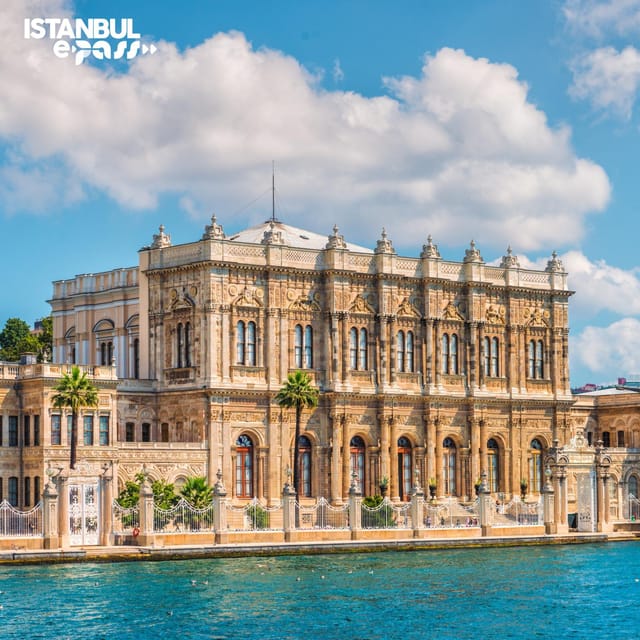
The basic visit gives you access to the palace with a self-guided audio program. You move through the building at your own pace, stopping when a room catches your attention and listening to explanations in your chosen language.
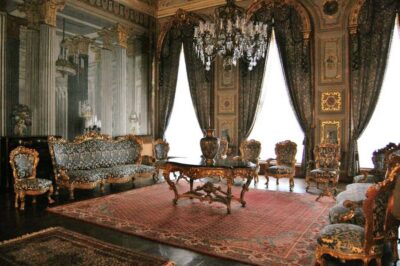
The ceremonial rooms are the main event. Expect lavish ceilings with extensive gold work, formal furniture, elaborate decoration, and crystal lighting that fills the rooms from above. The sheer amount of ornament can be hard to take in all at once, so I suggest pausing in each major hall instead of rushing from one room to the next.
The chandelier collection is one of the palace’s strongest features. Baccarat and Bohemian pieces appear throughout the royal interiors, and the largest Bohemian chandelier is a particularly memorable sight. You do not need to be an expert in decorative arts to appreciate the effect. These fixtures were designed to show wealth, access, and imperial power.
The palace’s furniture also helps explain its difference from Topkapı. Dolmabahçe uses more European-style furnishings and a more formal arrangement of rooms. If you have already visited Topkapı, this contrast gives you a useful picture of how Ottoman taste changed during the nineteenth century.
The audio guide is most useful here. Without explanations, the rooms can feel like a series of beautiful but similar halls. With the narration, you can connect the decoration to the sultans, the building’s construction, and the political changes of the period.
The supplied audio guide supports English, German, Russian, Persian, Arabic, French, Italian, Chinese, Dutch, Spanish, Hindi, Romanian, Ukrainian, Korean, Turkish, Bulgarian, Polish, Swedish, Japanese, Indonesian, Greek, Hungarian, Portuguese, Urdu, and Croatian. Since the link comes with your ticket, set it up before you enter rather than trying to solve technical problems in the first room.
The Harem and the quieter side of royal life
The Harem section is included with this entry, but it is worth checking your actual ticket before you arrive. One visitor was refused entry because the required paper ticket was missing, even though a QR code had been provided.
The Harem offers a different mood from the grand public rooms. The ceremonial palace shows how the Ottoman court presented itself to the outside world. The Harem points more toward the private life of the imperial family and the internal organization of the royal household.
You should not expect a fully guided walk with a live historian through every room. Depending on the option and current museum rules, you may receive a short explanation outside and then continue independently. This is where the audio guide earns its keep.
Allow enough time for both the main palace and the Harem. Some people complete the palace in about an hour, while others spend close to the full two hours moving slowly, listening to the narration, and pausing in the rooms. There is also a café near the Harem entrance, a useful spot for a cold drink before continuing.
More palaces and castles in Istanbul:
- Istanbul: Topkapi Palace & Harem Museum Ticket & Audio Guide
★ 4.1 · 3,977 reviews - Istanbul: Topkapi Palace and Harem Guided Tour with Ticket
★ 4.8 · 1,726 reviews - Basilica Cistern &Topkapi Palace &Hagia Sophia Combo Tickets
★ 4.6 · 1,306 reviews - Istanbul: Topkapi Palace & Harem Tour Skip-the-Line Ticket
★ 4.1 · 1,112 reviews
What the audio guide adds
The audio guide is not a small extra. It is the central explanation included with this booking because a live guide is not part of the standard price.
The narration helps you understand three things:
- Why Abdülmecid I commissioned the palace
- How Dolmabahçe differs from Topkapı
- Why the palace mattered during the final Ottoman years and the early Turkish Republic
I like the freedom of an audio visit. You can stop for photographs outside, move at your own pace, and spend more time in rooms that interest you. You are not tied to a group schedule or waiting for everyone to catch up.
The drawback is that the audio guide requires your phone and a working internet connection to access the supplied link. Because the guide is provided by the tour operator rather than the palace, you cannot simply ask the museum to issue another one at the entrance.
The narration is generally considered useful, though it may not satisfy visitors who want detailed questions answered in real time. If you enjoy personal discussion, consider adding a private guide, but confirm exactly where that guide may accompany you. Museum regulations can prevent guides from walking through the interior.
Choosing the live guide option
A private guide is available as an additional option. This may suit you if Ottoman architecture is a main interest, if you prefer conversation to recorded narration, or if you are visiting with family members who may not want to use an audio device.
There is an important limitation. Guides may be required to give their main explanation outside the palace and then leave you to explore the rooms alone. This rule has affected groups of more than five, and it means a private guide does not always equal a fully guided interior visit.
Past bookings have included guides called Ilke, Furkan, John, Adam, Ozzy, and Zey, but guide assignment is not guaranteed. If a named guide matters to you, ask before booking rather than assuming that person will lead your visit.
The strongest guided experiences offer a useful explanation before entry, then let you explore with the audio guide inside. That combination can work well, but you should not pay extra expecting a guide to narrate every room if the museum does not permit it.
Photos, timing, and practical limits
Indoor photography is not allowed, according to the visitor information associated with this experience. That can be disappointing, especially when you reach the great chandeliers and gilded ceilings. Take your time looking rather than treating the visit as a photo stop.
The gardens provide a change of pace and are worth including in your visit. The palace grounds help you see the relationship between the enormous building and the waterfront setting, though the supplied details do not specify how much garden access is available at every time of day.
The stated duration is two hours, which is a sensible target. One hour may be enough for a brisk palace visit, but you will have less time for the Harem, audio narration, gardens, and café. If you are visiting in winter, note that the palace closes on Mondays and operates approximately from 9:00 AM to 4:00 PM between November 1 and March 31.
Security checks are mandatory. Busy hours can produce delays even with skip-the-line entry, so avoid scheduling a tight connection immediately afterward.
Is $55 good value?
At $55 per person, this is not the cheapest way to see an Istanbul palace. The value comes from the combination of palace admission, Harem access, digital convenience, and the multilingual audio program.
I think the price is fair for visitors who want the Harem and who would otherwise struggle with language options. It is also more attractive during crowded periods, when avoiding the standard ticket process may save useful time.
The value is weaker if you are happy to visit quickly, do not need an audio guide, or already have another Istanbul pass that includes the palace. It is also weaker if you expect a live guide to remain beside you inside every room.
The cancellation terms are flexible: you can cancel up to 24 hours in advance for a full refund. You can also reserve now and pay later, which helps if your Istanbul schedule is still changing.
Who should book this experience?
I would choose it for first-time visitors who want to understand the palace without committing to a long private tour. It also suits families or mixed-language groups because the audio guide supports 25 languages and lets each person move at a comfortable pace.
Architecture fans will appreciate the contrast with Topkapı. Anyone interested in Atatürk should also make time for the palace because Dolmabahçe connects the end of the Ottoman Empire with the founding period of modern Turkey.
I would hesitate if your top priority is a fully guided interior tour. In that case, contact the supplier first and ask how the museum’s current guide rules apply to your group. You may find the standard audio option gives you the same access with fewer expectations.
Should you book Dolmabahçe Palace and Harem?
Book this experience if you want the palace’s grand rooms, Harem, and a multilingual audio guide in one package. The chandeliers and gold ceilings are impressive, but the visit becomes much more rewarding when you understand why the Ottomans built such a European-style palace so late in the empire’s life.
Bring the QR code from the separate email, allow time for security, and do not assume skip-the-line means no waiting at all. If you accept those limits, the two-hour visit offers a clear and convenient way to see one of Istanbul’s most lavish royal buildings.
FAQ
How much does the Dolmabahçe Palace and Harem experience cost?
The listed price is $55 per person.
How long does the visit last?
The stated duration is two hours, though you may spend less time inside if you move quickly.
Is the Harem included?
Yes. The ticket includes entry to Dolmabahçe Palace and the Harem section. Check that your received ticket shows both areas before entering.
Is a live guide included?
No. The standard experience includes an audio guide. A private guide is available as an additional option.
In how many languages is the audio guide available?
The audio guide is available in 25 languages, including English, German, French, Italian, Spanish, Chinese, Arabic, Turkish, Japanese, Korean, Portuguese, and Croatian.
How do I receive the audio guide?
The audio guide is provided through a link sent with your ticket by Istanbul Tourist Pass®. It cannot be collected at the palace.
Does skip-the-line entry eliminate all waiting?
No. All visitors must pass through security, and busy periods can bring delays. Some visitors may also need to exchange the QR code for an official museum ticket at the information desk.
Is Dolmabahçe Palace open on Mondays?
No. The palace is closed on Mondays.
What are the winter opening hours?
From November 1 to March 31, the opening hours are approximately 9:00 AM to 4:00 PM. Check the available starting times when booking.
Newest Istanbul trips on the site
- Turkey Classics 7 Day Escorted Tour from Istanbul★ 4.5 · 165 reviews
- 7 Day 6 Night Express Turkey Tour★ 5.0 · 37 reviews
- Bosphorus Dinner Cruise with Turkish Music and Live Performances★ 4.0 · 158 reviews
- Bosphorus Dinner Cruise & Show with Private Table★ 5.0 · 24 reviews
- Pearl’s of Turkey – 8 Days★ 5.0 · 38 reviews
- Bosphorus Boat Tour 3 Hour with Asian Side Stop in Istanbul★ 5.0 · 97 reviews
- 7 Days Turkey Tour Package – Highlights of Turkey★ 5.0 · 73 reviews
- Turkey Highlights 4 Day Tour from Istanbul Hassle-Free Package★ 5.0 · 91 reviews
Castle & Palace Tours, compared.

Topkapi Palace & Harem Museum Ticket & Audio Guide
Our review →
Basilica Cistern & Topkapi Palace & Hagia Sophia Combo Tickets
Our review →

Dolmabahce Palace & Harem Fast-Track Entry with Audio Guide
Our review →

Browse the lists this tour appears in