
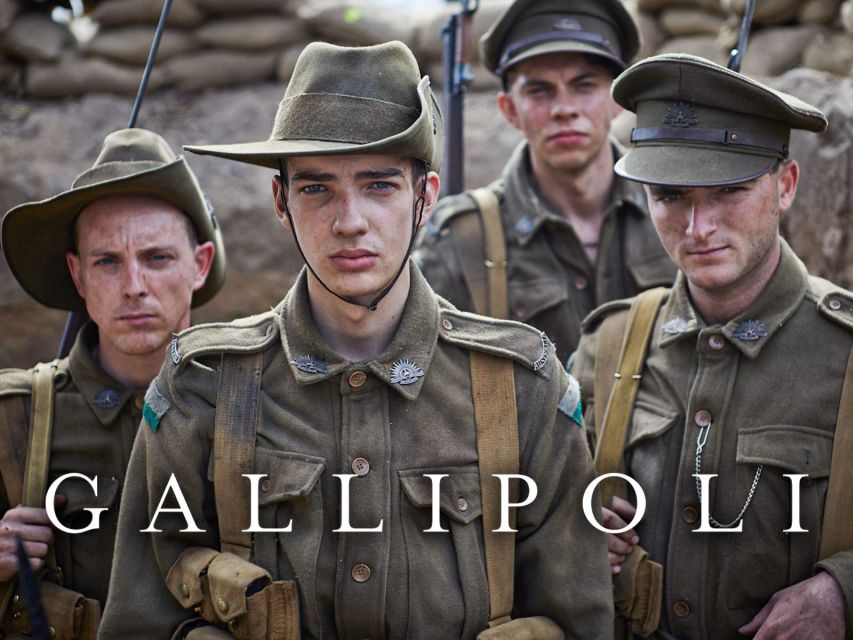
Reviewed · GALLIPOLI TOURS
From Istanbul: Gallipoli and Anzac Full-Day Tour
Gallipoli is not a quick sightseeing stop. It is a long, emotional day at a place where military history feels close under your feet. You will see Anzac Cove, Ariburnu Cemetery, Lone Pine, Chunuk Bair, Turkish gun batteries, and other sites tied to the 1915 campaign, then return to Istanbul late at night.
I like the small group size, limited to 15 people, and the way the best guides use maps, photographs, soldier stories, and humor to explain both the Turkish and Anzac sides. I also like that hotel pickup, lunch, transport, and entry fees are covered, which makes a difficult day trip easier to manage.
The drawback is the schedule: pickup begins around 6 AM, the drive takes roughly four hours each way, and you may not reach Istanbul until about 11 PM. This is a serious history day, not a relaxed outing, and the long ride is part of the price of seeing Gallipoli from Istanbul.
Key points to know before you book
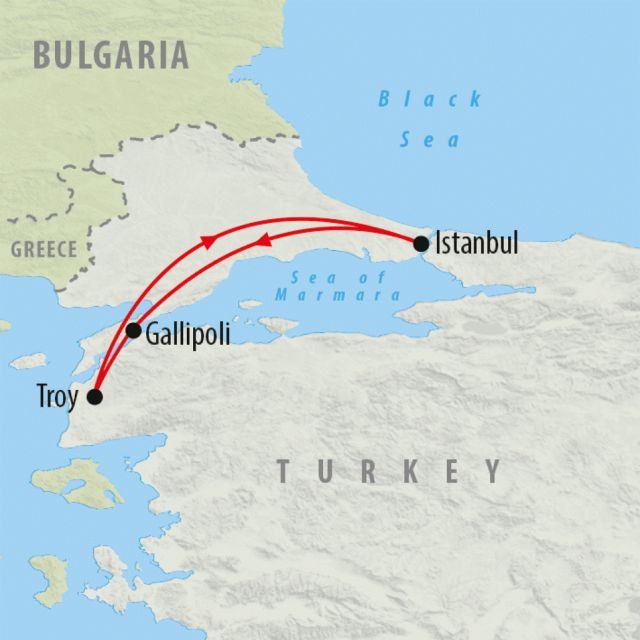
- The day lasts about 15 hours, with early hotel pickup and an evening return to Istanbul.
- Anzac Cove, Lone Pine, and Chunuk Bair form the emotional heart of the battlefield visit.
- Guides such as Burak, Ibrahim, Ibo, Charlie, Bulent, and Hassan are praised for clear English, humor, and strong command of the campaign.
- Lunch in Eceabat is included, while breakfast and drinks cost extra.
- The group is capped at 15, allowing more room for questions than a large coach tour.
- Pickup is limited to central hotels on Istanbul’s European side, including Sultanahmet, Taksim, Sirkeci, Şişli, Laleli, Topkapı, and nearby areas.
Why Gallipoli deserves a full day from Istanbul
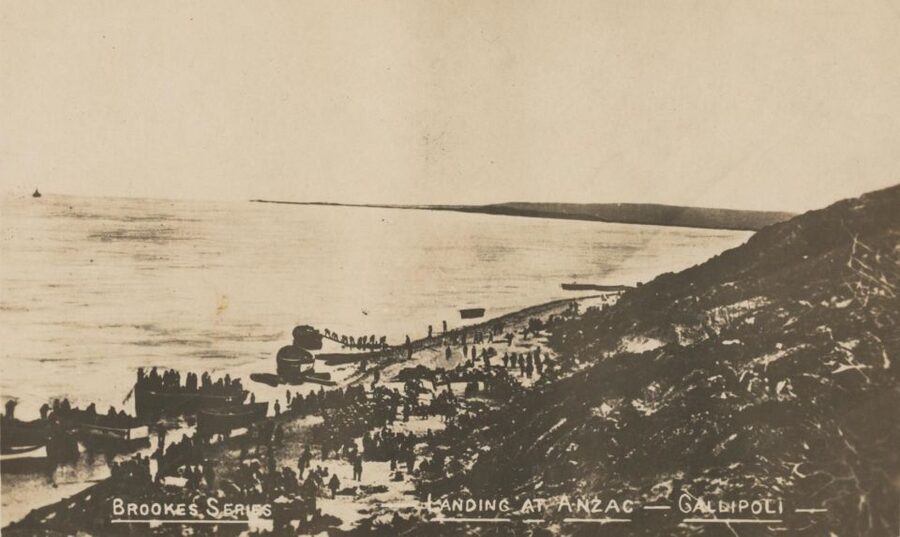
The Gallipoli Campaign was an Allied attempt during World War I to force a supply route through the Dardanelles toward Russia. British Empire forces, including Australian and New Zealand troops, landed alongside French forces and fought Ottoman troops across a narrow, rugged peninsula.
The campaign failed, and the human cost was severe. Gallipoli also became a defining national story for Australia, New Zealand, and modern Turkey. You do not need to arrive with a specialist’s grasp of the war. A good guide can explain the military plan, the mistakes, the terrain, and the personal stories in a way that makes the visit understandable.
I value this tour because it does not treat Gallipoli as a collection of monuments to photograph and leave behind. The stops are connected. You see where troops came ashore, where they tried to move inland, and where they were eventually held or buried.
The focus is also not limited to the Anzac story. Guides explain the Turkish defense and the Ottoman experience as well. That balance matters at Gallipoli, where remembrance is shared by former opponents.
More day trips in Gallipoli:
- Istanbul to Gallipoli Full Day Tour with Lunch and Transfers
★ 5.0 · 567 reviews - Gallipoli Full-Day Tour from Istanbul
★ 4.9 · 468 reviews - Troy: Full-Day Tour from Istanbul
★ 4.7 · 312 reviews
The early start and four-hour journey
Pickup for Taksim hotels is generally between 6 AM and 6:20 AM. Sultanahmet pickups are usually between 6:30 AM and 7 AM. The exact time and meeting point can vary by hotel, so I would confirm them before going to bed.
You first travel by air-conditioned, nonsmoking coach toward the Dardanelles. The vehicle is described as comfortable, and several guides remain with the group during the day. The small group limit helps, but the vehicle may still be a minibus or small coach rather than a private car.
A breakfast stop is scheduled around 9:30 to 10 AM. An open buffet breakfast is available for an additional cost, so you should not assume it is included in the $159 price. Drinks are also extra.
The drive is long, but the rest stop matters. You have a chance to use clean facilities, eat, and stretch before the battlefield program begins. I would bring water, sunglasses, and a light layer, along with comfortable shoes. Large bags and luggage are not allowed, so pack for a day out rather than an overnight trip.
Eceabat lunch and the first view of the Dardanelles
On arrival in Eceabat, lunch is served at a restaurant with views across the Dardanelles. The meal is included, which is useful because there is no need to spend time searching for a restaurant during a tightly planned afternoon.
The lunch is generally described as tasty and substantial. One practical limitation is that the included meal does not appear to offer much choice, and drinks are not part of the package. One person found the meal adequate but wished for a dessert choice and more nonalcoholic drink options. I would keep that expectation in mind.
Eceabat is also where the day shifts from transport to interpretation. The guide begins with an overview near the narrowest point of the Dardanelles. This helps you understand why the strait mattered so much. The waterway was the route the Allies hoped to control, and the Ottoman defenses were built around preventing that passage.
Kilitbahir Castle and the Ottoman side of the story
Kilitbahir Castle is a memorable early stop. Fatih Sultan Mehmet built the 15th-century fortress in 1463 to protect the Dardanelles. Its presence gives you a clear reminder that this waterway had military value centuries before World War I.
The castle is especially useful as context. Gallipoli was not an isolated battlefield chosen at random. The strait had long been a strategic gateway between Europe and Asia, and the Ottoman defenses reflected that importance.
You may not spend a long time inside the castle, since the afternoon includes many battlefield stops. Still, seeing the fortress from the road or nearby viewpoint gives the guide a strong visual starting point before the discussion turns to 1915.
More full days out in Gallipoli:
- Troy Full-Day Guided Tour incl. Transfer, Ferry Tickets w/Lunch
★ 5.0 · 126 reviews - Full-Day Troy Tour From Istanbul
★ 4.5 · 123 reviews - Canakkale: Full-Day Troy and Gallipoli Tour
★ 4.8 · 79 reviews - Gallipoli Full-Day Tour from Istanbul
★ 4.8 · 47 reviews
Anzac Cove and the difficult first landing
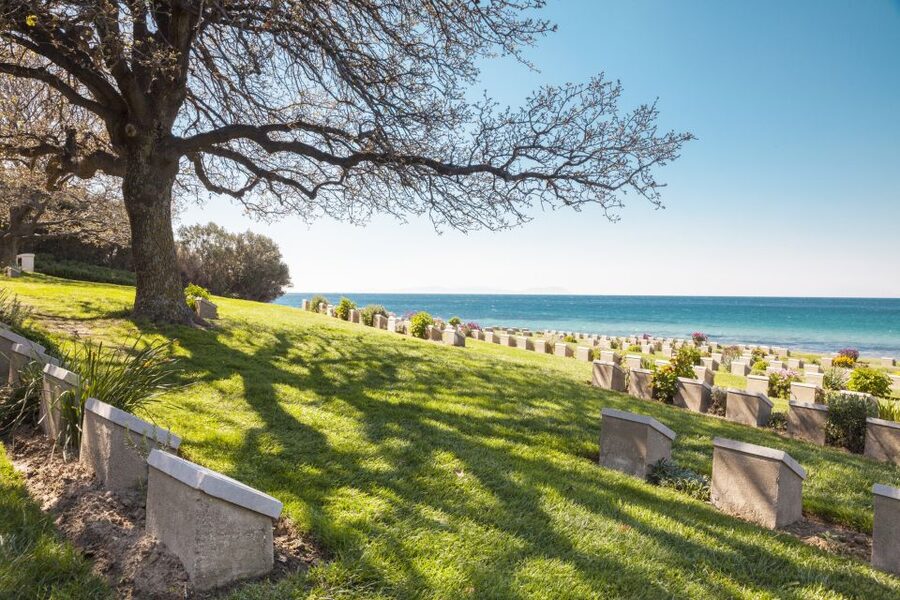
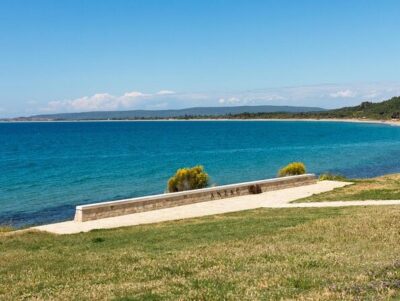
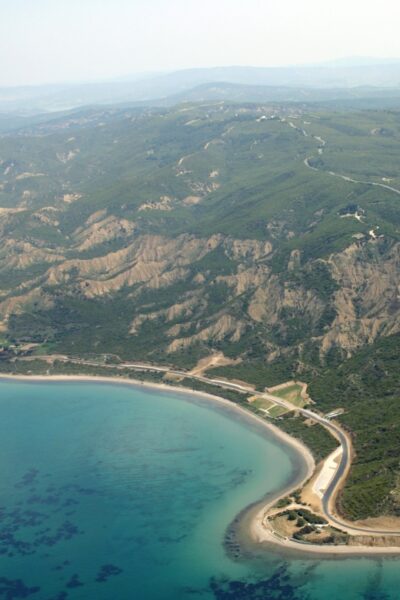
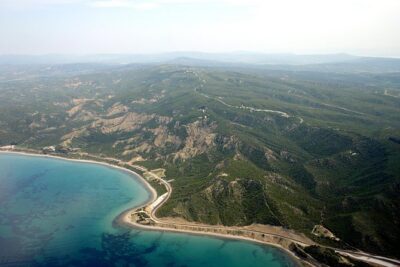
The route then reaches the beaches associated with the Gallipoli landings. Anzac Cove was the main base for Australian and New Zealand troops after they came ashore. The physical setting helps explain the problem immediately: the landing beaches sit below steep, uneven ground, making movement inland hard and dangerous.
This is one of the places where a good guide makes the difference. The best explanations use maps, photographs, and quotations to show what soldiers faced rather than simply naming dates and units. Burak, also spelled Barak or Borak in some accounts, is especially praised for combining precise history with a good sense of humor. Ibrahim, Ibo, Charlie, Bulent, Hassan, and Hussein are also named as strong guides on different departures.
Your guide will explain how the British Empire forces and French troops landed, and how the Anzacs reached Ariburnu. The point is not to recreate the battle as entertainment. It is to understand the scale of the operation and how quickly the original plan broke down.
Ariburnu Cemetery and the ANZAC Commemorative Site
Ariburnu Cemetery and the ANZAC Commemorative Site bring the military story back to individual lives. Cemeteries at Gallipoli are quiet, carefully maintained places, and the short distance between the graves and the former battle positions can be sobering.
The tour also includes the ANZAC Museum, where you learn more about the campaign and its human cost. Museum time can be limited because the day has a full route. If you prefer to study displays at length, you may find the battlefield stops more important than the museum portion.
This is also a place to ask your guide questions. The group size makes that easier than on a large bus. One particularly thoughtful detail is that guides may research a named relative for someone in the group and, when possible, help locate that grave. That kind of personal connection can change the day from a general history lesson into a family visit.
Turkish gun batteries and the view from the other side
The Turkish cannon batteries are an important part of the route. They help explain how Ottoman forces defended the strait and responded to the Allied landings.
I appreciate that the tour does not present Gallipoli only through Australian or New Zealand memory. Guides explain the Turkish response, the defensive positions, and the campaign from both sides of the firing line. That approach is especially valuable if you know the Anzac story well but have had less exposure to the Turkish account.
The setting can make military maps easier to understand. From the coastal and higher positions, you can connect the Dardanelles, the beaches, and the inland ridges. Do not expect a museum-style presentation at every stop. Much of the detail comes from the guide speaking outdoors, so clear audio and comfortable shoes matter.
Lone Pine and the Australian memorial
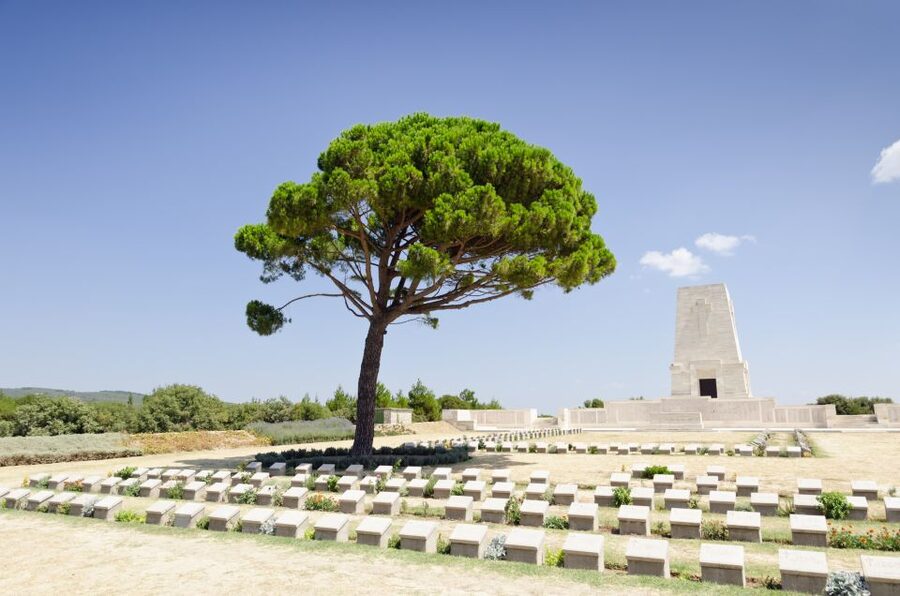
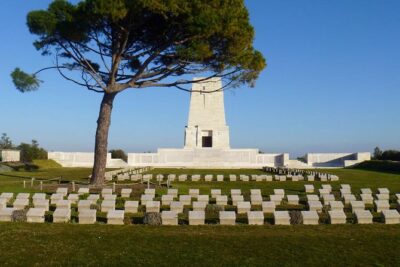
Lone Pine Australian Memorial is one of the central Australian sites on the tour. It commemorates those who died in the campaign, and the name refers to the fighting around a single pine tree that became associated with the position.
For Australian visitors, this is often one of the most meaningful stops. The guide may add stories about individual soldiers and explain how the battle fits into the wider campaign. I would allow yourself a quiet moment here rather than rushing straight into photographs.
The tour has a strong Australian and New Zealand focus because of the route, but it remains suitable for anyone interested in World War I, Ottoman history, military strategy, or remembrance. You do not need an Australian or New Zealand family connection to find the memorial significant.
Chunuk Bair and the New Zealand connection
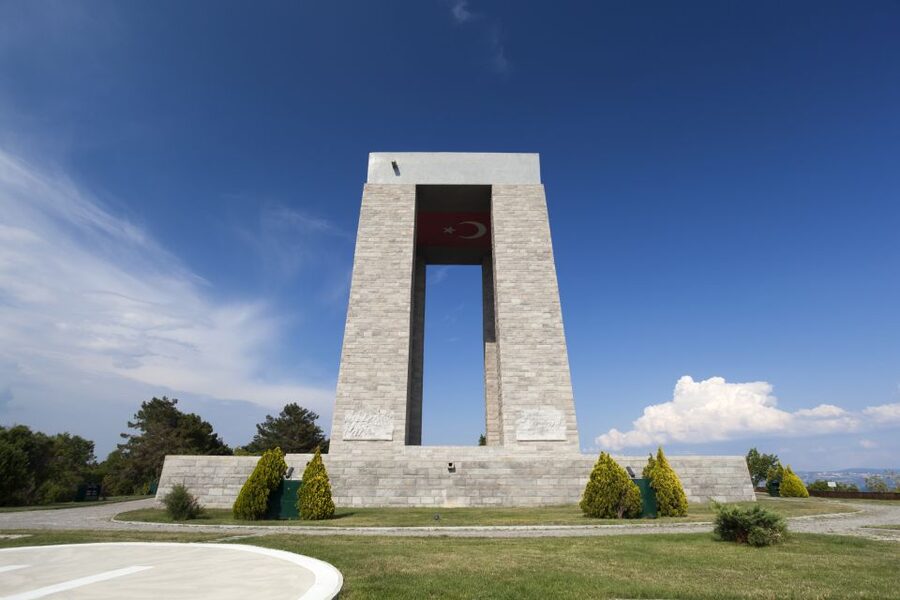
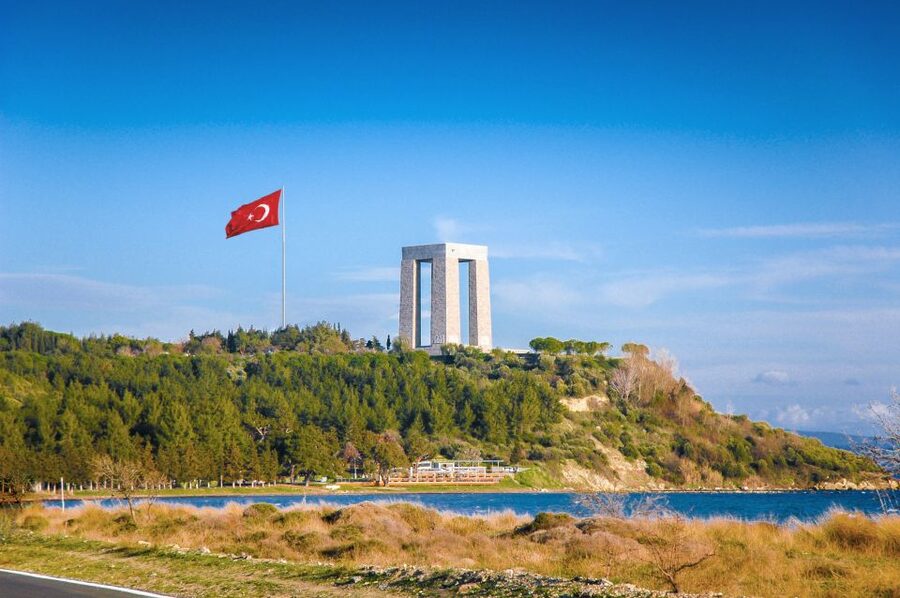
Chunuk Bair New Zealand Memorial is another major stop. It is tied to the New Zealand part of the campaign and to one of the most important objectives on the heights above the landing area.
This stop can feel brief for visitors with a strong New Zealand connection. One person specifically wanted more time at Chunuk Bair, so I would keep expectations realistic. The tour covers many sites in one afternoon, and the guide must balance several national histories within a fixed schedule.
Even with limited time, Chunuk Bair helps you understand the broader aim of the campaign. The landings were not only about holding a beach. The Allied forces needed to take high ground and control movement through the peninsula, which is why the ridges mattered so much.
John Simpson Kirkpatrick and the personal stories
The tour visits the burial place of John Simpson Kirkpatrick, remembered in Anzac history for carrying wounded men with a donkey. His story is one of the personal accounts that guides use to give a human scale to the campaign.
This kind of detail is valuable because military history can become abstract very quickly. Dates, troop movements, and objectives explain the campaign, but individual stories help you understand the fear, exhaustion, courage, and confusion experienced by the people involved.
The strongest guides do not turn these stories into simple hero worship. They place them alongside the Turkish experience and the wider loss of life. That balance keeps the visit respectful.
What the guide adds to the day
The guide is the key variable in this experience, though the overall feedback about the guiding is very strong. I would expect fluent English, battlefield explanations, and time for questions. Names that come up across different departures include Burak, Ibrahim, Ibo, Charlie, Bulent, Hassan, and Hussein.
Burak is praised for his passion, humor, and use of maps, photographs, and quotations. Charlie is noted for a balanced presentation of Turkish and Australian history. Ibo is described as articulate and particularly strong at explaining the sites. These are not scripted audio stops with a guide standing far away. The human delivery shapes the day.
An English audio guide is also included, but I would treat it as a backup or supplement. The live guide is where you get local context, answers to specific questions, and explanations adapted to your group.
Transport, timing, and the real value of $159
At $159 per person, this is not a cheap day trip. It is also not an unreasonable price for a 15-hour outing that includes central hotel pickup and drop-off, air-conditioned transport, an English-speaking guide, lunch, the Gallipoli tour, and entrance fees.
The alternative is arranging transport to Eceabat, finding the battlefield sites, paying entry costs, and hiring or locating a guide once you arrive. That would be difficult to manage in one day from Istanbul, especially if you want to visit the main cemeteries and memorials rather than only reach the peninsula.
The cost makes the most sense if you have limited time in Turkey and want to see Gallipoli without changing hotels. If you are already staying near Eceabat or can spend several days in the area, a slower visit could give you more time at each site.
The return journey begins around 6 PM, with another rest stop along the way. Arrival in Istanbul is expected around 11 PM, though traffic can affect the timing. One report described an overly fast return drive, so I would regard driving standards as a possible, if uncommon, concern rather than assume every departure feels the same.
Who should book this tour?
I would choose this trip if you have one full day available from Istanbul and Gallipoli is important to you. It is especially well suited to Australians and New Zealanders, people with family connections to the campaign, and anyone who wants the Turkish and Allied stories presented together.
It also suits history-minded visitors who prefer a guide to explain the terrain. You see far more than you would by simply arriving at a cemetery and reading plaques.
I would hesitate if you dislike long coach rides, early starts, or emotionally serious subjects. The itinerary is packed, and there is not much free time. It is also not suitable for wheelchair users, and pickup is not available from the Asian side of Istanbul.
For the best experience, wear supportive shoes, carry sunglasses and a camera, keep your bag small, and confirm your hotel pickup time. If you want breakfast, budget extra for it. I would also bring water since drinks are not included.
Should you book the Gallipoli day trip?
I would book it if you want to understand Gallipoli properly but cannot spare several nights outside Istanbul. The day is tiring, yet the combination of Anzac Cove, Lone Pine, Chunuk Bair, the cemeteries, Turkish defenses, Kilitbahir Castle, and a strong English-speaking guide gives you a clear sense of why this place matters.
The main question is not value alone. It is stamina. If you can handle a 6 AM start, four-hour travel stretches, and an 11 PM return, this is an efficient and thoughtful way to reach the Dardanelles. If that schedule sounds punishing, stay closer to Gallipoli and visit at a slower pace.
FAQ
How long is the Gallipoli tour from Istanbul?
The activity lasts about 15 hours. Pickup begins early in the morning, and the return to Istanbul is scheduled for approximately 11 PM.
Where is hotel pickup available?
Pickup and drop-off are available from central hotels on Istanbul’s European side, including Sultanahmet, Laleli, Topkapı, Aksaray, Taksim, Sirkeci, and Şişli. Pickup is not available from the Asian side.
What time is pickup in Istanbul?
Taksim pickup is generally between 6 AM and 6:20 AM. Sultanahmet pickup is generally between 6:30 AM and 7 AM. Confirm your exact meeting point and time before departure.
Is breakfast included?
No. An open buffet breakfast is available at an additional cost during the morning stop. Lunch in Eceabat is included.
What sites are visited?
The tour includes Kilitbahir Castle, the Gallipoli battle areas, Anzac Cove, Ariburnu Cemetery, the ANZAC Commemorative Site, Turkish cannon batteries, Lone Pine Australian Memorial, Chunuk Bair New Zealand Memorial, John Simpson Kirkpatrick’s burial place, and the ANZAC Museum.
Is the tour suitable for wheelchair users?
No. The tour is not suitable for wheelchair users.
What is included in the $159 price?
The price includes central Istanbul hotel pickup and drop-off, air-conditioned nonsmoking transport, an English-speaking guide, an English audio guide, lunch in Eceabat, the Gallipoli tour, and entrance fees. Drinks and breakfast are not included.
Newest Gallipoli trips on the site
- 3 Day Gallipoli in Depth Tour from Istanbul with Troy★ 5.0 · 18 reviews
- 2-Days Gallipoli Troy Pergamon Acropolis Tour From Istanbul to Kusadasi★ 5.0 · 34 reviews
- 2 Days 1 night Gallipoli Troy Landing Beaches Tour From Istanbul★ 5.0 · 28 reviews
- 2-Day Troy and Gallipoli Tour from Istanbul★ 4.5 · 32 reviews
- 2-Day Gallipoli and Troy Tour from Istanbul and return★ 5.0 · 17 reviews
- Troy and Gallipoli Day Trip from Canakkale★ 5.0 · 33 reviews
- Full Day Troy & Gallipoli Tour ( From Canakkale )★ 5.0 · 45 reviews
- Gallipoli Tour from Eceabat, Canakkale★ 5.0 · 26 reviews
Gallipoli Tours, compared.
Istanbul to Gallipoli Full Day Tour with Lunch and Transfers
Our review →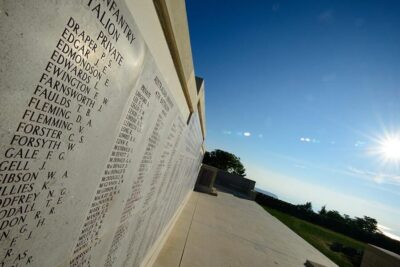
Istanbul to Gallipoli, Canakkale and Troy. 2 Day Tour with Hotel
Our review →
Istanbul to Truva Troy Guided Day Tour with Lunch and Transfers
Our review →
Troy Full-Day Guided Tour incl. Transfer, Ferry Tickets w/Lunch
Our review →Browse the lists this tour appears in