
Reviewed · EPHESUS TOURS
Ephesus, Priene, Miletos and Didyma Tour
Ephesus is only the beginning here. This private eight-hour circuit links four ancient sites, from Roman streets and theatres to a mountaintop sanctuary and a giant oracle temple. I like the route because it gives you far more context than a quick Ephesus stop, and the included entrance fees keep the $210 price easy to understand.
I especially like the chance to see Priene, Miletos, and Didyma, places many Kusadasi visitors skip. I also like the comfortable vehicle and flexible private setting, with guides such as Olkan, also written Volkan, praised for adjusting the day to guests’ needs. The main drawback is simple: four sites in eight hours makes for a full, fast day, with plenty of walking and limited time at each stop.
Four ancient sites, one busy but rewarding day
- Ephesus beyond the postcard sights: Walk Marble Street, the Great Theatre, the Library of Celsus, and the ancient brothel marker.
- Priene’s hillside setting: See a carefully planned Hellenistic city and wide views toward the Meander River delta.
- Miletos and the philosophers: Visit the huge theatre, Baths of Faustina, and former harbor city of Thales and Anaximander.
- Didyma’s Temple of Apollo: Follow the old pilgrimage route to one of the largest temples in the Greek world.
- Private transport and guide: Ride in an air-conditioned vehicle with pickup and return from Kusadasi, with pickup also available from hotels in Aydin and Izmir.
- Fees included: Entry to all four archaeological sites and museums listed in the route is covered.
Why this route is different from a standard Ephesus trip
Many visitors to the Aegean Coast build their day around Ephesus alone. That makes sense: Ephesus is the most famous site, the ruins are extensive, and the Library of Celsus photographs beautifully. But the other three stops explain how ancient western Anatolia worked as a whole.
You see a Roman metropolis at Ephesus, a planned Hellenistic city at Priene, a port and center of early philosophy at Miletos, and a major religious sanctuary at Didyma. The result is not just a list of ruins. You get four different ideas of ancient life: urban power, city planning, trade and thought, and religious authority.
The route is offered as a private group experience, which matters here. You are not tied to the pace of a large coach party. A guide can spend more time on the subjects that interest you, and the day may be adjusted to your needs. One recent booking described the trip as well organized, with some flexibility over time and stops.
Still, do not mistake private for leisurely. The advertised duration is eight hours, and the sites are spread across the Aegean countryside. This is a strong choice for someone who wants breadth. If you prefer to spend a full morning examining every carving at Ephesus, you may find the pace brisk.
A few more Ephesus half-days worth a look
- FOR CRUISERS: Skip The Lines PRIVATE EPHESUS TOUR &On Time Return
★ 5.0 · 8,527 reviews - Top Choice For Cruisers: Ephesus, Mary’s House WITH TICKETS+LUNCH
★ 5.0 · 7,233 reviews - PRIVATE EPHESUS TOUR FOR CRUISERS: On-time Return and Skip-Line
★ 5.0 · 5,807 reviews
Ephesus: marble streets and Roman scale
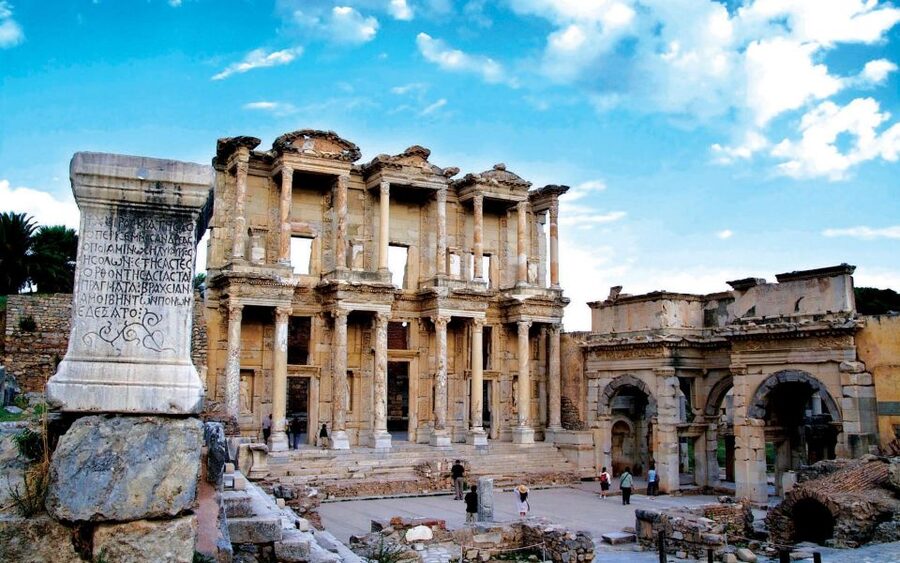
Ephesus is the grand opening, and it deserves its reputation. You walk along Marble Street, a route used roughly 2,000 years ago, with major public buildings rising around it. The setting helps you picture Ephesus as a real city rather than a collection of broken stones.
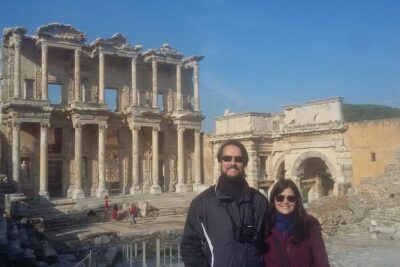
The Library of Celsus is the familiar star, but your guide should help you look beyond its decorated facade. The Great Theatre is just as important. It could hold about 24,000 people and served not only for performances, but also for political meetings and gladiatorial events. Its size gives you a feel for the population and power of ancient Ephesus.
There are also small details that reward a slower eye. Near the old streets, look for the carved footprint and heart associated with the ancient brothel advertisement. It is an amusing reminder that public signs and commercial messages are not modern inventions.
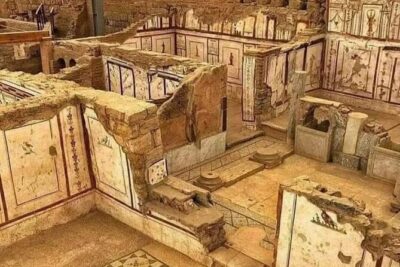
The Terrace Houses are an optional premium upgrade. These were the well-appointed homes of wealthy Ephesians, with mosaics and painted decoration that offer a more personal view of city life. If you care about domestic interiors, the upgrade may be worth considering. If your priority is seeing all four sites in the scheduled time, you may prefer to keep moving.
Ephesus is also the stop most likely to feel crowded and exposed. The stone surfaces can be hard underfoot, and there is little reason to expect shade across the whole route. Wear proper walking shoes, bring sunglasses and a sun hat, and carry a camera if you want to record details beyond the famous library.
Priene: a planned city on the hill
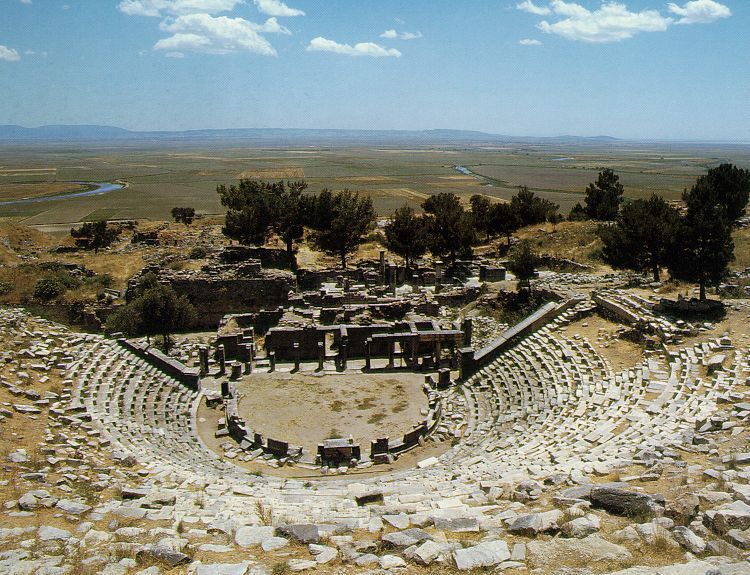
Priene changes the mood. Instead of a large Roman center, you reach a hillside city shaped by Hellenistic planning. Its streets followed a strict grid, an approach that influenced later ideas about orderly city design.
The remains of the Temple of Athena Polias are the main focus, with its Ionic architectural style. The site is not as visually complete as Ephesus, but that is part of its appeal. You can see how the city was arranged and how buildings related to one another, rather than simply moving from one famous facade to the next.
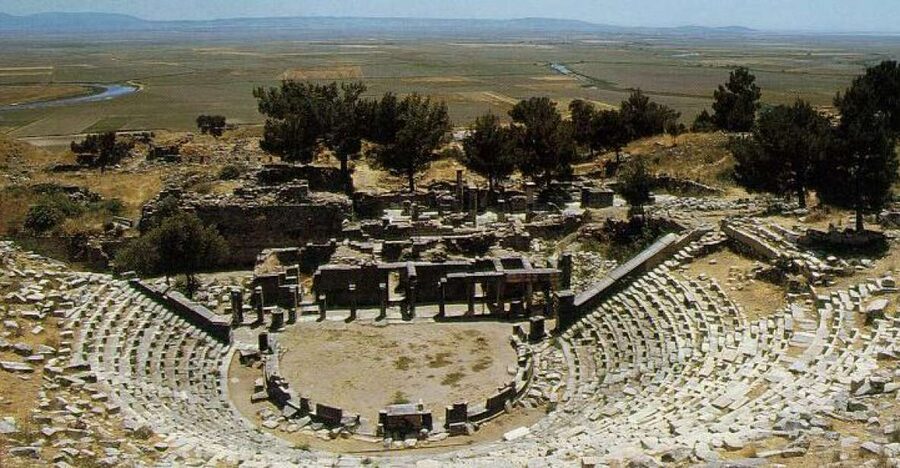
The climb is an important practical point. Priene sits on a hillside, and the walking can be uneven. The effort pays off with views over the Meander River delta. From the theatre area, you can also understand why the city had strategic value and why its setting mattered.
Your guide can add the myths and stories tied to the city, but the physical setting does much of the teaching. Priene asks you to look at the ancient city as an organized plan. It is a good stop for anyone interested in architecture, town design, or how Greek cities were laid out.
Time is the limitation. You will not have the same long, leisurely exploration you might get on a separate Priene visit. The upside is that the site often feels quieter than Ephesus, giving you room to focus on the views and the layout.
Miletos: theatre, baths, and big ideas
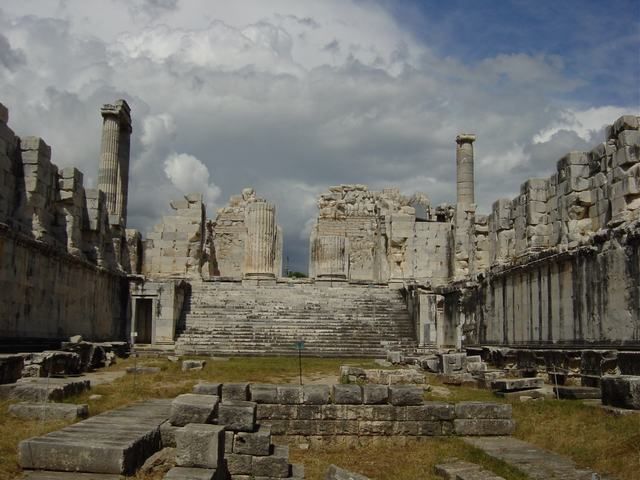
Miletos was a major maritime center and a birthplace of early Greek philosophy. Think of Thales and Anaximander, figures associated with attempts to explain the world through reason and observation rather than relying only on myth.
That intellectual background gives the ruins a useful extra layer. You are not only looking at a city that handled trade. You are walking through a place linked with new ways of asking questions about nature, mathematics, and the universe.
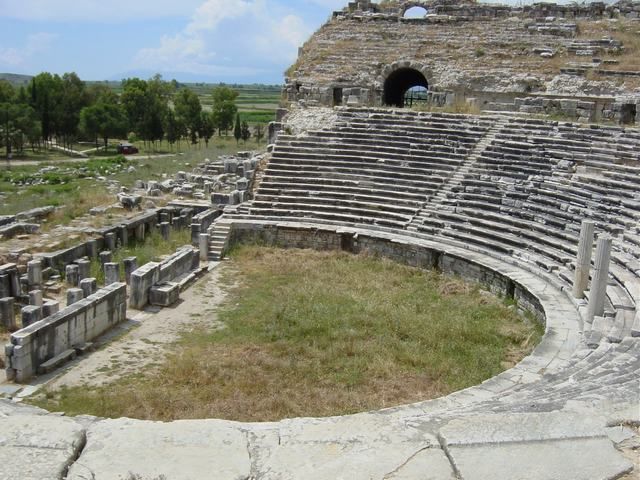
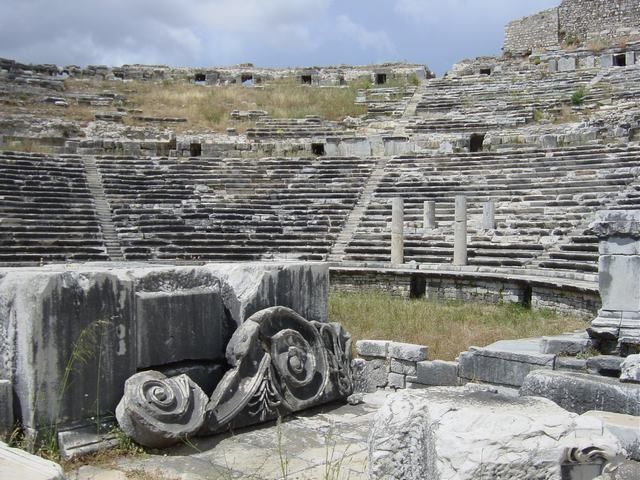
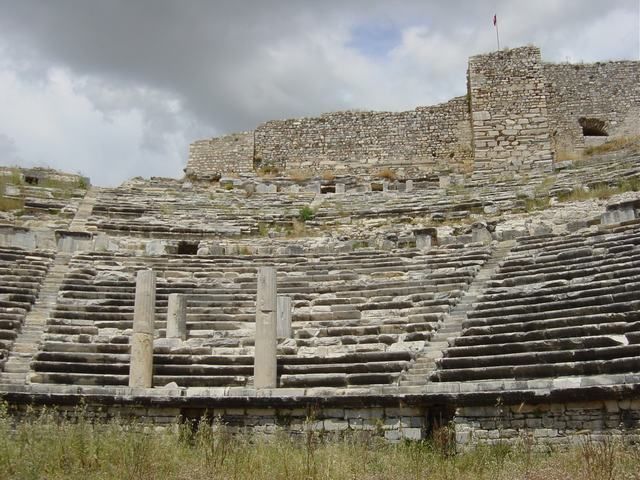
The theatre is the major visual feature. It could hold around 15,000 people, a scale that places Miletos among the significant cities of the ancient Aegean. Walk through it and look toward the seating, stage area, and surrounding remains. The size helps you imagine public events on a scale far beyond a small local gathering.
The Baths of Faustina are another strong stop. They were built by Faustina, the wife of Emperor Marcus Aurelius, and remain unusually readable in their layout. The baths show the practical side of Roman public life: washing, socializing, and meeting in a carefully designed complex.
You also see the Agora, once a major marketplace. The city’s old connection with ships and Mediterranean trade is harder to picture because the harbor world is gone, but the scale of the ruins gives you a clue to Miletos’ former importance.
Miletos is less instantly polished than Ephesus. That can be a benefit if you enjoy archaeology more than perfect photo angles. Your guide matters here, since the history is spread across a broad site and the surviving walls need explanation to make sense.
A completely different sort of day out, same corner of Turkiye:
- PRIVATE NO HIDDEN FEES Ephesus, Mary’s House Guided Tour /GRP OPT
★ 5.0 · 2,455 reviews - For Ship Guests:BEST SELLER EPHESUS PRIVATE TOUR & On Time Return
★ 5.0 · 2,029 reviews - ALL INCLUDED: Ephesus Ruins, Mary’s House Tour incl ENTRY TICKETS
★ 5.0 · 1,670 reviews - Ephesus Temple of Artemis and House of Mary Private Half Day Tour
★ 5.0 · 1,573 reviews
Didyma: the oracle and the unfinished temple
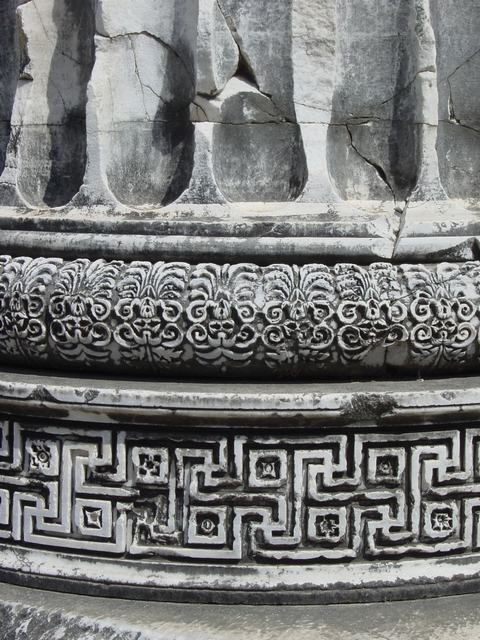
Didyma is not an ancient city in the same way as Ephesus, Priene, or Miletos. It was a sanctuary, built around the Temple of Apollo and the oracle connected with it. Pilgrims came along the Sacred Way seeking answers that could affect rulers, wars, and public decisions.
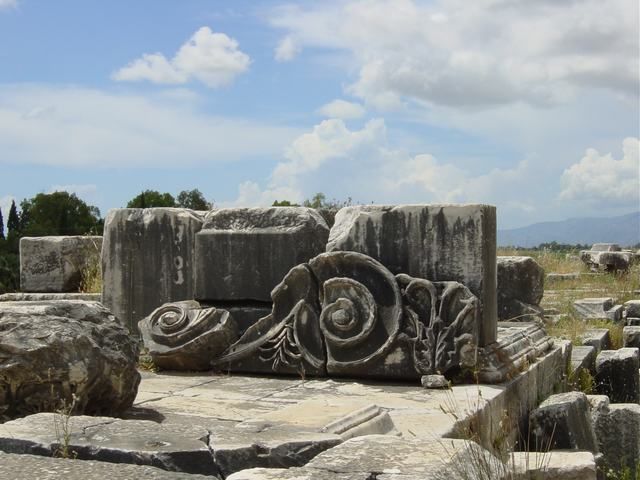
The temple’s scale is the first thing you notice. Three tall, fluted columns still rise above the site, surrounded by massive foundations and fallen architectural pieces. The temple was never fully completed, which makes the surviving work even more striking. You can see the ambition in the size of the blocks and the planned design.
Didyma rivaled Delphi as an oracle center. That comparison helps explain why this was more than a local shrine. It drew people who wanted divine guidance, and its reputation reached far beyond the immediate region.
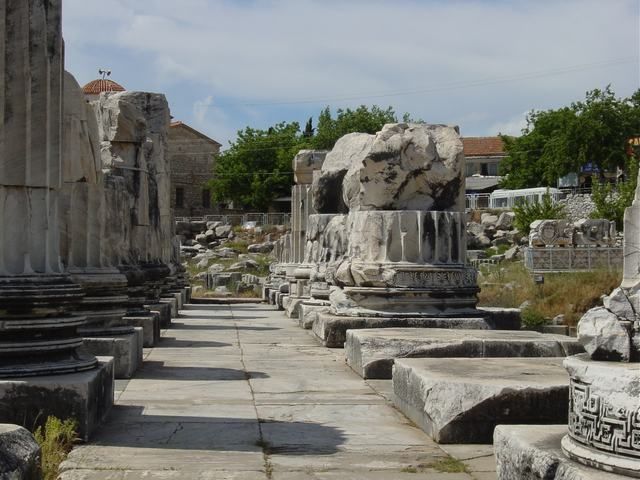
The Sacred Way gives the site a strong sense of movement. This was a pilgrimage route, not simply an entrance path. As you walk, you can picture ancient visitors approaching the sanctuary with questions about their families, cities, and political futures.
Didyma is a good final stop because it leaves you with a different kind of ancient experience. Ephesus is about city life and Roman spectacle. Didyma is about faith, ceremony, and the power of a place built to connect humans with the divine.
The guide and vehicle make a real difference
The tour includes a licensed guide, a professional driver, and an air-conditioned vehicle. That combination is valuable on a route with several stops and stretches of driving. You can focus on the sites instead of trying to organize directions, parking, tickets, and timing yourself.
Recent bookings specifically praise the guiding and driving. Olkan, also spelled Volkan in booking details, is named as an engaged guide, and Mohammed is identified as a driver who made the trip comfortable for one family. Another booking describes the guide as helpful, flexible, and willing to show less-known places where the group could have the site largely to itself.
You should still confirm the assigned guide when booking, since the available person may vary. Guide languages listed for the activity include English, German, French, Dutch, Spanish, Italian, Greek, and Russian. The information supplied for the activity lists both live-guide languages and guide-language options, so check your preferred language before paying.
Pickup and return are available at Kusadasi port or local hotels. Pickup is also listed for hotels in Aydin and Izmir. That makes the tour useful for cruise visitors as well as people staying inland or near the coast.
Is $210 per person good value?
At $210 per person, this is not a budget sightseeing trip. The value depends on what you would otherwise need to arrange. The price includes the private guide, driver, air-conditioned vehicle, pickup and return, and entrance fees for Ephesus, Priene, Miletos, and Didyma.
That is a reasonable package for someone who wants all four sites in one day without managing transport or buying tickets separately. A private vehicle also saves you from piecing together several transfers across the region. The more people in your private group, the easier it is to see the value, although the stated price is per person.
The cost does not include personal purchases or anything not specifically listed. Do not assume meals, drinks, or the optional Terrace Houses upgrade are included. Ask about those details before departure so the final cost matches your expectations.
The tour also offers free cancellation up to 24 hours ahead and a reserve-now, pay-later option. Those terms help if your Kusadasi schedule is still moving, particularly around a cruise port visit.
Who should book this full-day circuit?
I would recommend it to you if you want a strong overview of ancient Aegean civilization and do not expect to spend half a day at one monument. It suits first-time visitors, archaeology fans, cruise passengers, and anyone who wants a private day with a guide rather than a self-guided road trip.
It is also a good fit for solo visitors. One booking specifically described the experience as a safe and efficient way for a woman traveling alone to cover the region. The private format gives you support without requiring you to join a large group.
You should think twice if you have limited mobility. The activity is not suitable for wheelchair users, and Priene includes hillside walking. Across the day, expect uneven ancient surfaces, outdoor exposure, and a lot of time on your feet.
Bring your passport or ID card, comfortable shoes, sunglasses, a sun hat, and a camera. The sites are exposed, and small preparation choices will make the long day easier.
My verdict: book it for breadth
Book this tour if you want four major ancient sites in one organized day and value a private guide, included entry fees, and comfortable transport. Ephesus gives you the headline monuments, while Priene, Miletos, and Didyma add planning, philosophy, trade, and religion to the story.
Skip it if you want a slow, highly detailed visit to Ephesus alone, or if hills and uneven ruins are a serious problem. For everyone else, the route offers a lot for $210, provided you accept the brisk pace and confirm what is included in your preferred language and whether you want the optional Terrace Houses visit.
FAQ
How long does the tour last?
The tour lasts eight hours.
Where does pickup take place?
Pickup and drop-off are available at Kusadasi port or your local hotel. Pickup is also listed for hotels in Aydin and Izmir.
Is the tour private?
Yes. The activity is offered for a private group.
Which sites are included?
The route includes Ephesus, Priene, Miletos, and Didyma.
Are entrance fees included?
Yes. Entrance fees for the museums and archaeological sites listed in the itinerary are included.
Which languages are available for the live guide?
Listed languages include Spanish, English, Italian, Dutch, Greek, German, French, and Russian.
Is the Terrace Houses visit included?
The Terrace Houses at Ephesus are described as an optional premium upgrade, so you should confirm the additional cost and availability before booking.
Is the tour suitable for wheelchair users?
No. The activity is listed as unsuitable for wheelchair users. Comfortable walking shoes are recommended.
Newest Ephesus trips on the site
- Best Turkey 8-Day Tour: Istanbul, Cappadocia, Pamukkale, Ephesus★ 5.0 · 21 reviews
- 7 Days Highlights of Turkey Tour: Istanbul, Cappadocia, Pamukkale, Ephesus★ 4.5 · 17 reviews
- Turkey Flyer 8-Day: Istanbul, Pamukkale, Cappadocia, Ephesus★ 4.5 · 25 reviews
- Wonders of Turkey – Gulet: Istanbul, Cappadocia, Ephesus, Fethiye★ 5.0 · 51 reviews
- 10 Days Turkey Tour to Istanbul, Cappadocia, Antalya, Ephesus★ 5.0 · 16 reviews
- All Inclusive Private BODRUM to Ephesus, Mary’s House, Lunch Tour★ 5.0 · 17 reviews
- Full-Day Tour from Bodrum to Ephesus★ 4.0 · 19 reviews
- 1 Day Ancient City Ephesus and House Virgin Mary Trip from Bodrum★ 4.0 · 21 reviews
Ephesus Tours, compared.
For Cruisers: Skip The Lines Private Ephesus Tour & On Time Return
Our review →
Top Choice For Cruisers: Ephesus, Mary’s House With Tickets+Lunch
Our review →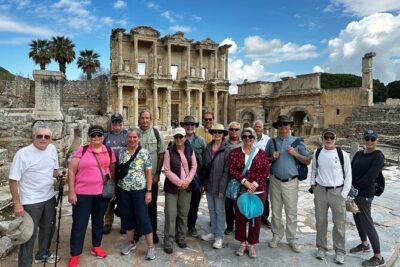
All Included: Ephesus Ruins, Mary’s House Tour incl Entry Tickets
Our review →
Ephesus Temple of Artemis and House of Mary Private Half Day Tour
Our review →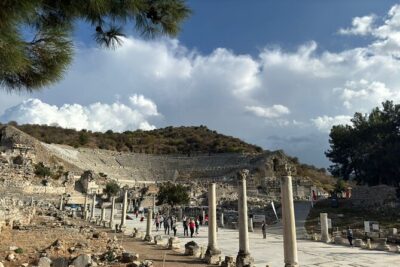
Private Tour For Cruisers: Mary’s House (Meryemana) and Ephesus
Our review →
Top-Rated: Ephesus & Artemis Tour for Cruisers With Entry Tickets
Our review →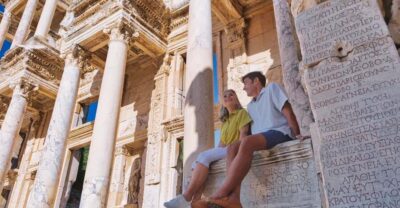
Browse the lists this tour appears in