
Reviewed · CITY TOURS
Eastern Turkey 12-Day Sightseeing Tour from Trabzon
Eastern Turkey is not a quick checklist of famous sights. It is a long sweep across Black Sea forests, high mountain passes, Armenian churches, Urartian fortresses, Kurdish villages, Syriac monasteries, Roman cities, and the ancient worlds of Mesopotamia. This 12-day route from Trabzon to Gaziantep gives you a rare look at a part of Turkey that is difficult to arrange on your own.
I like two things right away: the route links major places that are far apart, and the small group size, capped at eight people, allows room for a more personal experience. I also like that a guide and driver handle the long road sections, while hotels, breakfasts, dinners, two domestic flights, transport, and museum entries are arranged for you.
The main drawback is the pace. You change hotels almost every night, cover many miles, and spend plenty of time in the vehicle. At $3,850 per person, this is a serious investment, so you should want history, archaeology, and remote scenery more than a slow, restful holiday.
Key points at a glance
- Sumela Monastery hangs above a Black Sea valley, combining a dramatic setting with Byzantine religious art.
- Ani, Akdamar, and Ishak Pasha Palace reveal the Armenian, Georgian, Persian, Seljuk, and Ottoman layers of eastern Anatolia.
- Lake Van and Mount Ararat bring some of the tour’s finest mountain views, along with Urartian ruins and island churches.
- Göbekli Tepe and Mount Nemrut connect the earliest known ritual buildings with a later royal tomb high in the mountains.
- Gaziantep adds a strong food finish, with the Zeugma Mosaic Museum, old streets, and famously spicy regional cooking.
- The route demands energy, with long drives, frequent hotel changes, uneven ground, and some basic roadside toilets.
Why this route is unusual
Many Turkey itineraries stay around Istanbul, Cappadocia, Ephesus, and the Mediterranean. This one heads east, where the distances are larger and the story is less familiar. You follow a broad historical arc from the medieval Black Sea and Caucasus borderlands to Mesopotamia and the earliest settled societies known to archaeology.
The route is also a study in contrast. One day you may be looking at Byzantine frescoes in Trabzon, and the next you may be standing beside a waterfall in a high valley. Later come Urartian fortresses, Armenian carvings, Islamic schools, Syriac Christian worship, Roman bridges, and modern bazaars.
A private guide matters here. The sites often need context, and several are partly ruined or spread across open ground. Guiding staff associated with this tour have included Ahmet Gülmez, Ören, Sabahattin, Adem Kocaman, and Hasan. Their roles and availability can vary, but the route clearly depends on strong explanation, not just transportation from one monument to the next.
A few more Turkiye half-days worth a look
- Trabzon: Sümela Monastery, Cave, and Hamsiköy Daily Tour
★ 4.6 · 87 reviews - Sumela Monastery, Zigana and Hamsiköy Village Tour
★ 5.0 · 73 reviews - Trabzon: Uzungöl Group Tour, Explore The Nature & Taste Tea
★ 4.6 · 51 reviews
Days 1 and 2: Trabzon, Sumela, and the road to Erzurum
You begin with a morning flight from Istanbul to Trabzon, unless you arrive the previous day. Pickup is provided at Trabzon Airport, and the first stop is Trabzon Hagia Sophia Museum. This fourteenth-century Byzantine church sits above the Black Sea and is noted for its surviving frescoes.
The visit is fairly short, but it sets the tone. This is not simply a tour of Ottoman Turkey. The Black Sea coast preserves traces of Byzantine Christianity, Georgian connections, Armenian communities, and later Islamic rule.
The major first-day sight is Sumela Monastery, reached through Altındere National Park near Maçka. The monastery appears to cling to a cliff about 1,200 feet above the river valley. Its setting does much of the work, but the long monastic history, dating back as early as the fourth century, gives the place greater weight.
Allow for walking and uneven surfaces here. The monastery is not a quick roadside photo stop. You are in a steep mountain setting, and weather or access conditions can affect how much of the complex you see.
The route then follows the Black Sea coast through Rize and Hopa toward Artvin. Day two turns inland to Ishan Church, passing the Bocka Dam and the dramatic Çoruh Valley. Ishan was once an Armenian and Georgian religious center, and its ruins include an eighth- or ninth-century cathedral and a church dedicated to the Virgin Mary, dated to 1006.
Tortum Waterfall provides a useful break from ruins. It is described as Turkey’s tallest waterfall, and you walk down to its base. The stop can also work as a picnic point, though lunch arrangements should be confirmed because the program lists lunch as both included and not included in different sections.
You finish the day in Erzurum with Yakutiye Medrese, a fourteenth-century Islamic school now used partly as a museum. Its central location lets you see ordinary city life around the historic buildings rather than viewing the monument in isolation.
Days 3 and 4: Erzurum, Ani, and Mount Ararat
Erzurum’s morning walk includes the Great Mosque, the Double Minaret Madrasa, other medreses, the bazaar, the Three Tombs, and Ulu Cami. This is an easy way to understand the city’s Seljuk and later Islamic identity before heading farther east.
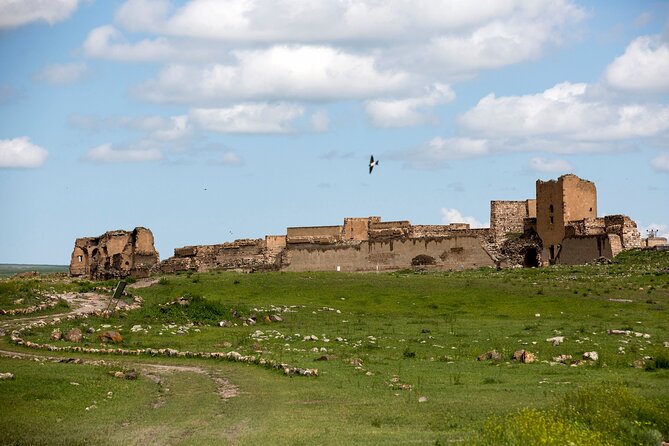
The drive to Kars leads to Ani, once the capital of the medieval Armenian kingdom. The ruins spread across an open borderland setting, with churches, the Cathedral of Ani, a citadel, defensive walls, and a mosque. The Church of St. Gregory, also called Tigran Honentz, retains traces of frescoes despite centuries of exposure.
Ani deserves time. The program gives about two hours for the wider ruins and another three hours for Ani Cathedral, so you are not being rushed through a single viewpoint. Still, expect exposed walking and little shade. Good shoes, water, and protection from the sun matter.
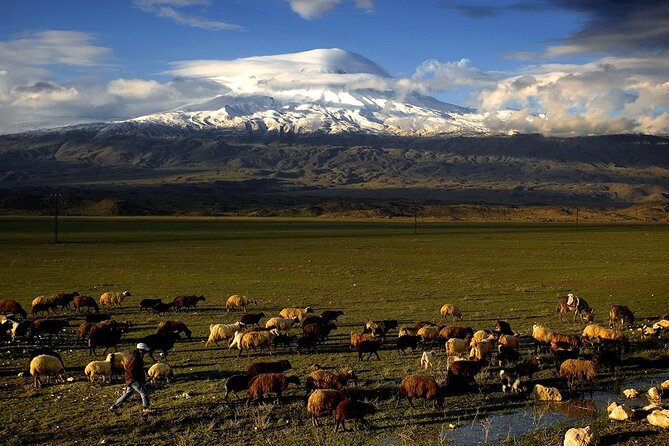
Day four skirts the western edge of Mount Ararat, whose summit reaches 5,137 meters. The mountain is weather-dependent, so views are never guaranteed, but even a clear sight of its broad snow-covered profile can become one of the trip’s strongest images.
In Doğubayazıt, Ishak Pasha Palace is the chief attraction. Built between 1685 and 1784, the palace blends Seljuk, Ottoman, Georgian, Armenian, and Persian influences. Its remote position and ambitious design make it feel far more surprising than a standard palace visit in a major city.
Muradiye Waterfall supplies a gentler final stop. You can pause for refreshments before the next long section of the route.
Days 5 and 6: Lake Van, Urartu, and Ahlat
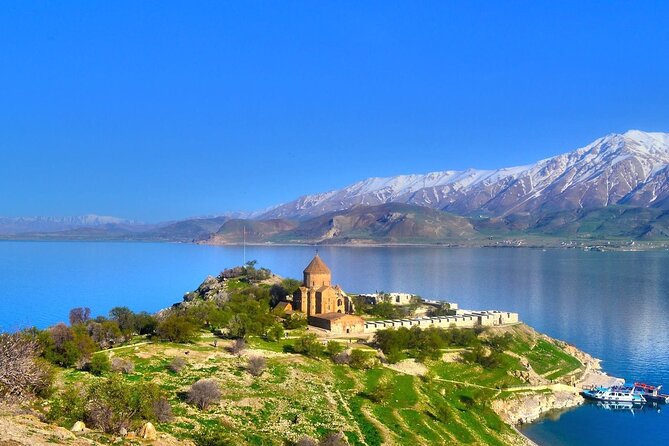
Lake Van brings together scenery and archaeology. A boat takes you to Akdamar Island, home to the restored tenth-century Armenian Church of the Holy Cross. Built between 915 and 921 under King Gagik Ardzruni, the church is famous for the carved reliefs on its exterior.
The reliefs are the reason to pay close attention. They depict biblical and royal subjects in a style unlike the plain interiors of many medieval churches. The island setting adds to the experience, but the building itself deserves the focus.
You continue to Hosap Castle, built mainly in its present form in 1643 by the Kurdish chieftain Sari Suleyman. Its position beside the old Silk Road explains its practical purpose as well as its defensive appearance. The structure sits on a rocky outcrop above the Hosap River, and the approach helps you see why this was a useful place to control movement and collect tolls.
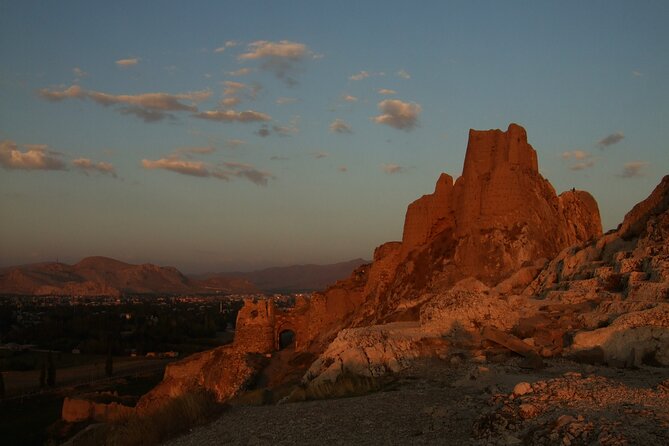
Van Castle is older by many centuries. The fortress was built by the Urartian kingdom between the ninth and seventh centuries BC, above the ancient capital of Tushpa. The site gives you a direct connection to one of eastern Anatolia’s earliest organized states.
The nearby site of Çavuştepe, or Sardurihinilli, adds another Urartian royal center. It is a shorter visit, but it helps you see that Urartian power was not limited to one fortress.
Day six follows Lake Van toward Tatvan and Mount Nemrut’s crater lakes. This is not the Mount Nemrut with colossal statues, which comes later. Here you visit a volcanic caldera with five lakes, including a cold lake and a hot lake fed by thermal springs. A picnic lunch is planned beside the crater lakes.
The elevation and open terrain make this a weather-sensitive day. It is scenic and unusual, but it is less about grand monuments and more about geology, fresh air, and a change of pace.
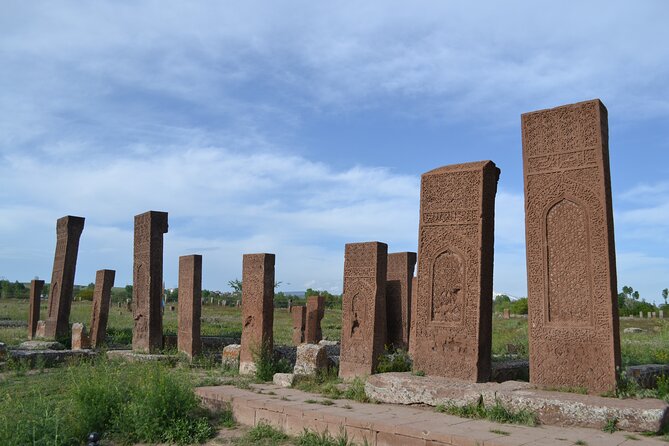
Ahlat then brings you back to history, with its large collection of carved tombstones connected to the Ahlatshah dynasty. The stones are more than a cemetery visit. Their decoration and scale show the artistic strength of a medieval regional power.
More city tours in Turkiye:
- Istanbul: Daytime or Sunset Sightseeing Cruise & Audio Guide
★ 4.8 · 14,430 reviews - Istanbul: Bosphorus Sightseeing Cruise Tour with Audio Guide
★ 4.6 · 2,694 reviews - Antalya Luxury Old Town Tour with Cable Car & Boat Trip
★ 4.5 · 1,880 reviews - Istanbul: Full-Day Highlights Tour with Guide and Lunch
★ 4.6 · 1,662 reviews
Days 7 and 8: Hasankeyf, Mardin, and Diyarbakır
From Bitlis, the route follows the Bitlis Gorge and continues through Batman to Hasankeyf on the Tigris River. You see caves and the remains of a medieval city, although modern changes to the river and surrounding area have altered the setting.
Hasankeyf is best approached with realistic expectations. It is an important historical stop, but not every part of the old city survives in its original condition. The value lies in the caves, river setting, and long sequence of occupation.
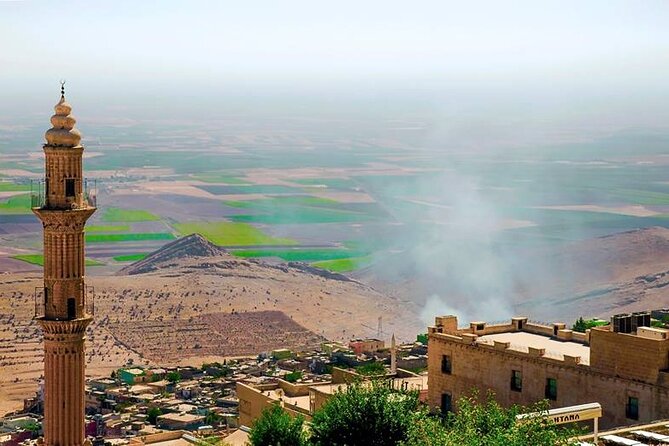
Mardin changes the mood again. Built from warm-colored limestone, the city is known for its layered architecture and elevated views across the surrounding plain. The program allows time for a city visit and for Deyrulzafaran Monastery, the former center of the Syriac Christian patriarchate.
The monastery is especially interesting because its foundations include an ancient temple associated with sun worship. A flat-arched roof over the old temple area gives the site an unusual construction story. This is one of the places where a guide can turn a short visit into a memorable lesson in religious continuity and change.
Diyarbakır brings Roman, Islamic, and Ottoman history into one city day. The fortress walls were built in their present form in the fourth century by Emperor Constantius II, incorporating the older Roman city of Amida. The main gates include Mountain Gate, Urfa Gate, Mardin Gate, and New Gate.
You also visit the Great Mosque, which was built over an older mosque and influenced by the Great Mosque of Damascus. The itinerary includes Meryem Ana Church, the Ten Arches Bridge over the Tigris, and the sixteenth-century Hasan Pasha Han.
This is one of the busier sightseeing days, so do not expect every stop to receive a long visit. The reward is variety: walls, mosque architecture, Christian heritage, a bridge, a han, and the daily life of a major southeastern city.
Days 9 and 10: Mount Nemrut, Göbekli Tepe, and Şanlıurfa
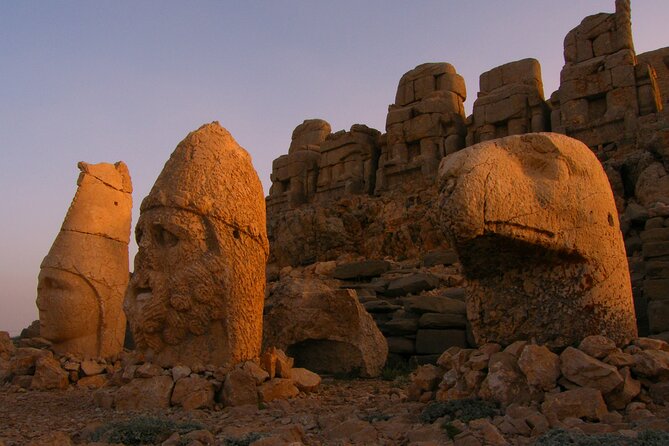
Mount Nemrut is one of the trip’s headline experiences. After crossing the Euphrates by ferry, you travel into Nemrut National Park and climb to the summit at about 2,150 meters. The stone heads and seated figures belonged to the Commagene Kingdom and surround the burial mound of Antiochus I.
The summit is reached on foot, and the program is built around sunset. That means conditions can be cold, windy, or cloudy even when lower towns are hot. Wear layers and shoes suitable for a short but uneven climb.
The scale of the statues is impressive, but the story is equally compelling. Antiochus created a royal monument that blended Greek, Persian, and local religious traditions, then the site was forgotten for nearly 2,000 years. The sunset visit gives the mountain a powerful final note, though it is also one of the longest and most tiring sightseeing sessions.
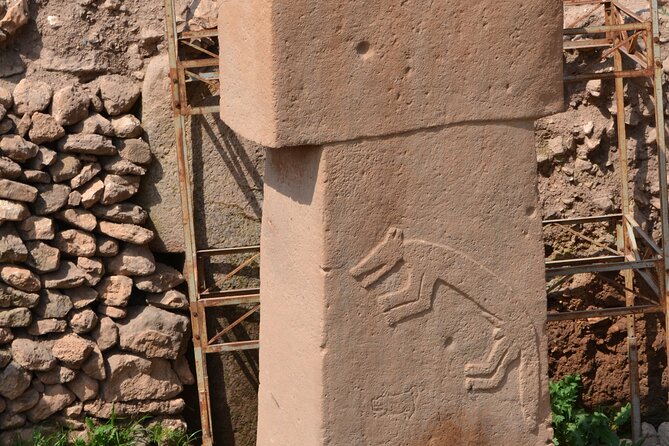
The next day begins at Göbekli Tepe, an archaeological site dating roughly 11,000 to 13,000 years. Its stone circles and carved pillars changed how archaeologists think about early ritual buildings and organized communities. The site is older than pottery, writing, Stonehenge, and the Egyptian pyramids.
You then visit Şanlıurfa, including the Pools of Abraham, the cave linked by tradition to his birth, the bazaar, and Gümrük Han. The Archaeology and Mosaic Museum adds objects from Göbekli Tepe, Harran, and nearby excavations.
These visits work well together. Göbekli Tepe presents the earliest end of the story, while Şanlıurfa shows how faith, trade, food, and city life continue to shape the region today.
Days 11 and 12: Zeugma and Gaziantep’s food culture
The final full day is in Gaziantep, beginning at the Zeugma Mosaic Museum. The mosaics came from the ancient city of Zeugma, much of which is now beneath the waters of the Atatürk Dam. Their detail gives you a close look at the wealth, taste, and technical skill of ancient households.
After the museum, you have time around the citadel district and old town. Gaziantep is also the right place to finish because its food is a major part of the regional identity. Expect kebabs, spicy meat dishes, lahmacun, soups, rice dishes, vegetables, yogurt-based foods, and pistachio specialties.
The food can become repetitive if every meal centers on kebabs, and vegetarian or vegan diners should ask ahead about choices. Still, the cooking is a genuine part of the place, not an extra added for tourists.
On day twelve, the operator transfers you to Gaziantep Airport. The route ends here rather than returning to Trabzon, so plan any onward travel from Gaziantep.
What the $3,850 price really covers
The price is high, but the route is complicated. It includes two domestic flights, airport pickup, an air-conditioned vehicle, hotels, 11 breakfasts, eight dinners, museum and site entries, taxes, and guiding. With so many long transfers and remote archaeological sites, arranging the same trip independently would require considerable time and careful coordination.
The value depends on your travel style. You are paying for access and organization across a huge region, not luxury resort time. Hotels have been described as clean, comfortable, and often characterful rather than international-chain properties. A few accommodation details may not be polished, and basic items such as tissues may not always be supplied.
Check the meal wording before paying. The information lists lunch as included in one place and not included in another, while dinners and breakfasts are clearly specified. Alcohol is not included.
Transport deserves attention, too. A previous group found a Mercedes vehicle tight for five people with luggage, especially for a tall passenger. A Toyota was considered more comfortable, so ask what vehicle is planned for your departure and how much luggage each person may bring.
Who should book this eastern Turkey journey?
You should consider it if you want archaeology, religious history, mountain scenery, and local food, and if you are comfortable with frequent hotel changes. It suits adults with moderate physical fitness who can manage walking at Ani, Sumela, Akdamar, Göbekli Tepe, and Mount Nemrut.
The small maximum group size is a real advantage. If numbers fall very low, the trip may become private, but the minimum group requirement also means a departure can be canceled if too few people remain. Book only when your dates have been confirmed, and remember that the standard cancellation rule allows a full refund when you cancel at least 24 hours before departure.
You should look elsewhere if you want a relaxed schedule, resort comfort, or long free periods in each city. This is a working journey across eastern Turkey, with early starts, long roads, and many different chapters packed into twelve days.
Final verdict
I would recommend this tour to a curious, energetic history lover who wants to see Ani, Akdamar, Ishak Pasha Palace, Lake Van, Mount Nemrut, and Göbekli Tepe in one carefully connected journey. The strongest parts are the range of cultures, the remote settings, the skilled guiding, and the chance to eat your way through Gaziantep at the end.
Before booking, confirm the vehicle, meal plan, hotel standards, departure status, and luggage space. If you accept the pace and prepare for basic facilities, this is a rare way to reach eastern Turkey without having to solve every long-distance transfer yourself.
FAQ
Where does the tour start and finish?
The tour starts with pickup at Trabzon Airport and finishes with a transfer to Gaziantep Airport on day twelve.
Are flights included?
Yes. The tour includes two domestic flights. The information does not specify the exact flight routes, so confirm those details before departure.
How large is the tour group?
The maximum group size is eight people. If other participants cancel, the experience may operate as a private tour, but it requires a minimum number of participants to run.
Are meals included?
Breakfast is included on all 11 mornings, and eight dinners are included. The information is inconsistent about lunch, listing it as included in one section and not included in another, so confirm this before booking. Alcoholic drinks are not included.
What level of fitness is needed?
A moderate level of physical fitness is advised. You will walk around ruins, fortresses, churches, museums, waterfalls, and mountain sites, including the climb to the summit area of Mount Nemrut.
Can I cancel for a full refund?
You can cancel at least 24 hours before the experience start time for a full refund. Changes or cancellations made less than 24 hours before the start time are not accepted for a refund. If the operator cancels because the minimum number is not met, you are offered another date or experience, or a full refund.
Newest Turkiye trips on the site
- Best Turkey 8-Day Tour: Istanbul, Cappadocia, Pamukkale, Ephesus★ 5.0 · 21 reviews
- 6 Days Istanbul Cappadocia Tour in Spanish with 2 internal flights★ 5.0 · 29 reviews
- Turkey Classics 7 Day Escorted Tour from Istanbul★ 4.5 · 165 reviews
- 7 Days Highlights of Turkey Tour: Istanbul, Cappadocia, Pamukkale, Ephesus★ 4.5 · 17 reviews
- 6-Day Private Guided Tour to Istanbul and Cappadocia★ 5.0 · 27 reviews
- 6 Days Guided Istanbul and Cappadocia Tour★ 5.0 · 36 reviews
- 7 Day 6 Night Express Turkey Tour★ 5.0 · 37 reviews
- 6-Day Turkey Tour from Istanbul: Gallipoli, Troy, Ephesus, Pamukkale and Cappadocia★ 5.0 · 27 reviews
City Tours, compared.
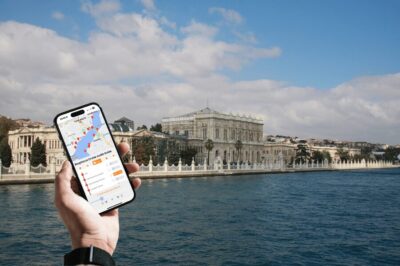
Daytime or Sunset Sightseeing Cruise & Audio Guide
Our review →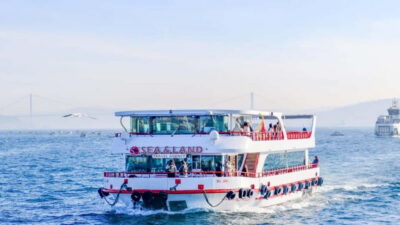
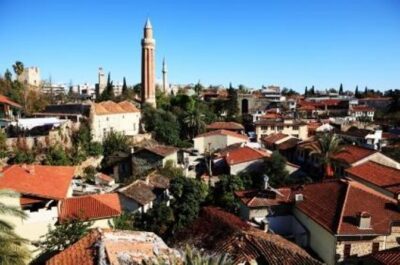
Antalya Luxury Old Town Tour with Cable Car & Boat Trip
Our review →
Guided City Tour with Top 2 Waterfalls incl. Lunch
Our review →
Antalya/Kemer: City Tour w/Olympos Cable Car, Boat & Lunch
Our review →
Istanbul Best: Iconic Landmarks Full Day Private Guided City Tour
Our review →Browse the lists this tour appears in