
Reviewed · 2-DAY EXPERIENCES
2-Days Private Tour to Gobeklitepe and Karahantepe from Istanbul
Göbekli Tepe is the star here: a 12,000-year-old ritual site built before writing, pottery, or settled urban life as we usually understand it. Pairing it with nearby Karahantepe lets you compare two early Neolithic sites instead of treating Göbekli Tepe as a one-stop wonder.
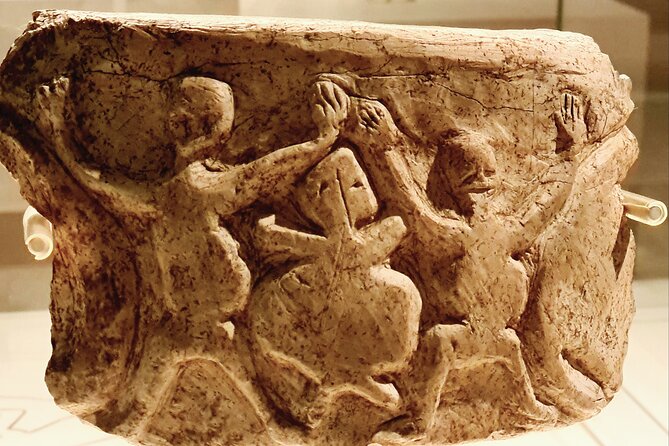
I like the private format, which keeps the pace in your hands, and I like the way the tour adds Şanlıurfa’s Archaeology and Mosaic Museum before the ruins. That museum gives you the Urfa Man statue, a Göbekli Tepe enclosure replica, and stones moved from submerged Nevali Çori.
The main drawback is the price: $2,760 per person is a major outlay for two days, especially since food, drinks, insurance, and personal purchases are not included. You’ll want to confirm exactly what the price covers, particularly flights and the overnight hotel.
Key points at a glance
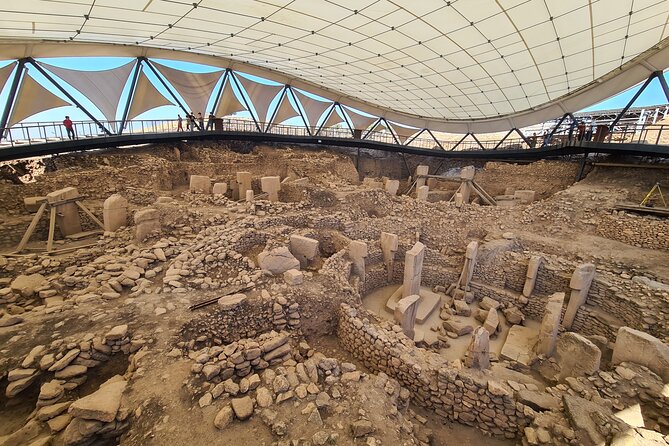
- Göbekli Tepe and Karahantepe together: See two major Pre-Pottery Neolithic sites with carved pillars and early ritual structures.
- Şanlıurfa’s museum first: The collection helps you understand Göbekli Tepe before you reach the site itself.
- A private tour with local guidance: Taha and his team provide English-language guiding and personal transport coordination.
- More than prehistoric ruins: The route includes Balıklıgöl, Abraham’s Cave, the Kızılkoyun Necropolis, Sogmatar, and an Ayyubid caravanserai.
- A full regional experience in two days: The schedule combines archaeology, living city streets, religious tradition, and Silk Road remains.
- Check the package details carefully: Breakfast is included, while food and drinks not mentioned, insurance, and personal spending are extra.
Why Göbekli Tepe deserves the first look
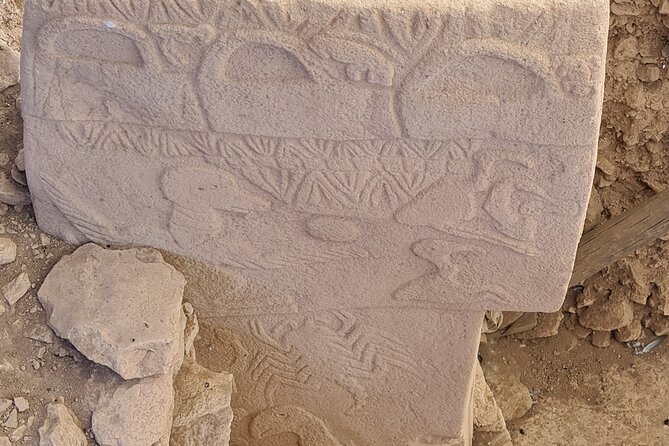
Göbekli Tepe changes the usual story of early civilization. The site dates back as far as 12,000 years and was built before written records or pottery. Its T-shaped pillars, animal carvings, and carefully arranged enclosures point to organized ritual activity at a time when people were not yet building cities in the familiar sense.
You get about two hours at the site. That is enough for a guided visit, though it is not an open-ended archaeological expedition. The value of a private guide becomes clear here. The stones can look simple at first glance, and the meaning of their placement is not always obvious without explanation.
The site is also important because archaeologists are still reconsidering what it says about early human society. Göbekli Tepe is not merely an old ruin to photograph. It raises questions about why people gathered, how they organized large construction projects, and whether ritual helped bring communities together.
The visit is best for anyone who enjoys archaeology with unanswered questions. If you prefer intact buildings, long inscriptions, or a clear chronological story, this may feel less immediately satisfying. Much of the pleasure comes from thinking through evidence that is still being studied.
More private tours in Istanbul:
- Best of Istanbul 1, 2 or 3-Day Private Guided Istanbul Tour
★ 5.0 · 8,922 reviews - ISTANBUL BEST: Iconic Landmarks Full Day PRIVATE Guided City Tour
★ 5.0 · 1,032 reviews - Istanbul Highlights Private Tour: Hotel Pick-Up & Drop-Off
★ 5.0 · 672 reviews
Start at the Şanlıurfa Archaeology and Mosaic Museum
The museum is one of the smartest parts of the schedule because it gives you a foundation before you reach Göbekli Tepe. Plan on about two hours with admission included.
Its collection covers the period from the Neolithic era through Crusader Edessa. You will see artifacts connected with the wider region, including finds from Göbekli Tepe and the famous Urfa Man, regarded as the world’s oldest statue.
The museum also contains a replica of Göbekli Tepe’s Enclosure D. That matters because the actual site can be difficult to read from ground level. A replica lets you think about the enclosure as a complete structure rather than a set of scattered stones and partial walls.
Another unusual feature is the preserved material from Nevali Çori. That cult site was submerged by the Atatürk Dam, and original stones were moved into the museum. The museum therefore does more than display objects in glass cases. It also preserves parts of a site that can no longer be visited in its original setting.
I would pay close attention here, even if museums are not usually your main reason for booking a tour. The visit makes the later outdoor sites more rewarding and gives you names, shapes, and symbols to look for.
Balıklıgöl and the sacred center of Şanlıurfa
After the prehistoric sites, the tour shifts to living religious tradition in central Şanlıurfa. At Balıklıgöl, you visit Abraham’s Cave and the Pool of Prophet Abraham.
The pool is associated with the story of Prophet Abraham being thrown into a fire by Nimrod. The cave is identified as Abraham’s birthplace. These traditions are central to the character of the area, and the setting also gives you a break from archaeological interpretation.
You have about an hour here. The stop is not only about a religious story from the past. It is also a place where local families spend time, giving you a chance to see Şanlıurfa as a working city rather than simply a base for day trips.
Approach this part with respect. The site has religious meaning for many people, so dress and behavior should suit a sacred place. The tour data does not specify a dress code, but modest clothing is a sensible choice for visits connected with Abraham and the sacred pool.
Kızılkoyun Necropolis and Şanlıurfa after dark
The Kızılkoyun Necropolis adds a Roman-era layer to the first day. More than 61 tombs were carved into the local limestone bedrock, and the excavated complex dates from the second to fourth centuries AD.
You spend about 30 minutes here. That is enough to understand the layout and see the carved tombs, but not enough for a long archaeological study. The brief stop works because the tour already gives you two hours at the museum and Göbekli Tepe.
This sequence gives the first day a useful range: Neolithic ritual, sacred tradition, and later burial customs. You are not looking at one isolated period. You are seeing how the area continued to attract communities for thousands of years.
The overnight stay in Şanlıurfa is important because this region cannot be sensibly reduced to a quick visit from Istanbul. A local hotel gives you a base for the second day, though you should confirm whether the hotel itself is included in your quoted price. One well-regarded arrangement described for this experience involved a historic hotel, but the included-items section specifically lists breakfast rather than accommodation.
A few more Istanbul half-days worth a look
- Istanbul: 1 or 2-Day Hop-On-Hop-Off Bus Tour Ticket
★ 4.1 · 863 reviews - Istanbul: 1 or 2-Day Private Guided Tour with Hotel Transfer
★ 4.7 · 438 reviews - Multi 2 Days Private Guided Istanbul Iconic Landmarks City Tour
★ 5.0 · 26 reviews - Antalya/Kemer: 2-Day Cappadocia, Cave Hotel, & Balloon Tour
★ 4.4 · 732 reviews
The bazaar reveals everyday Şanlıurfa
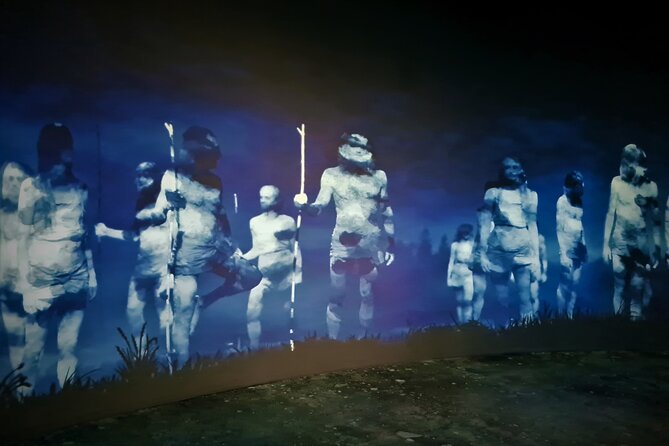
Allow two hours for Şanlıurfa’s bazaar. This is where the tour becomes less about excavation and more about local life.
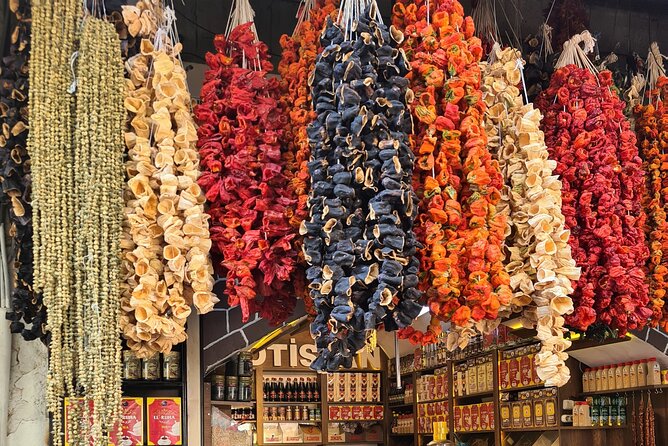
The stalls sell sheepskins, jeans, and colorful scarves. You can also see old workshops and craftspeople at work. The setting gives you something that a museum cannot: a sense of how commerce, craft, and social life still operate in the city.
I would use this time for slow walking rather than shopping with a checklist. Look at the workshops, notice the materials, and ask your guide about the goods before buying anything. Personal purchases are not included, and bargaining may be part of the experience, but the tour does not promise specific prices or products.
The bazaar also helps balance the heavy archaeological content. Two days of ancient sites can become tiring, particularly for children or anyone who is not already interested in prehistory. The market adds movement, color, and human contact without requiring another formal explanation.
Sogmatar and its unusual pagan sanctuary
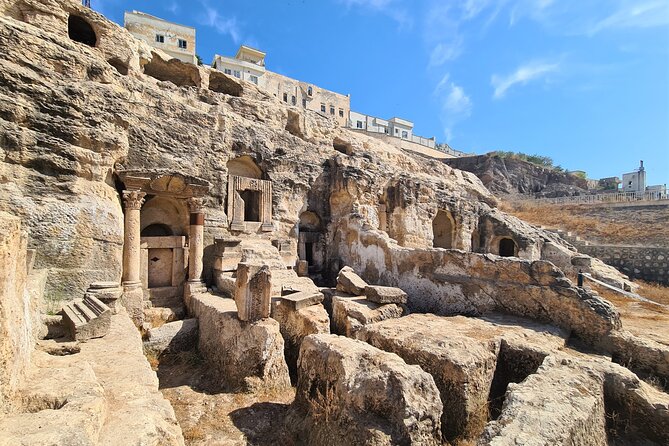
Sogmatar, also called Sumatar, is one of the less familiar stops and one of the most distinctive. The name is linked with an Arabic word for rain, and local tradition connects the area with Prophet Moses, farming, and a well opened by his miraculous scepter.
The archaeological remains at the center of the settlement date to the second century, when Sogmatar served as a pagan center. A hill formed the center of an outdoor sanctuary, with temples dedicated to the Sun, Moon, Saturn, Jupiter, Mars, Venus, and Mercury.
The site later produced evidence suggesting that the hill was also a grave monument and sacred area associated with Mare-late, described as the Lord of Gods. The arrangement is especially interesting because worshippers directed prayers toward the center of the hill, in a way that recalls the direction of prayer in Islam.
You visit Pognon’s Cave, the sacred hill, and the Mars temple during roughly two hours. This is not a polished urban museum. Expect a site where the setting and the guide’s explanation carry much of the experience.
The mix of religious traditions can be confusing if you try to force everything into one tidy story. Let the layers remain separate. Sogmatar is valuable precisely because local tradition, ancient astronomy, burial practice, and sacred geography meet in one place.
Han el Ba’rur on the old Silk Road route
Han el Ba’rur is a short stop, around 30 minutes, but it gives the second day a later historical anchor. The remains are from the Ayyubid dynasty, and the caravanserai was built in 1228 to serve trade caravans traveling along the Silk Road.
A caravanserai was a stopping place for people, animals, and goods. At Han el Ba’rur, you see the remains of the infrastructure that supported long-distance trade across southeastern Anatolia.
This is a good place to keep your expectations in check. Thirty minutes will not provide a full architectural study, and the remains may feel less immediately dramatic than Göbekli Tepe. Its importance is practical: it shows how movement through the region continued long after the Neolithic period.
The stop also makes the day feel less narrowly focused on prehistoric archaeology. You move from early ritual centers to medieval commerce, then return to one of the world’s oldest known ritual sites at Karahantepe.
Karahantepe offers a second prehistoric perspective
Karahantepe is the final major stop and the natural companion to Göbekli Tepe. It dates back more than 11,000 years and belongs to the Pre-Pottery Neolithic period.
The site includes T-shaped pillars, human and animal carvings, and elaborate stone structures. You have about two hours here, with admission listed as free in the supplied tour details.
Seeing Karahantepe after Göbekli Tepe is useful because the comparison sharpens your understanding of both places. Instead of hearing only about one famous site, you can consider similarities and differences in the stonework, carvings, and arrangement of ritual spaces.
The site is still part of an evolving archaeological picture. Do not expect every question to have a settled answer. That uncertainty is a feature, not a flaw, for visitors who enjoy piecing together evidence.
Karahantepe also makes the second day demanding. You have already spent time in the bazaar, driven to Sogmatar, and visited Han el Ba’rur. If you tire easily, tell your guide early and ask how the timing can be managed. The private format should make that conversation easier than it would be in a large group.
What the private format adds
This is a private tour, so only your group participates. That matters in a region where the best experience often depends on asking questions, pausing at a carving, or adjusting the pace at an outdoor site.
Taha is identified as one of the guides, and the local team handles English-language guiding. The tour also offers hotel or agreed-address pickup, though the exact transport plan should be confirmed before payment.
A private guide can also help connect places that appear unrelated. The museum, Balıklıgöl, Sogmatar, and the caravanserai cover very different periods and traditions. Without a good explanation, the route could feel like a string of disconnected stops.
The tour has received a top rating from 62 reviews, with 100 percent recommending it. The most praised points are the English guidance, local expertise, care with transport and meals, and coordination of the Istanbul departure, Şanlıurfa stay, and return arrangements. Still, treat those services as items to confirm, not assumptions, because the formal inclusions list only breakfast and admission details for selected stops.
Is $2,760 per person a fair price?
At $2,760 per person, this is not a budget archaeological excursion. The price may make sense for you if you value private guiding, a tightly organized two-day visit from Istanbul, local transport, and help coordinating a short stay in Şanlıurfa.
The value is less clear if you are paying for two people and expect every major expense to be covered. Food and drinks not mentioned, travel insurance, and personal purchases are excluded. Flights and accommodation need particular attention because the tour information describes coordination of an Istanbul flight and an overnight hotel in the experience, but does not clearly list them among the included services.
Before booking, ask for a written breakdown of:
- Istanbul to Şanlıurfa flights
- Airport transfers
- Overnight accommodation
- Entrance fees beyond those specifically noted
- Meals beyond breakfast
- Return travel to Istanbul
The tour is booked an average of 47 days ahead, so planning early is sensible. Confirmation is normally issued at booking, but bookings made within seven days of travel may take up to 48 hours and depend on availability.
Cancellation terms are strict. You can receive a full refund when canceling at least six full days before the start time. A 50 percent refund applies two to six full days before departure, while cancellations less than two full days ahead are nonrefundable. Poor weather or failure to meet the minimum number of participants can lead to a different date or a full refund.
Who should book this two-day tour?
I would choose this tour if you have a strong interest in archaeology, ancient religion, or the early development of human communities. It also suits you if you want Şanlıurfa’s food-free market streets, sacred sites, and local crafts included rather than visiting only the two headline ruins.
The private setup is useful for couples, families, and small groups with different walking speeds. Most people can participate, and service animals are allowed. The tour is near public transportation, though the main convenience comes from the arranged pickup and private touring.
I would hesitate if your main goal is a low-cost day trip, a relaxed schedule, or a journey centered on food and nightlife. The program is packed, the drive connections are important, and the price is high.
FAQ
How long does the tour last?
The experience lasts approximately two days.
Is the tour private?
Yes. Only your own group participates.
Is pickup available?
Yes. Pickup can be arranged from your hotel or another address agreed upon by both sides.
Is the tour offered in English?
Yes. English-language guiding is offered.
Is breakfast included?
Yes. Breakfast is included. Food and drinks not specifically mentioned are extra.
What is the cancellation policy?
You can cancel at least six full days before the start time for a full refund. A 50 percent refund is available when canceling two to six full days ahead. Cancellations less than two full days before the start time are nonrefundable.
Should you book it?
Book this tour if you want the major prehistoric sites handled by a private local team and you value context as much as sightseeing. The museum, Göbekli Tepe, Sogmatar, and Karahantepe make a strong archaeological route, while Balıklıgöl, the bazaar, Kızılkoyun, and Han el Ba’rur keep the experience tied to Şanlıurfa’s later life.
At this price, do not book on the assumption that every cost is covered. Confirm flights, hotel, transfers, and entrance fees in writing. If those details suit your budget, this is an efficient and unusually broad introduction to one of Turkey’s most important archaeological regions.
Newest Istanbul trips on the site
- Istanbul Afternoon Bosphorus Cruise with Asian Side Stop★ 4.0 · 98 reviews
- Guided Bosphorus Afternoon Cruise on Yacht★ 5.0 · 108 reviews
- Private Bosphorus Sightseeing Cruise on Luxury Yacht★ 5.0 · 59 reviews
- Bosphorus Night Cruise with Luxury Yacht★ 5.0 · 209 reviews
- Istanbul Highlights Bosphorus Stops 1 +2 (Europe + Asia)★ 4.5 · 118 reviews
- Bosphorus Dinner & Show Cruise (All Inclusive)★ 4.0 · 44 reviews
- Stage Front Bosphorus Dinner Cruise with Pickup & Drinks included★ 4.0 · 58 reviews
- Bosphorus Dinner Cruise & Entertaintment & Private Table & Wi-Fi★ 3.5 · 28 reviews
2-Day Experiences, compared.

Antalya/Kemer: 2-Day Cappadocia, Cave Hotel, & Balloon Tour
Our review →
From Antalya: 2-Day Cappadocia, Cave Hotel, & Balloon Tour
Our review →

2 Day All Inclusive Cappadocia Tour from Istanbul with Optional Balloon Flight
Our review →
From Istanbul: 2-Day All-Inclusive Cappadocia Guided Trip
Our review →

Browse the lists this tour appears in