Reviewed · ISTANBUL TOURS
Istanbul: Blue Mosque, Hagia Sophia, & Basilica Cistern Tour
The most useful thing about this Istanbul tour is that it brings three major Sultanahmet sights into one well-organized morning or afternoon. You get a live guide for the Blue Mosque, Basilica Cistern, Hippodrome, and Old City, then time to explore Hagia Sophia on your own with an audio guide. That mix gives you both context and breathing room.
I like the strong historical storytelling and the working skip-the-ticket-line entry for the Basilica Cistern and Hagia Sophia. I also like the practical pace, with short breaks and time for photos. The main caution is that skip-the-line does not mean skip security, and the Hagia Sophia security queue can still take up to 60 minutes in high season.
Key points to know before booking
- Three headline sights in 3.5 hours: The tour covers the Blue Mosque, Basilica Cistern, Hagia Sophia, Hippodrome, and Million Stone.
- Hagia Sophia is partly self-guided: Your guide explains the exterior and gives you a ticket plus audio guide for the Visiting Area and Upper Gallery.
- Security lines still apply: You skip the ticket queue, not airport-style screening.
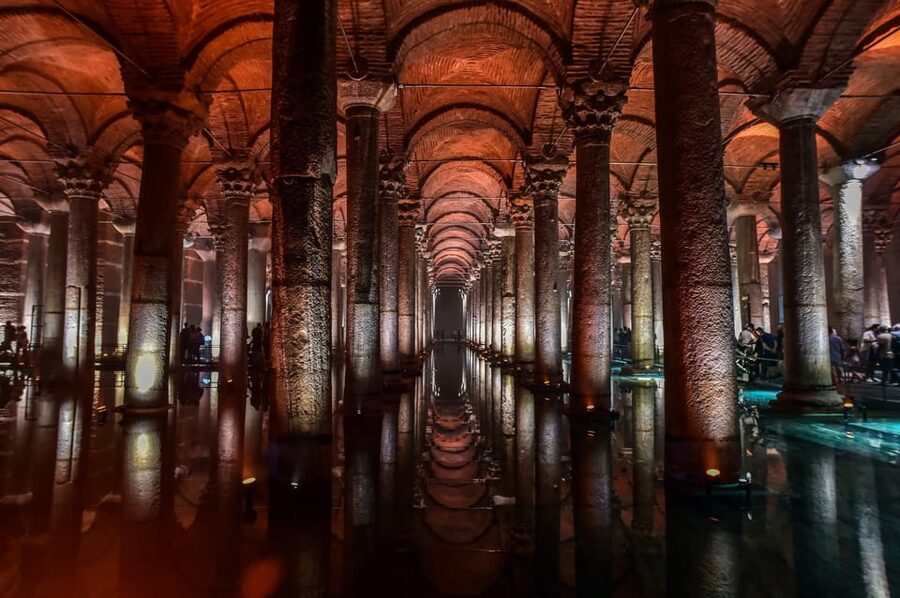
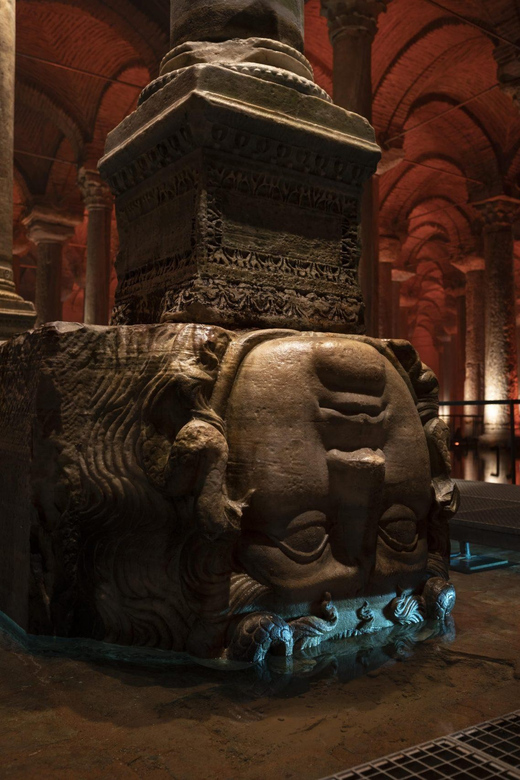
- The Basilica Cistern is the atmospheric highlight: Underground columns, dim light, water, and Medusa heads make this the most unusual stop.
- Dress rules are strict: Knees and shoulders must be covered, and women need a headscarf inside the mosques.
- The guide makes the price worthwhile: Ali, Buse, Michael, Mrs Kiss, Arthur, and others are praised for clear explanations, humor, and crowd control.
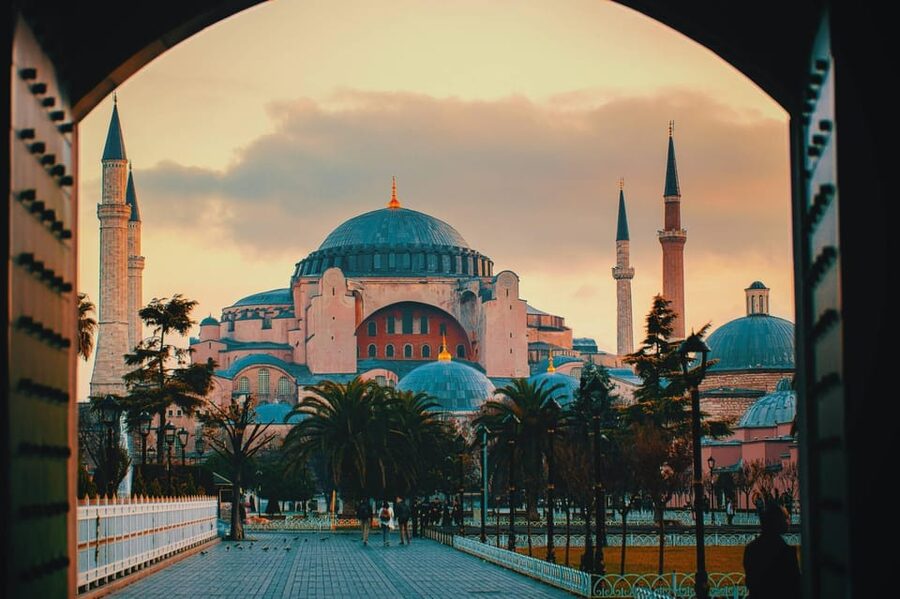
Three Istanbul icons, one compact route
At $58 per person, this is not the cheapest way to enter Sultanahmet’s sights. The Blue Mosque is free to enter, and you can visit parts of the Old City without paying anything. The value comes from combining two paid attractions, an English-speaking guide, historical explanation, and help with the confusing entrances.
This matters most on a first visit. Sultanahmet can feel simple on a map, yet the lines, security checks, prayer schedules, separate entrances, and changing rules can eat up a large part of your day. A good guide keeps the group moving and tells you what you are looking at instead of leaving you to stare at impressive stonework without context.
The tour lasts about 3.5 hours. That is enough time for a strong introduction, but not enough for a slow museum day. You will see the essentials, hear the main stories, and have some personal time. If you want long photography sessions or extended time inside Hagia Sophia, plan to return on your own.
A few more Istanbul half-days worth a look
- Istanbul: Bosphorus Dinner Cruise & Show with Private Table
★ 4.8 · 44,561 reviews - Istanbul: Daytime or Sunset Sightseeing Cruise & Audio Guide
★ 4.8 · 14,430 reviews - Istanbul: Bosphorus Dinner Cruise with Turkish Night Show
★ 4.8 · 10,127 reviews
Meeting beneath the trees at the Hippodrome
The meeting point is beneath the trees across from Design Café and the Turkish and Islamic Arts Museum at the Hippodrome in Sultanahmet. This is a central historic area, but the exact spot can be easy to miss if you are rushing.
Give yourself extra time to find it. One practical annoyance with the meeting point is that it is not as obvious or central as some visitors expect. Keep the map link open, look for the café and museum, and do not wait until the last minute to start searching.
Once the group gathers, the route works well on foot. There is no coach transfer between the sights, and that is a plus here. You remain in the historic core, moving through the same streets and open spaces that connect the monuments.
The Blue Mosque and its blue Iznik tiles
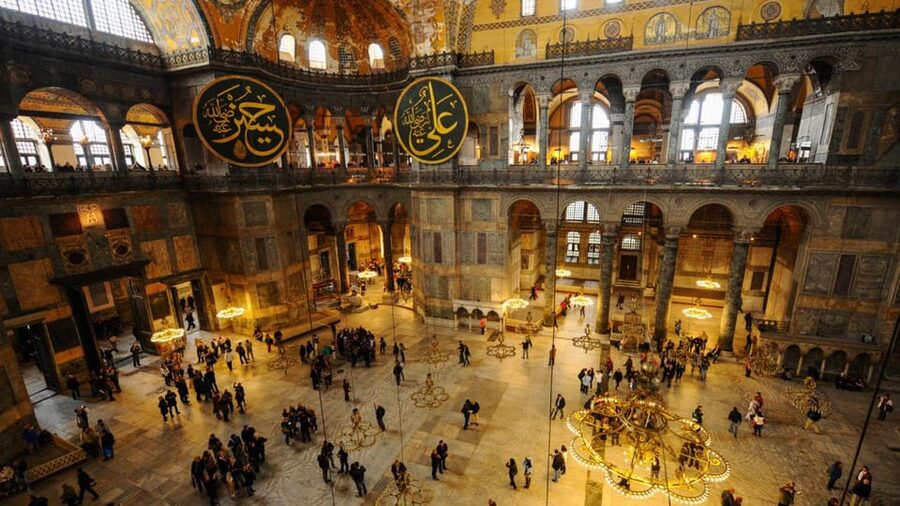
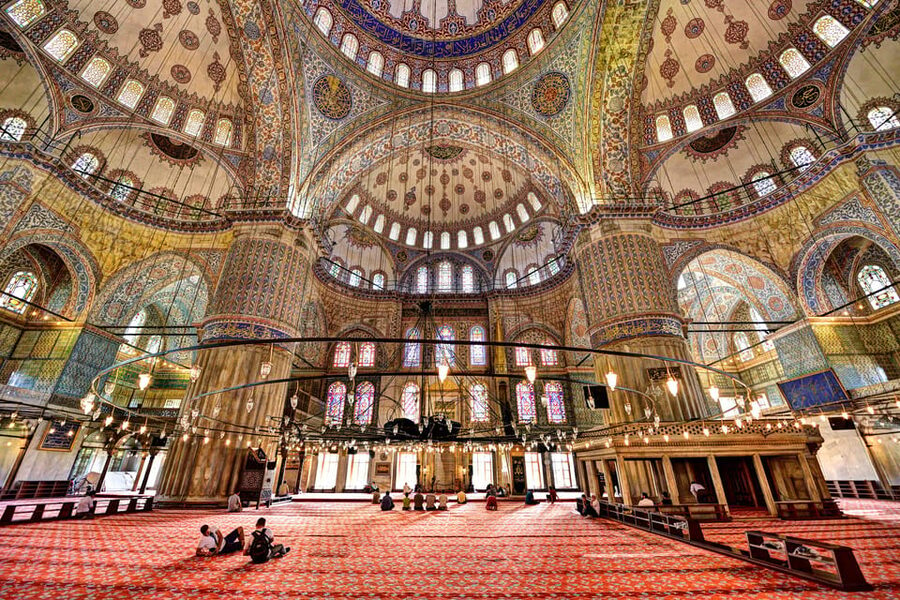
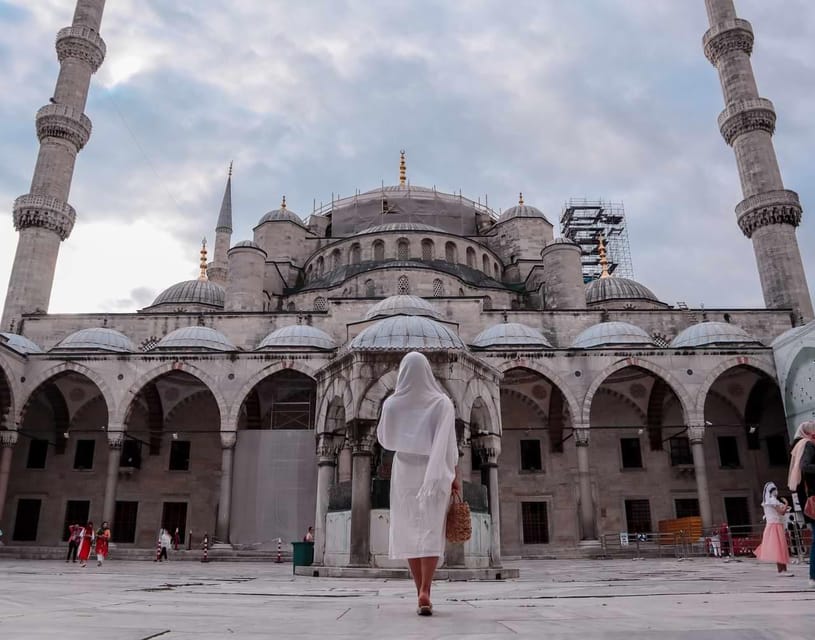
The Blue Mosque is the tour’s first major interior stop. Its official name is the Sultan Ahmed Mosque, but the nickname comes from the thousands of blue Iznik tiles that decorate the interior.
Your guide explains the mosque’s role in Ottoman Istanbul, the basics of Islam, and the building’s connection to the city’s Byzantine past. This is where a live guide adds real value. The mosque is beautiful at first glance, but the details can blur together without someone pointing out what to notice.
The interior is also a working place of worship, not simply a historic building. Prayer times can affect access, and visitors need to behave respectfully. You may have to follow a set visitor route, remove your shoes, and keep your voice down.
Dress carefully. Men and women must cover their knees, while sleeveless shirts are not allowed. Women need a headscarf, and a scarf is useful for anyone who needs extra coverage. A body cover can be purchased for 100 TRY if you arrive in shorts. It is easier and cheaper to pack suitable clothing before you leave your hotel.
The Blue Mosque is free to enter, so the guide is the main reason to include it in a paid tour. You are paying for explanation, timing, and group management rather than admission. The guide also helps you understand where to line up and how to enter, which is useful when the area is crowded.
One timing issue is worth noting. The tour may spend a generous amount of time here, while Hagia Sophia can feel shorter afterward. If the Blue Mosque is the building you most want to photograph, you may appreciate that balance. If Hagia Sophia is your top priority, you may wish the schedule gave it more room.
The Hippodrome and Million Stone
Between the major interiors, the guide takes you through the Old City, including the Hippodrome and Million Stone. These stops help explain why the three monuments sit together in such a compact area.
The Hippodrome was the social and sporting center of Constantinople. It hosted chariot racing and public events, and it was closely tied to political life. Today, the open space is calmer, but the guide helps you picture the scale and importance of what once took place there.
The Million Stone is another small but useful stop. It marked the starting point for roads leading across the Byzantine Empire. On its own, it is easy to miss. With the story attached, it becomes a quick lesson in how Constantinople measured its place in the world.
These outdoor explanations are short, but they break up the interiors. You get time to walk, take photographs, and ask questions before entering the cistern.
A completely different sort of day out, same corner of Turkiye:
- Best of Istanbul 1, 2 or 3-Day Private Guided Istanbul Tour
★ 5.0 · 8,922 reviews - Istanbul: Basilica Cistern Fast-Track Entry and Audio Guide
★ 4.6 · 7,521 reviews - Istanbul: Hagia Sophia Skip-the-Line Ticket & Museum Option
★ 3.7 · 4,958 reviews - Istanbul: Hodjapasha Whirling Dervishes Show & Exhibition
★ 4.4 · 4,790 reviews
Below ground in the Basilica Cistern
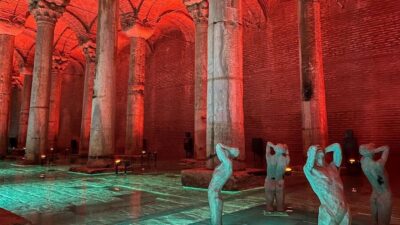
The Basilica Cistern is often the most memorable part of this experience. Beneath the streets, rows of columns support a huge underground water reservoir built for Constantinople’s water supply.
The mood changes as soon as you go below ground. The light is low, the space is cool compared with the street, and the repeated columns create a strong sense of scale. The water and shadows make this feel very different from the grand religious buildings above.
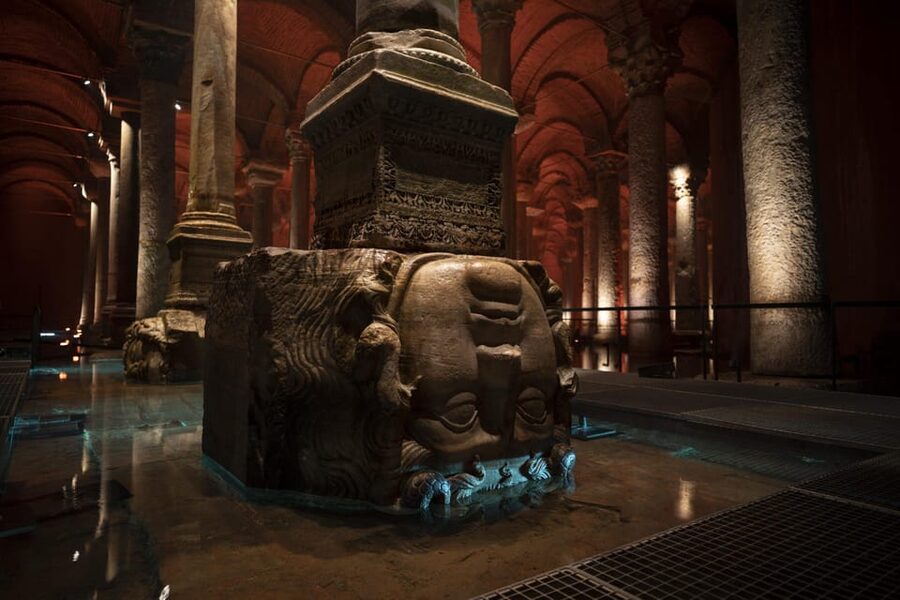
The Medusa heads are the cistern’s most famous detail. These carved heads from Greek mythology are used as column bases, one turned sideways and one placed upside down. Their exact purpose is still a subject of discussion, but the unusual placement is part of the attraction.
The included ticket lets you bypass the ticket line, which can save a large amount of time. You still must pass security, and that check can take up to 30 minutes. So keep your expectations realistic: you are avoiding one queue, not every queue.
The cistern visit is guided, which helps you notice the architecture and understand its purpose. You will not simply walk through a dark room of columns. Your guide can point out the Medusa heads and explain how the reservoir fitted into the city’s water system.
Maintenance can change the plan. On July 29, 30, and 31, the Basilica Cistern is scheduled to close, with theodosius Cistern used instead. Check the date of your booking if the Basilica Cistern is the main reason you want this tour.
Hagia Sophia with an audio guide
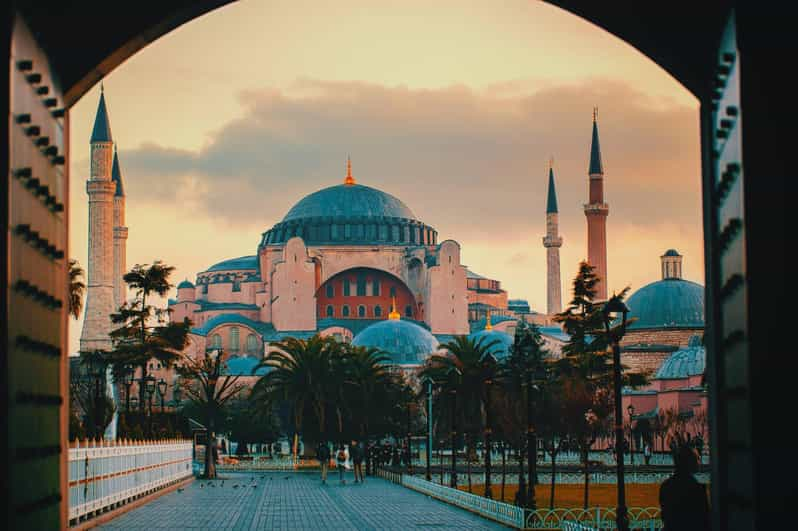
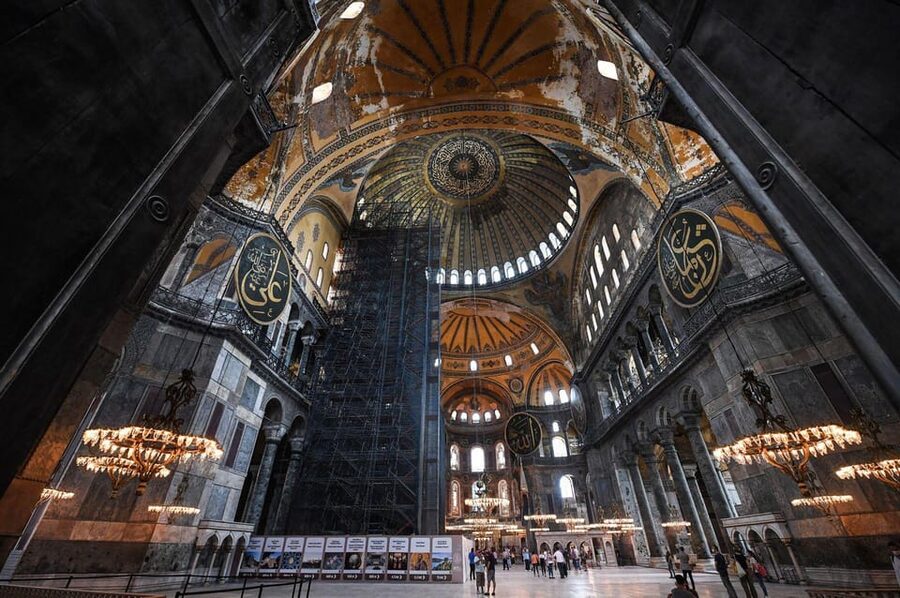
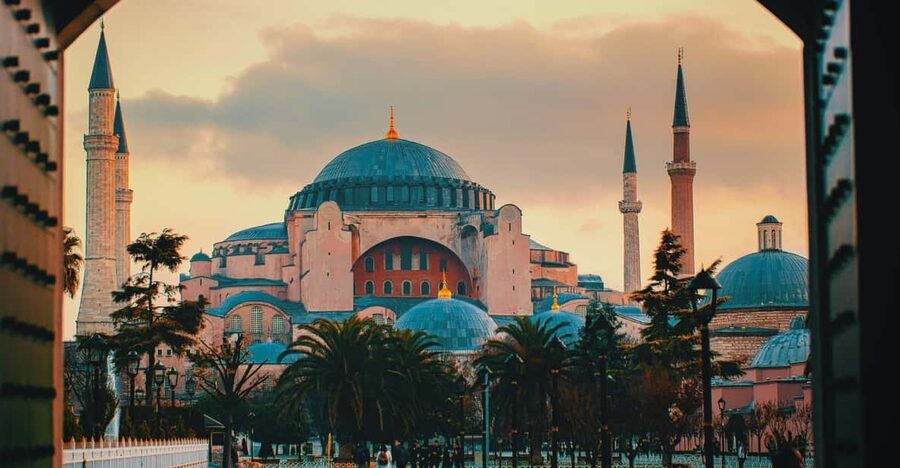
Hagia Sophia is handled differently from the other two major sights. Your guide explains the exterior and gives you the ticket and audio guide before you enter. You then explore the interior at your own pace.
This arrangement has a clear advantage: you are not tied to a guide’s commentary at every step. You can pause, listen, look around, and take photographs where permitted. It also means the quality of your visit depends partly on how much time remains when you enter.
The ticket covers the Visiting Area and Upper Gallery, not the prayer area. That distinction matters. Hagia Sophia is both a historic monument and an active religious site, and access rules do not match those of a standard museum.
You should also expect restoration and reservation work inside and outside the building. Some views may be affected by maintenance or temporary arrangements. That can be disappointing if you are hoping to see every surface without obstruction, but the work is part of caring for a very old and heavily visited structure.
The skip-the-ticket-line entry is useful here, especially in high season. Security remains the weak point. The security line can take up to an hour, so the tour cannot promise instant entry. Even so, avoiding the ticket queue is a worthwhile advantage in a busy part of Istanbul.
Several people find the Hagia Sophia portion too short, especially if the Blue Mosque receives more time. I would treat this tour as an introduction rather than a complete Hagia Sophia visit. If the building is your main priority, return later and allow more time for the audio guide and Upper Gallery.
The guides make the difference
The strongest part of this tour is the live guiding. Ali, also identified in some bookings as Alex, is praised for clear explanations, patience, and careful group management. Buse is described as friendly and informative, while Michael, also called Mehmet, brings facts and humor to the route.
Mrs Kiss receives particular praise for explaining the cultural meaning of each site, asking the group questions, and allowing time for photographs. Arthur, Haluk, Cenkur, and other guides are also noted for answering questions and keeping the pace comfortable.
The experience can depend on which guide leads your departure. Still, the pattern is consistent: the guide is there to supply context, answer questions, show you where to go, and keep the group together in crowded streets.
Groups can be large, with one account describing around 30 people. That is not an intimate private tour. The supplied earpiece helps you hear the guide, though, and clear communication is especially useful near busy entrances.
The group size also explains why the tour has a set rhythm. You will not be able to stop for ten minutes at every tile panel or column. On the other hand, a well-managed group can move through the area more efficiently than a couple trying to work out each entrance alone.
Timing, clothing, and comfort
Wear comfortable shoes. The tour involves walking between monuments, standing at security checks, and moving through busy historic areas. There are short breaks, including time for coffee and toilets, but this is still an active half-day.
Pack a scarf or headscarf, and avoid shorts, short skirts, and sleeveless shirts. Knees must be covered for both men and women. Since the tour includes religious buildings, modest clothing is not just a rule to get past the entrance. It is the respectful choice.
Bring water if you need it, though no special equipment is listed as included. The audio guide for Hagia Sophia is included, but the live tour itself is in English. If you do not speak English, you can receive the tickets separately with an audio guide in a preferred language instead of joining the English guided portion.
The tour is not wheelchair or stroller accessible. That is important to settle before booking, since the route includes historic sites, security areas, and underground access.
Is $58 a fair price?
For $58, you receive the guide, the Blue Mosque explanation, the Basilica Cistern entry and guided visit, the Old City walk, the Hagia Sophia ticket, and the Hagia Sophia audio guide. The Blue Mosque itself does not charge an admission fee, so the financial value rests mainly on the two ticketed attractions and the guide service.
The Basilica Cistern admission alone can represent a large share of the price, particularly when purchased close to the date of a visit. Add Hagia Sophia, then factor in the time saved by bypassing the ticket queues, and the package makes sense for a first-time visitor with only a short stay.
It is less compelling if you enjoy researching sites, dislike fixed schedules, or plan to spend hours inside Hagia Sophia. You could visit the free mosque independently and arrange the paid attractions yourself. But you would give up the guide’s stories, entrance help, and route planning.
I see this as a good value for a first day in Istanbul, especially when you want the big three without spending a full day organizing the details.
Who should book this tour?
I would recommend it to first-time visitors, cruise passengers, couples on a tight schedule, and anyone who wants historical background without committing to a private guide. It also suits people who prefer a guide for the Blue Mosque and Basilica Cistern but want personal time at Hagia Sophia.
It is not the best choice for visitors who need step-free access, want a small private group, or care most about extended photography. It may also disappoint anyone expecting every line to disappear, since security screening remains outside the skip-the-ticket-line promise.
The overall rating is 4.7 from 1,806 bookings, and the strongest pattern is clear: people value the guides, the explanations, the smooth movement between sights, and the time saved at paid entrances. The most repeated criticism is limited time at Hagia Sophia, plus occasional concern about the meeting point or uneven timing between the mosque and museum.
Should you book the Blue Mosque, Hagia Sophia, and Basilica Cistern tour?
Book it if you want a solid introduction to Istanbul’s central monuments and prefer having someone explain the complicated layers of Byzantine, Ottoman, and Islamic history. The Basilica Cistern and the guide-led storytelling are the biggest reasons to choose it.
Skip it if you want to linger at every site, dislike groups, or already understand the area well. If you do book, dress modestly, arrive early at the Hippodrome meeting point, and save extra time for Hagia Sophia after the guided portion if it is high on your list.
FAQ
How long does the Istanbul landmarks tour last?
The tour lasts 3.5 hours.
What sights are included?
The route includes the Blue Mosque, Basilica Cistern, Hagia Sophia, the Hippodrome, Million Stone, and other Old City highlights.
Is admission to the Blue Mosque included?
The Blue Mosque tour is included, but skip-the-line entry to the Blue Mosque is not included. The mosque itself does not charge an admission fee.
Are Hagia Sophia tickets included?
Yes. A Hagia Sophia skip-the-ticket-line ticket and audio guide are included.
Which parts of Hagia Sophia can I visit?
The ticket provides access to the Visiting Area and Upper Gallery. It does not provide access to the prayer area.
Does skip-the-line mean I avoid security checks?
No. You skip the ticket line, but security screening is still required. The Hagia Sophia security line can take up to 60 minutes in high season, and the Basilica Cistern security check can take up to 30 minutes.
What should I wear?
Your knees and shoulders must be covered. Shorts, short skirts, and sleeveless shirts are not allowed. Women should bring a headscarf, and a scarf or suitable covering is useful for mosque visits.
What language is the live tour in?
The live tour is conducted in English. Visitors who do not speak English can choose to receive their tickets separately with an audio guide in a preferred language instead of joining the English tour.
Is the tour wheelchair and stroller accessible?
No. The tour is not wheelchair or stroller accessible.
What happens if the Basilica Cistern is closed for maintenance?
On July 29, 30, and 31, the Basilica Cistern is scheduled to be closed. Theodosius Cistern is used as the replacement visit on those dates.
Newest Istanbul trips on the site
- Turkey Classics 7 Day Escorted Tour from Istanbul★ 4.5 · 165 reviews
- 7 Day 6 Night Express Turkey Tour★ 5.0 · 37 reviews
- Bosphorus Dinner Cruise with Turkish Music and Live Performances★ 4.0 · 158 reviews
- Bosphorus Dinner Cruise & Show with Private Table★ 5.0 · 24 reviews
- Pearl’s of Turkey – 8 Days★ 5.0 · 38 reviews
- Bosphorus Boat Tour 3 Hour with Asian Side Stop in Istanbul★ 5.0 · 97 reviews
- 7 Days Turkey Tour Package – Highlights of Turkey★ 5.0 · 73 reviews
- Turkey Highlights 4 Day Tour from Istanbul Hassle-Free Package★ 5.0 · 91 reviews
Istanbul Tours, compared.
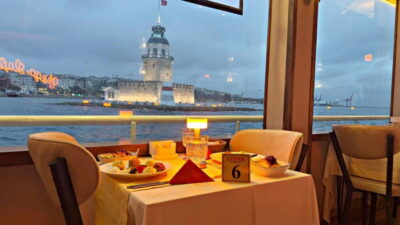
Bosphorus Dinner Cruise & Show with Private Table
Our review →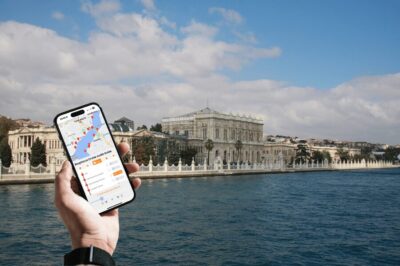
Daytime or Sunset Sightseeing Cruise & Audio Guide
Our review →

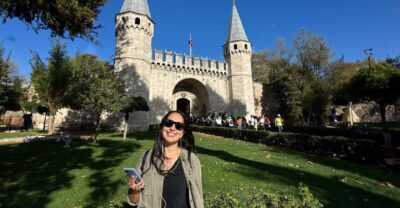
Topkapi Palace & Harem Museum Ticket & Audio Guide
Our review →